Case-status note: The archive labels this case solved or adjudicated because six participants were convicted through one guilty plea and a later trial. It separately records Sadat Kateregga's acquittal and Kasolo Coporiyamu's appeal. No final appellate decision was located, so the appeal is not described as resolved.
Two people taken outside a home
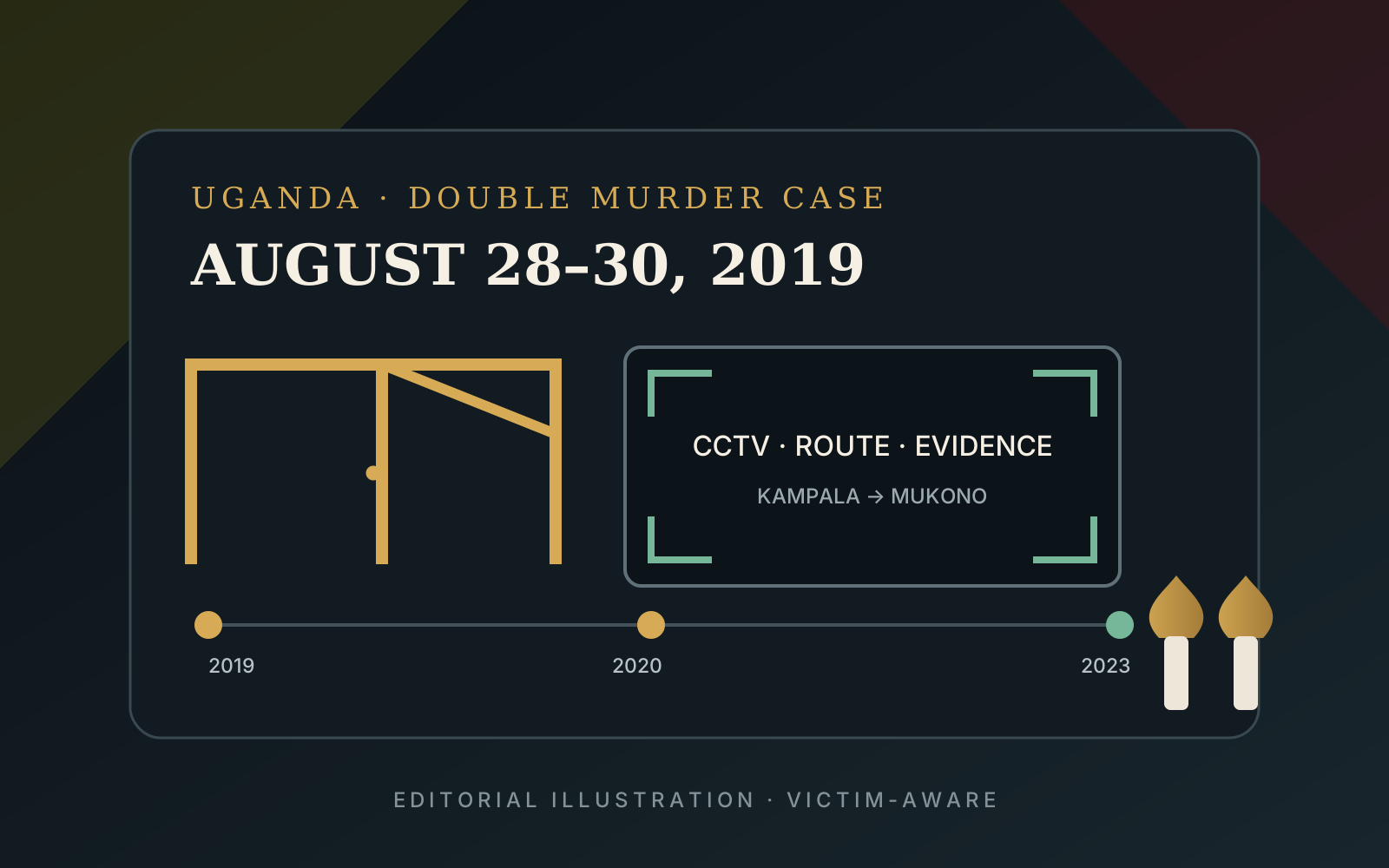
Maria Nagirinya Gateni worked in community development. Ronald Kitayimbwa was her driver. On the night of August 28, 2019, the two arrived at Nagirinya's home in Lungujja, a Kampala suburb. They were forcibly taken before they could enter safely.
The crime quickly became a double missing-person inquiry. Relatives reported the abduction, while investigators began tracing the vehicle, phones and movements captured by surveillance cameras. The public attention given to Nagirinya did not diminish Kitayimbwa's equal status as a victim; both names remain in the title and throughout this file.
Recovery in Mukono District
On August 30, police recovered their bodies at Nakitutuli village in Mukono District. Nagirinya's vehicle was found elsewhere. The geographic separation between the abduction, killing, body-recovery site and abandoned vehicle made the investigation dependent on reconstructing movement across several locations.
Contemporary reporting and the later judgment described robbery as the criminal objective identified by the prosecution. This page does not repeat lurid details that add nothing to understanding the evidence, legal findings or the victims' lives.
CCTV, phones and scene reconstruction
Investigators gathered CCTV footage showing the vehicle's movement, financial and mobile-phone evidence, and statements from suspects. A recorded scene reconstruction was admitted at trial. The court also heard from Isaac Ssenabulya, who had pleaded guilty and described the group's actions.
Several defendants challenged statements attributed to them and raised allegations of torture. The trial judge conducted proceedings over admissibility and ultimately accepted evidence used against five of the accused. Recording those judicial findings does not erase the allegations; it identifies how the court resolved them at trial.
The earlier guilty plea
Isaac Ssenabulya pleaded guilty before the principal trial concluded and received a 40-year prison term. He later testified for the prosecution. The High Court treated his account as evidence that could be considered alongside independent material rather than as a substitute for proof against every co-accused.
A guilty plea resolves the case of the person who enters it. It does not automatically establish the guilt of others, which is why the remaining defendants still faced a full trial and individual verdicts.
Five convictions and one acquittal
In October 2023, High Court Judge Isaac Muwata convicted Kasolo Coporiyamu, Johnson Lubega, Nasif Kalyango, Hassan Kisekka and Sharif Mpanga in connection with the kidnapping, murders and aggravated robbery. The court acquitted Sadat Kateregga after finding the prosecution had not produced sufficient evidence tying him to the offenses.
That acquittal is an essential part of the outcome. Reporting that six people were charged or stood trial would not justify calling all six murderers; the court drew an explicit evidentiary distinction.
Life and fixed-term sentences
Kasolo and Lubega received life imprisonment. Kalyango, Kisekka and Mpanga received 30-year prison terms, with time already spent on remand addressed by the court. Together with Ssenabulya's earlier 40-year sentence, the proceedings produced six convictions.
These are sentences imposed by the court, not predictions about actual release dates. Prison administration, statutory rules and appellate decisions can affect how sentences operate, and this file does not speculate beyond the published record.
The appellate record
Kasolo filed a notice and memorandum of appeal shortly after sentencing, challenging both conviction and life sentence. His grounds included the treatment of his statements, fair-trial complaints and the judge's reliance on evidence he disputed.
No reliable final Court of Appeal judgment in that appeal was located in the review completed September 13, 2026. The High Court judgment therefore remains the latest verified adjudicated outcome presented here, while the appeal is shown as unresolved rather than assumed dismissed or allowed.
Questions still open
- What will the Court of Appeal decide on the challenges to conviction and sentence?
- Will later judgments clarify the legal treatment of the disputed statements and scene-reconstruction evidence?
- Can public records better document the long-term impact on both victims' families?
Sources and methodology
The conviction and sentencing structure is checked against the Uganda Police Force's official summary, Daily Monitor's courtroom reporting and Uganda Radio Network reporting republished by The Independent. The abduction and recovery timeline is cross-checked through contemporaneous reporting. Defendants are identified according to their individual outcome: convicted, acquitted or appealing.