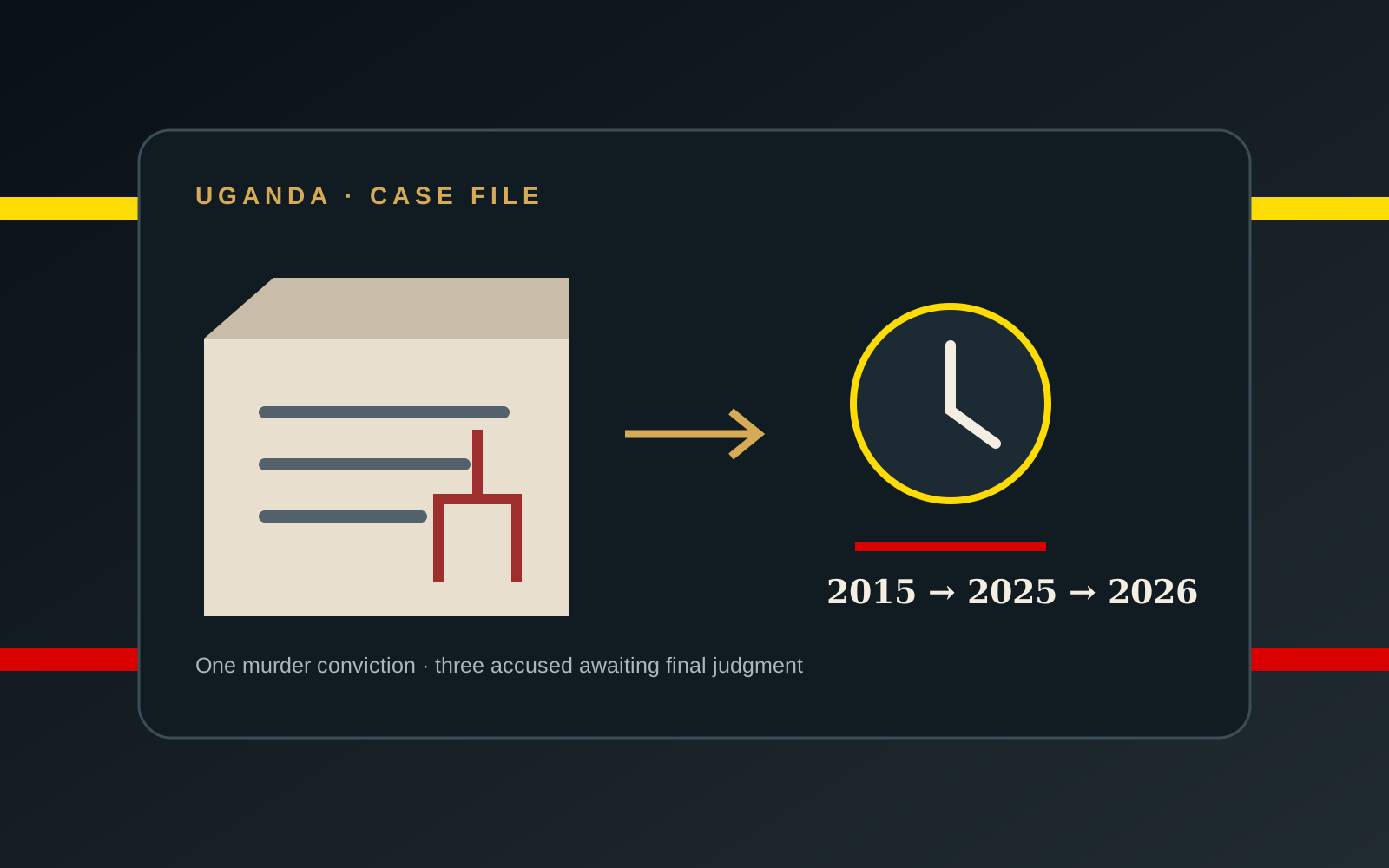
Case-status note: “Solved / adjudicated” reflects Daniel Kisekka Kiwanuka's murder conviction and sentence. It does not assign guilt to John Kibuuka, John Massajjage or Nasur Abdallah Mugonole, whose murder trial had not produced a final verdict in the record reviewed through September 13, 2026.
A prosecutor handling high-risk cases
Joan Namazzi Kagezi was a senior Ugandan prosecutor and assistant director of public prosecutions. Her work included terrorism and international-crimes matters. At the time of her death she was prosecuting the case arising from the 2010 Kampala World Cup bombings, another file documented in this archive.
Her profession is central to the public significance of the killing, but it does not by itself prove why she was targeted. Early statements and later prosecution evidence connected the attack to her work. The identity and instructions of whoever commissioned the killing, however, were not established by a final judgment located for this review.
March 30, 2015
Kagezi was driving home with three of her children on the evening of March 30, 2015. She stopped near a roadside stall in Kiwatule, a Kampala suburb. Gunmen approached and shot her through the vehicle window before escaping on motorcycles. She was taken for medical assistance but died.
The Uganda Judiciary's 2023 account emphasized that her children witnessed the attack. That fact is included because it explains the enduring harm described in later victim-impact statements; the page avoids reproducing graphic details.
Investigators pursued the case for years without a public prosecution. The long delay prompted repeated public concern about the ability of state institutions to identify and bring those responsible to court.
Four men charged in 2023
On November 6, 2023, police presented Kisekka Daniel Kiwanuka, John Kibuuka, John Massajjage and Nasur Abdallah Mugonole before the Nakawa Chief Magistrates Court. Murder and terrorism charges were read to them. Because those were accusations rather than verdicts, all four remained legally presumed innocent unless and until a conviction was entered.
The case moved to the International Crimes Division of the High Court. On March 24, 2025, the court confirmed the charges, allowing the prosecution to proceed to trial. The Office of the Director of Public Prosecutions described this as a breakthrough, not a completed adjudication.
Kisekka's plea and 35-year sentence
On May 19, 2025, Daniel Kisekka Kiwanuka pleaded guilty to murder under a plea-bargain agreement. The prosecution withdrew the terrorism charge against him. The International Crimes Division accepted the plea and sentenced him to 35 years' imprisonment, with time already spent on remand to be deducted.
Kisekka admitted participating in planning and supporting the operation. Public reporting of the agreed facts said he was not the gunman. His conviction therefore establishes his own criminal participation; it does not automatically prove each allegation he later made about the roles of the other accused.
Under the agreement, he became a prosecution witness in the continuing case. That created an evidentiary record for the remaining trial, but the other defendants retained the right to challenge his account and the prosecution's corroboration.
The remaining murder trial
The prosecution called 26 witnesses before closing its case in 2026. On July 3, a High Court panel found that there was sufficient evidence requiring John Kibuuka, John Massajjage and Nasur Abdallah Mugonole to answer the murder charge. The judges dismissed the terrorism charge because the prosecution had not established the required purpose of influencing government policy or intimidating the public.
A ruling that an accused person has a case to answer is not a conviction. It means the prosecution evidence has crossed the threshold for the defence stage. The three men were therefore still accused, not adjudicated perpetrators, at that point.
The reviewed reporting scheduled defence hearings for July 2026 and described the case as continuing. No reliable final judgment for the three men was located by September 13, 2026. This page will require an update if the court later convicts, acquits or otherwise disposes of those charges.
Motive and commissioning remain contested
Prosecution material attributed to Kisekka alleged that the group had been offered money and that Kagezi's work on sensitive cases was discussed. In its no-case ruling, the High Court reportedly found evidence sufficient to continue with murder but not terrorism. That distinction matters: a suspected connection to professional work is not identical to proof of the statutory purpose required for terrorism.
The available adjudicated record does not identify, through a final conviction, the person who commissioned the attack. This archive therefore avoids naming political, religious or institutional actors on the basis of allegation alone.
What remains unresolved
- What final verdict will the High Court enter for the three remaining accused?
- Will any later judgment establish who commissioned and financed the killing?
- Will the dismissed terrorism count be appealed or otherwise revisited?
- Will Kisekka challenge any aspect of his sentence within the limited appeal right described by the court?
The case has one final conviction and a continuing prosecution. Both facts can coexist without collapsing every defendant into the same legal status.
Frequently asked questions
Who was Joan Kagezi?
She was an assistant director of public prosecutions in Uganda who handled terrorism and international-crimes cases.
When was she killed?
She was shot in Kiwatule, Kampala, on March 30, 2015 while returning home with three of her children.
Who has been convicted?
Daniel Kisekka Kiwanuka pleaded guilty to murder and was sentenced to 35 years in prison on May 19, 2025.
What is the status of the other defendants?
Three men were ordered to defend themselves on the murder charge in July 2026. The terrorism charge was dismissed, and no final murder verdict was located by September 13, 2026.
Why is the page labeled adjudicated?
Because one participant has a final conviction. The label is paired with an explicit note that wider accountability remains incomplete.