Case-status note: This file is classified as solved or adjudicated because courts convicted several participants in the conspiracy and imposed life sentences. That does not mean every suspected organizer or participant was captured, tried or convicted. Indictments and reward notices concerning other people remain allegations unless adjudicated.
A truck stopped at the embassy gate
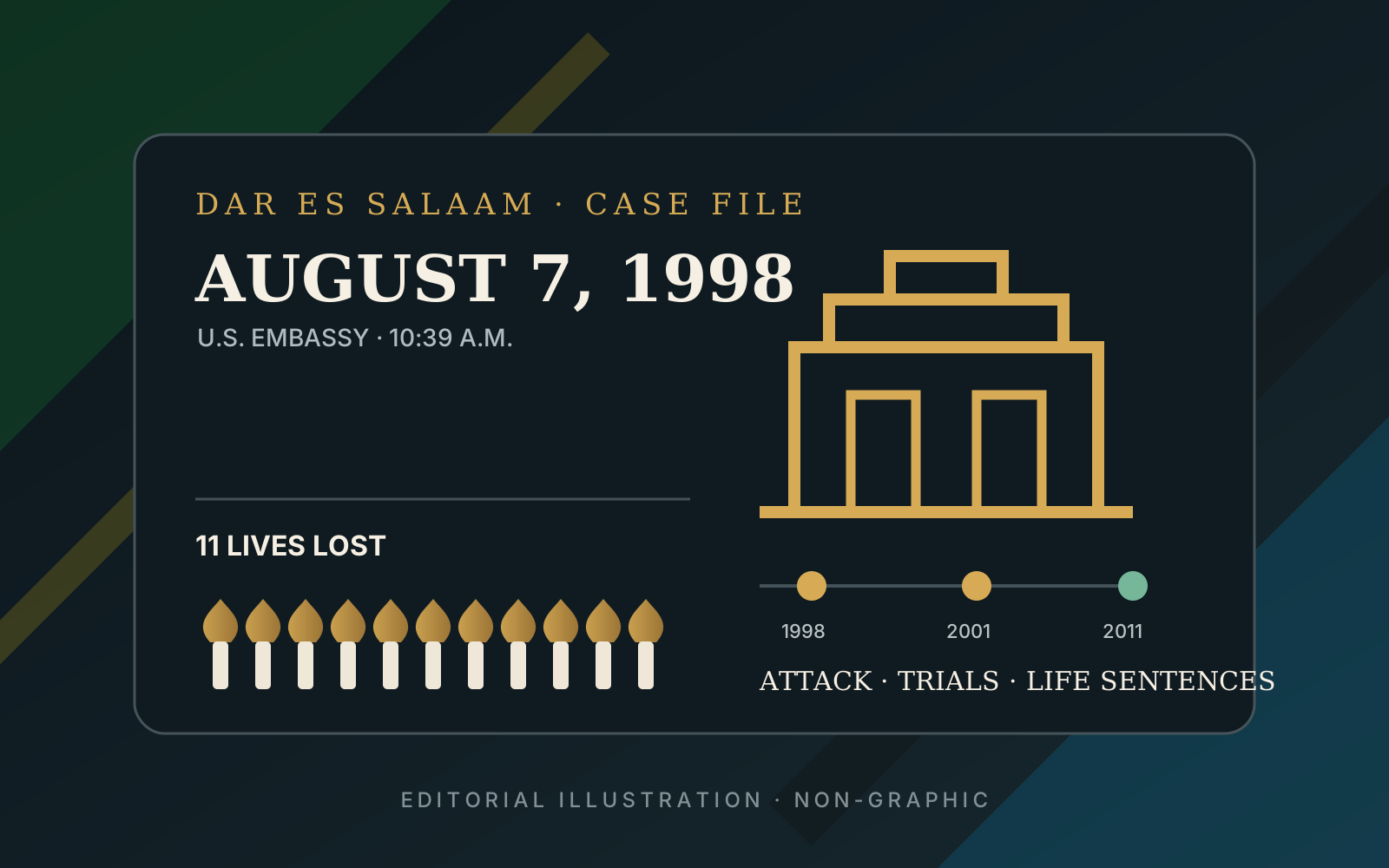
On the morning of Friday, August 7, 1998, a truck carrying explosives approached one of the vehicle entrances to the U.S. Embassy in Dar es Salaam. The State Department's Accountability Review Board found that an embassy water tanker blocked the vehicle from penetrating the perimeter. The bomb detonated about 35 feet from the chancery's outer wall at approximately 10:39 a.m.
The explosion killed 11 people. Official summaries differ on the number wounded: an archived FBI account lists more than 70, while the National Museum of American Diplomacy gives more than 85. Rather than force those figures into false agreement, this file records the shared conclusion—scores of people were injured—and identifies the source-specific totals.
The Dar es Salaam bombing occurred almost simultaneously with a much deadlier truck bombing at the U.S. Embassy in Nairobi, Kenya. The FBI records 224 deaths across both attacks, including 12 Americans, and more than 4,500 wounded. This page remains focused on the Tanzanian attack and does not merge Nairobi's victims into Tanzania's country count.
The people behind the number
Most people killed in the East Africa attacks were African civilians. In Tanzania, the dead included local embassy security personnel and people whose ordinary morning placed them near the compound. The State Department memorial identifies local guard Elia Elisha Paul among those killed. The full toll should be understood as individual lives, not as a backdrop to the later prosecution.
Survivors, families, Tanzanian responders, embassy staff and investigators faced the immediate consequences. The review board described the blast as a deliberate terrorist attack intended to cause deaths, serious injuries and destruction. It also documented how the embassy's location and the blocked gate limited damage that could have been still greater.
An unprecedented overseas investigation
The Federal Bureau of Investigation called the Tanzania inquiry “Tanbom.” More than 900 FBI agents, alongside other personnel and Tanzanian partners, traveled overseas after the paired attacks. Investigators processed enormous crime scenes, conducted more than 1,000 interviews and followed evidence across national borders.
The investigation connected the bombings to al-Qaeda. That attribution rests on evidence developed in criminal proceedings and official investigations, not simply on a later claim of responsibility. It is still important to separate organizational responsibility from individual guilt: each defendant's legal position depended on the charges, admissible evidence and outcome of a particular proceeding.
The 2001 federal trial
Wadih El Hage, Mohammed Sadeek Odeh, Mohamed Rashed Daoud al-‘Owhali and Khalfan Khamis Mohamed were tried in the Southern District of New York. On May 29, 2001, a jury convicted them of offenses that included conspiracies to kill U.S. nationals and use weapons of mass destruction, as well as murder and attempted murder charges tied to the embassy-bombing conspiracy.
Khalfan Khamis Mohamed had a direct documented connection to the Tanzania operation. The four defendants were sentenced to life imprisonment, and their convictions were affirmed on appeal. The judgments established criminal responsibility for those defendants; they did not amount to a trial of every person named in the wider indictment.
Ahmed Khalfan Ghailani
Ahmed Khalfan Ghailani, a Tanzanian national, was later prosecuted separately in the same federal district. In November 2010, a jury convicted him of conspiring to destroy U.S. buildings and property. The jury acquitted him on numerous other counts, a distinction that must remain visible when describing the verdict.
On January 25, 2011, Ghailani received a life sentence. His conviction added another adjudicated participant to the case, but the mixed verdict also demonstrates why the evidence cannot be summarized as though every allegation resulted in conviction.
What remains open
Other defendants entered different procedural paths: some were prosecuted later, some died, and others remained fugitives. The U.S. State Department's Rewards for Justice program continues to offer rewards for information connected with people sought over the 1998 embassy bombings. A continuing reward notice is not a conviction, and this page does not describe a wanted person as legally guilty.
The historical event is therefore both adjudicated and incomplete. Courts resolved the cases of several major participants, while the wider accountability record remains open as to fugitives and the full operational network.
Questions that remain
- Will every surviving fugitive named in the wider bombing conspiracy ever face trial?
- Can additional records clarify the final injury count in Dar es Salaam without conflating early and later official figures?
- What further public documentation exists about the Tanzanian victims and long-term experiences of survivors?
Sources and methodology
The attack details and security findings are grounded in the State Department's Accountability Review Board. Casualty totals and investigative scale are cross-checked against the FBI and National Museum of American Diplomacy. Trial outcomes are taken from Department of Justice records. Current fugitive language is limited to the State Department's reward notice.