The D. B. Cooper Hijacking
A passenger using the name Dan Cooper vanished after taking ransom money and parachuting from a Boeing 727 into a stormy Pacific Northwest night.
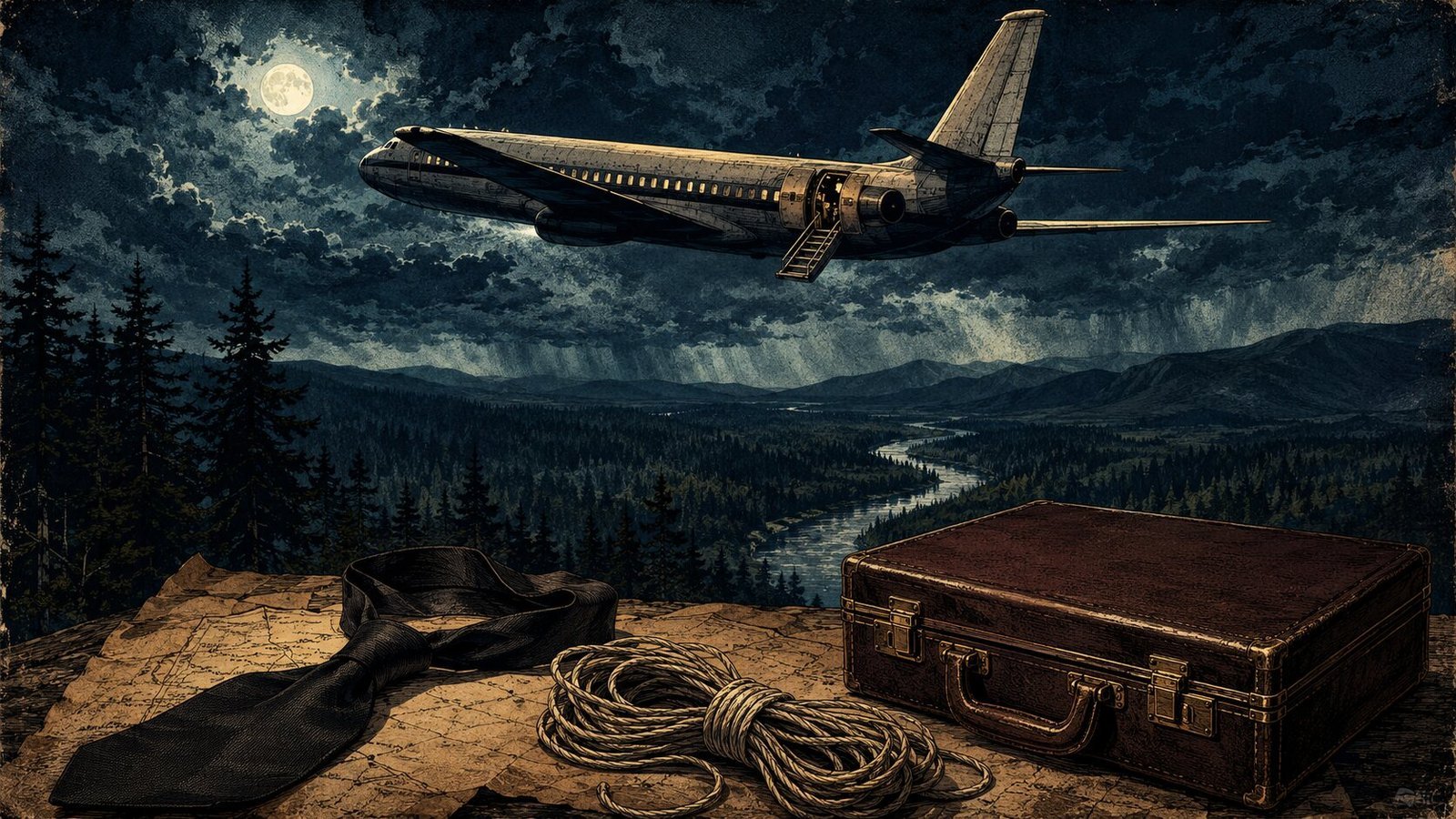
On November 24, 1971, a quiet passenger bought a one-way ticket from Portland to Seattle under the name Dan Cooper. During the short flight he told a flight attendant that he had an explosive device, demanded $200,000 and four parachutes, and released the passengers after the aircraft landed in Seattle. The plane took off again with a small crew. Somewhere between Seattle and Reno, Cooper lowered the rear stair and disappeared into the night. Neither the man nor a conclusive explanation of his fate has ever been found.
A concise timeline
- A ticket bought in Portland
A man identifying himself as Dan Cooper boards Northwest Orient Flight 305 for Seattle.
- Passengers are released
The requested money and parachutes are delivered in Seattle, and the 36 passengers leave safely.
- The rear stair moves
A cockpit warning indicates the aircraft's rear stair has been lowered while the plane flies through poor weather.
- NORJAK expands
The FBI interviews hundreds of people, examines the aircraft and considers more than 800 potential suspects.
- Ransom money is found
A child discovers $5,800 in deteriorating twenty-dollar bills beside the Columbia River; serial numbers match the ransom.
- Resources are redirected
The FBI ends active allocation of case resources while preserving the evidence and accepting specific new physical evidence.
What the official record establishes
The hijacker was described consistently by flight attendants as a middle-aged man in business clothes. A black clip-on tie left on the aircraft became one of the best-known physical exhibits. The flight crew followed his instructions, the passengers were not physically harmed, and the aircraft landed safely in Reno after the jump. The press introduced the initials “D. B.” even though the ticket name was Dan Cooper.
Investigators mapped a probable jump zone, searched difficult terrain and traced the ransom's serial numbers. The weather, darkness, clothing and parachute type made survival uncertain, but uncertainty is not proof that Cooper died. The recovered riverbank money is authentic evidence; its route to that location remains disputed.
The investigation and its limits
The FBI investigation, code-named NORJAK, compared fingerprints, handwriting, witness descriptions, aviation knowledge and criminal histories. Many prominent candidates were eliminated because their appearance, location, records or other facts did not fit. No publicly proposed suspect has been established by a court or conclusively identified by the Bureau.
Modern retellings often begin with a favored suspect and arrange facts around that person. A sounder method starts with the primary evidence and asks what remains testable. The tie, ticket, parachute materials, aircraft records, witness statements and recovered currency have different evidential value; resemblance alone cannot connect a person to the hijacking.
Why the mystery endures
The case combines a contained event with a missing ending. There was a finite passenger list, an identified aircraft and a documented ransom, yet the central figure left almost no verified personal history. The landscape below the flight path and the long delay before the money discovery created room for competing survival, accident and escape theories.
The FBI's 2016 decision was a resource decision, not a declaration that the mystery had been solved. The agency said it would still consider specific physical evidence related to the parachutes or ransom money. That distinction matters: an inactive historical allocation and a closed factual question are not the same thing.
It is proven that the hijacker received the ransom, left the aircraft through the rear stair and was never conclusively identified. Whether he survived, where he landed and which named suspect—if any—was Cooper remain theories.
Follow another evidence trail
Sources and further reading
Last reviewed: August 9, 2026