The Beaumont Children Disappearance
A routine summer outing ended with three siblings missing, a vast search and one of Australia’s longest-running investigations.
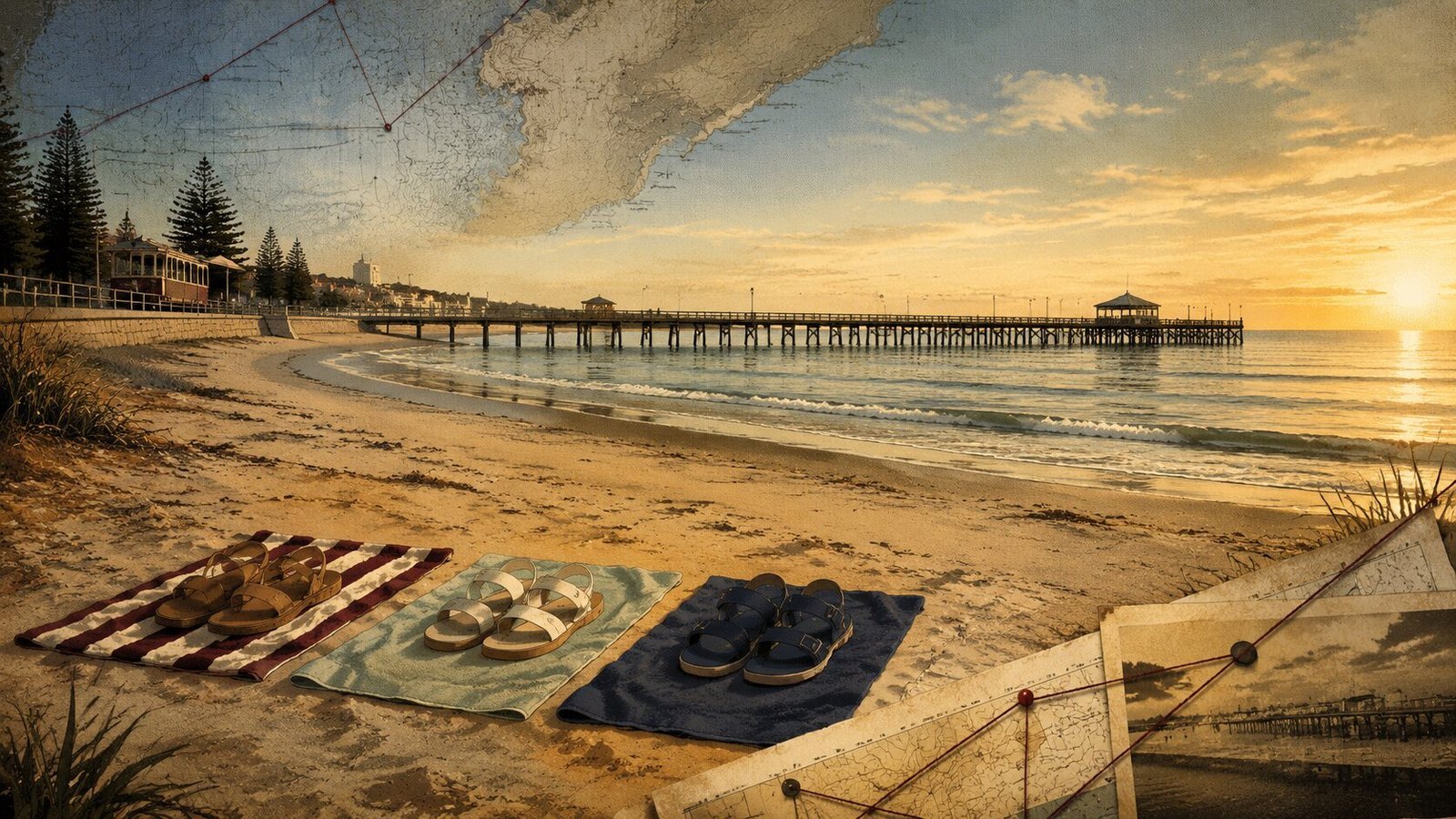
On Australia Day 1966, nine-year-old Jane Beaumont and her younger siblings, seven-year-old Arnna and four-year-old Grant, left their family home in Somerton Park for nearby Glenelg Beach. The excursion was familiar and, by the standards of the period, unremarkable. The children did not return. Despite an enormous police operation, repeated reviews and decades of public attention, no verified explanation has established what happened to them.
A concise timeline
- The siblings leave home
Jane, Arnna and Grant set out from Somerton Park for Glenelg Beach.
- Sightings at Glenelg
Witnesses later recalled the children near the beach, including reports that they were with an unknown man.
- A purchase is reported
A shopkeeper said Jane bought food using a £1 note—more money than the children were believed to have carried.
- Expected return
The children do not arrive home at the planned time.
- Police are notified
The family reports all three missing and a major search begins.
- A private excavation ends
A renewed dig at a former factory property finds no evidence that resolves the case.
- Sixty years missing
The anniversary renews appeals for reliable information and remembrance of the family.
The morning of January 26
The children left at about 10 a.m. and travelled by bus to Glenelg. Their parents expected them home around 2 p.m. When the usual return bus arrived without them, the family initially believed they might have missed it. As the afternoon passed, concern became alarm. Police were contacted that evening and the search quickly expanded across the beach, streets, transport routes and surrounding suburbs.
Witness evidence placed the siblings at Glenelg during the day. Several accounts suggested that they had been seen with a tall, thin-faced, tanned man with fair or light-brown hair. One witness described the children playing with him near the beach. Like many historical investigations, however, the record contains inconsistencies in timing and memory. A witness statement is an investigative lead, not proof of a person’s identity or guilt.
The investigation and its limits
The disappearance changed Australian ideas about childhood independence and public safety. Police, volunteers, military personnel and members of the public took part in early searches. Posters circulated nationally and internationally. A psychic’s widely publicized claims prompted excavation near a warehouse in 1966, but no trace of the children was found. Later searches of the area also failed to produce a conclusive result.
Over the decades, numerous men have been named in books, interviews and media reports. Some were investigated; others were linked through circumstantial claims made long after the event. No person has been charged over the disappearance. Responsible reporting must distinguish a documented police action from a private theory, especially when a named person cannot answer an allegation.
The reported beach companion, the shop purchase and later sightings are important parts of the public record. They do not identify an offender. Claims about a specific suspect remain theories unless supported by corroborated evidence and an official finding.
Renewed searches and current status
Advances in forensic science have led investigators to revisit old information and assess new submissions. Properties connected to historical theories have been searched, including a former Castalloy factory site at North Plympton. A privately funded excavation there in 2025 ended without discovering evidence of the children. South Australia Police has continued to state that the investigation remains open.
The central questions are unchanged: who was the man reportedly seen with the children, where did they go after leaving Glenelg, and is any recoverable physical or documentary evidence still available? The passage of time makes verification difficult, but it also makes careful preservation of records and credible witness information essential.
Follow another evidence trail
Sources and further reading
- Australian Federal Police — International Missing Children’s Day
- ABC News — A timeline of the Beaumont children mystery
- ABC News — 2025 excavation concludes
- ABC News — The sixtieth anniversary
Last reviewed: August 9, 2026