Country archive · Timor-Leste

Timor-Leste true crime: documented cases and unresolved accountability

Direct answer: The Timor-Leste archive currently contains one unresolved case: the killings of five Australian-based television journalists at Balibo on 16 October 1975. A 2007 New South Wales coronial inquest found that the men were deliberately killed to prevent them reporting Indonesian special-forces involvement in the attack on Balibo. The archive classifies the case as unsolved — no individual criminal accountability because the coronial findings were not criminal convictions, a later Australian Federal Police investigation ended without charge, and no criminal proceeding produced a verified conviction in the sources reviewed through 17 October 2026.

1 documented case0 solved cases1 unresolved caseLast reviewed: 17 October 2026
Editorial artwork for the Timor-Leste case archive using the national flag, island coastline, a press card and an evidence file

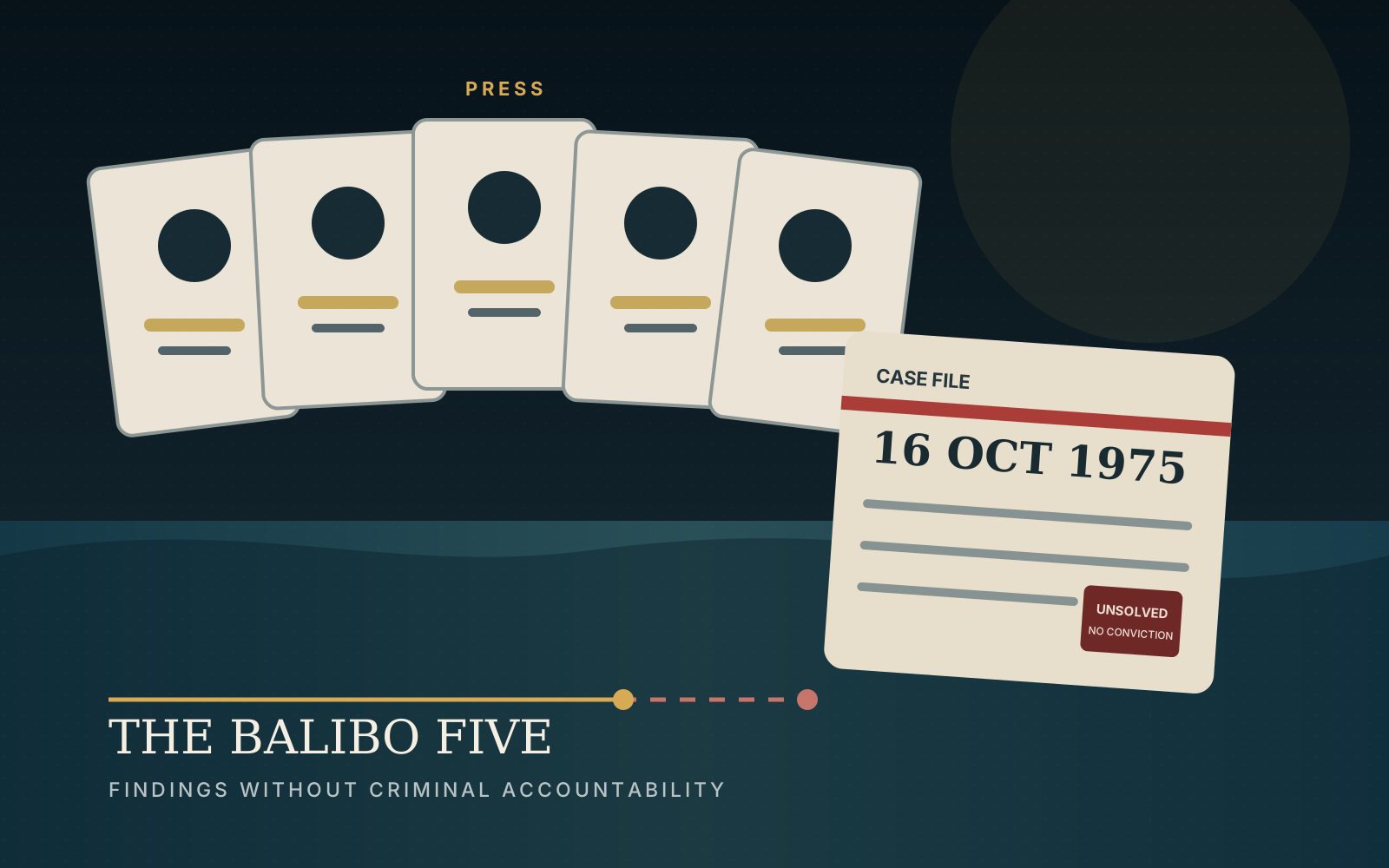
Original editorial illustration; not a depiction of the journalists, soldiers, the attack or a crime scene.

Advertisement

Solved cases

Cases with a verified conviction or equivalent final adjudication establishing individual criminal responsibility.

No Timor-Leste case has yet met this archive’s solved-case standard. Coronial findings can establish manner and cause of death, but they are not criminal convictions.

Unsolved cases

Documented cases in which no verified criminal judgment has established individual responsibility.

How this archive handles evidence

Historical finding, criminal liability and present case status are kept separate.

The case file gives greatest weight to the 2007 findings of the New South Wales Coroners Court, supported by the court’s executive summary. It cross-checks the later procedural record against the Australian Broadcasting Corporation’s publication of the Australian Federal Police statement, Committee to Protect Journalists reporting and official 2025 commemorative records from the Government and Presidency of Timor-Leste.

The coroner found that Brian Peters and the other four journalists were deliberately shot or stabbed, identified people whom the evidence placed in the operation, and referred the matter for possible war-crimes consideration. A coronial inquest determines facts about a death; it does not convict a defendant. The archive therefore does not label the case solved merely because an authoritative fact-finding process rejected the crossfire account.

The page distinguishes the 2007 coronial conclusion from the 2014 decision to end the federal investigation. It attributes disputed propositions, avoids presenting allegations as verdicts and limits its present-status conclusion to the absence of a verified criminal judgment or conviction in the sources reviewed.
Frequently asked questions

Short answers about the archive and its classification.

How many Timor-Leste cases are published?

One fully sourced case file is published.

Why are the Balibo Five killings classified as unsolved?

A 2007 Australian coronial inquest made detailed findings about how and why the journalists died, but no person has been criminally convicted for the five killings.

Who were the Balibo Five?

They were Australian-based television journalists Greg Shackleton, Tony Stewart, Gary Cunningham, Brian Peters and Malcolm Rennie.

Did the journalists die in crossfire?

The 2007 New South Wales coronial inquest rejected that account and found that the five were deliberately shot or stabbed to prevent them reporting Indonesian special-forces involvement in the attack on Balibo.

Did any criminal proceeding produce a conviction?

No criminal judgment or conviction for the five killings was identified in the official and reputable sources reviewed through 17 October 2026.

Will more Timor-Leste cases be added?

Yes, when reliable records support a complete case page and an accurate current-status assessment.

← Return to all country archives