How this archive is classified
The Al-Khatib case is marked solved or adjudicated with a boundary because Anwar Raslan's conviction and life sentence became final after Germany's Federal Court of Justice rejected his appeal. That result establishes his individual responsibility for the crimes defined by the judgment; it is not a declaration that Syria's detention system, command structure or every alleged perpetrator has been fully adjudicated.
Why is this a Syria case?
The criminal conduct examined by the Koblenz court occurred at the General Intelligence Directorate's Branch 251, known as Al-Khatib, in Damascus. Germany supplied the forum through universal jurisdiction, but the people harmed, the detention site and the institutional setting are Syrian.
What is established?
The Higher Regional Court in Koblenz convicted Raslan of crimes against humanity on 13 January 2022 and imposed life imprisonment. The Federal Court of Justice rejected his appeal in a decision dated 20 March 2024, publicly announced on 5 August 2024.
What remains bounded?
The judgment concerns Raslan's responsibility during the period and conduct proved in court. It does not convert allegations against other officials into verdicts, resolve the fate of every detainee, or substitute for the many other accountability processes concerning Syria.
Why does universal jurisdiction matter?
Universal jurisdiction allows national courts to prosecute certain international crimes even when the acts occurred elsewhere and neither the accused nor the victims are citizens of the prosecuting state. In this case, it enabled a German court to hear evidence about crimes committed in Damascus.
Why use non-graphic artwork?
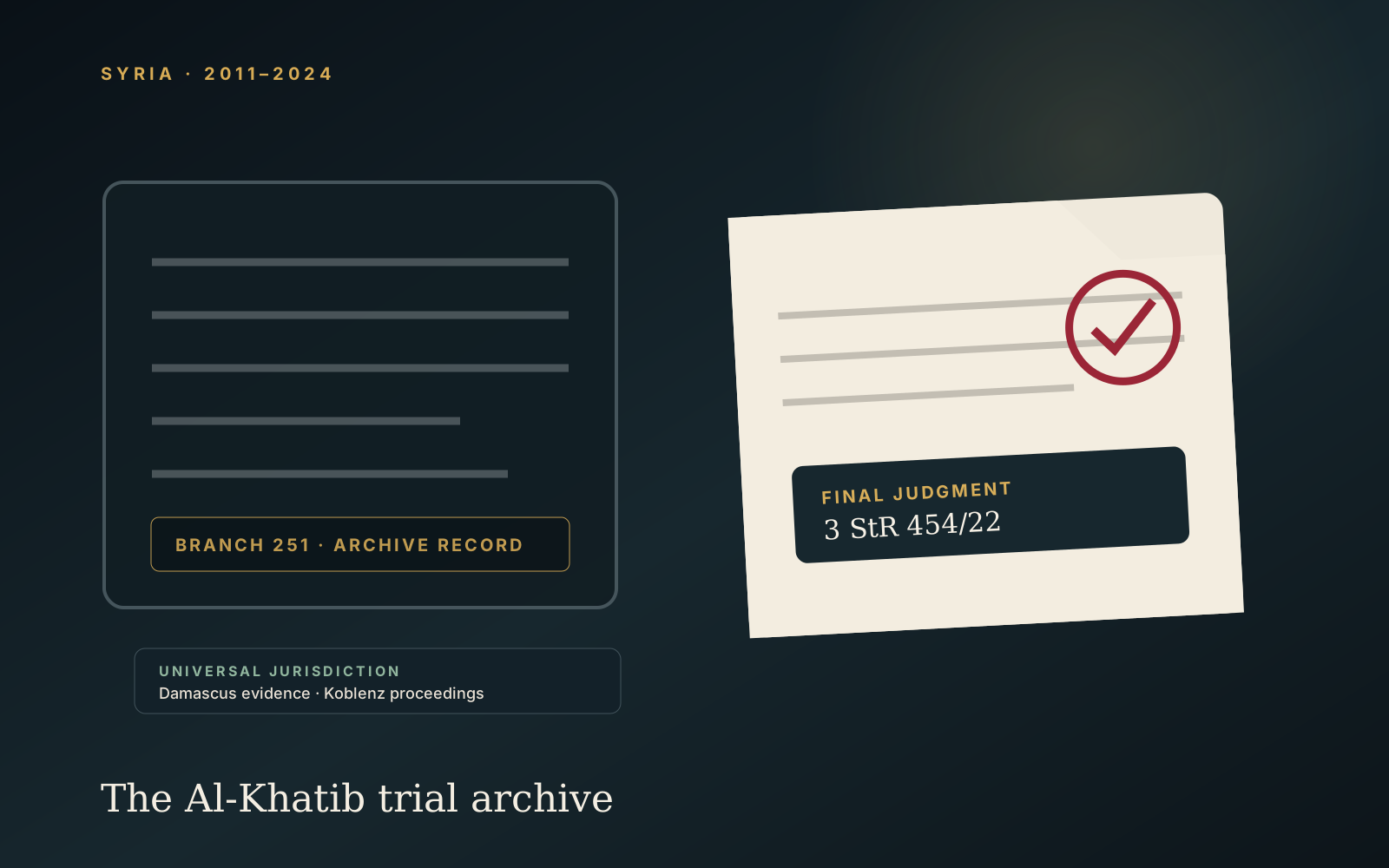
The visual system uses an archive box, court file and architectural lines rather than fabricated detention scenes, portraits or images of abuse. It supports the record without presenting illustration as evidence.
Syria archive FAQ
How many case files are published?
Crime by Region currently publishes two verified Syria case files.
Which cases are included?
The archive includes the Al-Khatib trial and the separately documented Tadamon massacre investigation.
Why was the case heard in Germany?
German law permits prosecution of certain international crimes under universal jurisdiction, even when the conduct occurred abroad.
What sentence did Raslan receive?
The Koblenz court sentenced him to life imprisonment for crimes against humanity.
Is the conviction final?
Yes. The Federal Court of Justice rejected the appeal by a decision of 20 March 2024, announced on 5 August 2024.
Why is the status bounded?
The final judgment establishes Raslan's individual responsibility; it does not claim that every official or abuse connected to Syria's detention system has been adjudicated.
← Return to all country archives