Country case archive · West Africa

Niger True Crime

An evidence-led file examines the 1999 assassination of President Ibrahim Baré Maïnassara, the investigation his family challenged as incomplete, the amnesty that blocked domestic proceedings and the ECOWAS Court judgment recognizing a denial of justice.

1 verified file
0 solved / adjudicated
1 unresolved file
Browse the case ↓
Editorial Niger archive artwork using the national colours, a Sahel horizon, the Niger River and a symbolic legal file

Solved / adjudicated

No Niger case with established individual criminal responsibility has been added to this archive yet.

No solved case is published for Niger yet. A human-rights judgment against the state is not treated as a criminal conviction of any individual.

Unsolved cases

This section contains cases in which criminal responsibility has not been established through a prosecution and final conviction.

How this archive classifies the case

The record separates a regional human-rights judgment against Niger from criminal liability for the assassination.

Why this case?

The ECOWAS Court judgment preserves a detailed procedural record, while Amnesty International documented the early inquiry and amnesty. Niger’s national news agency reported renewed public demands for justice in 2025 and 2026.

Why “unsolved”?

No reliable source reviewed records a criminal prosecution or conviction of the people who carried out or ordered the killing. Compensation and a finding of state responsibility do not solve that criminal question.

Why symbolic artwork?

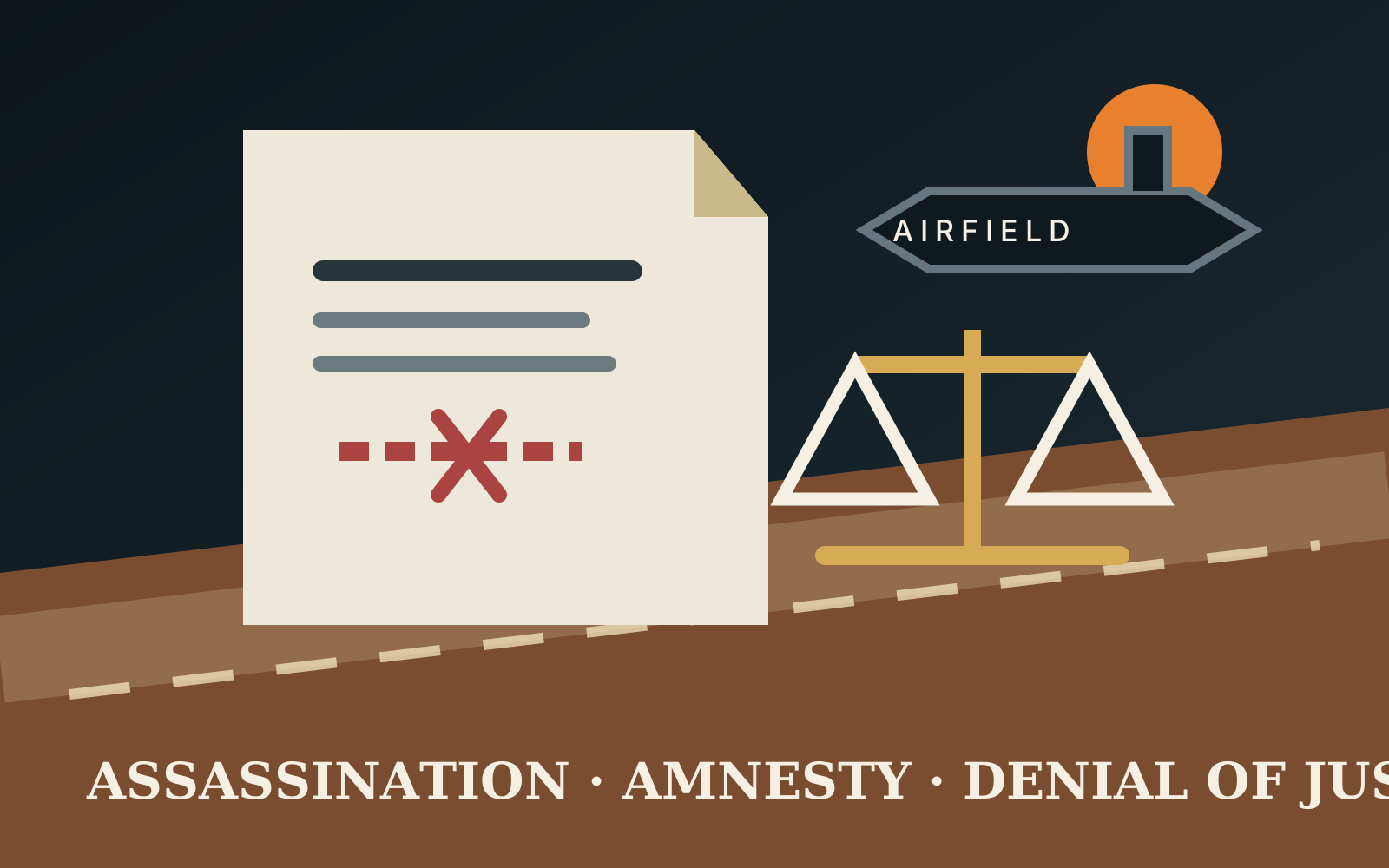
The visuals use an airfield, court file and interrupted path. They do not claim to reproduce the killing, identify a perpetrator or present authentic evidence.

Niger archive FAQ

Direct answers distinguishing the assassination, the amnesty and the ECOWAS human-rights judgment.

When and where was Ibrahim Baré Maïnassara killed?

He was killed by gunfire on 9 April 1999 at the military airfield in Niamey, Niger, as he prepared to travel by helicopter.

Was anyone convicted of the assassination?

No reliable source reviewed for this archive records a criminal prosecution or conviction for the assassination. The case is therefore classified as unsolved.

What did the ECOWAS Court decide in 2015?

The ECOWAS Community Court of Justice held that Niger violated the family’s right of access to justice and Maïnassara’s right to life, and ordered the state to pay 435 million CFA francs in total compensation.

Did the ECOWAS judgment solve the murder?

No. It was a human-rights judgment against the state, not a criminal trial of individual suspects. It did not identify or convict the people who fired the fatal shots or ordered the killing.

Why did the domestic investigation fail to produce a trial?

The family challenged a brief and incomplete inquiry, while courts and prosecutors repeatedly relied on an amnesty connected to the 1999 coup. The ECOWAS Court later found that the resulting denial of access to justice violated the family’s rights.

Why does this archive use symbolic artwork?

There is no need to imitate a victim, suspect or crime scene. The illustration uses an airport runway, legal file and broken investigative trail to explain the record without presenting invented imagery as evidence.
← Return to all country archives