Country case archive · East Asia

Mongolia True Crime

This evidence-led archive opens with the assassination of democratic leader Sanjaasürengiin Zorig. It separates the 1998 killing, disputed convictions, proven torture and the investigation that remains open.

1 verified file
0 solved / adjudicated
1 unresolved file
Browse the case ↓
Editorial Mongolia archive artwork using the national colours, Soyombo-inspired geometry, steppe horizon and a symbolic legal file

Solved / adjudicated

Only cases with reliable, completed adjudication of individual criminal responsibility appear here.

No Mongolia case currently meets this archive’s solved / adjudicated standard. Earlier convictions in the Zorig case do not qualify because the proceedings were undermined by torture findings and the investigation was returned for further work.

Unsolved cases

Open investigations and disputed proceedings remain in this section until reliable adjudication establishes responsibility.

How this archive classifies the case

Procedural history is not simplified into a misleading solved label.

Convictions are not the endpoint

Three people were convicted after closed proceedings, but torture of two defendants was later judicially established and the case was returned for further investigation.

Current status controls

The Inter-Parliamentary Union reported in February 2026 that the investigation remained open and the true assassins or masterminds had not been reliably identified.

Symbolic, not simulated

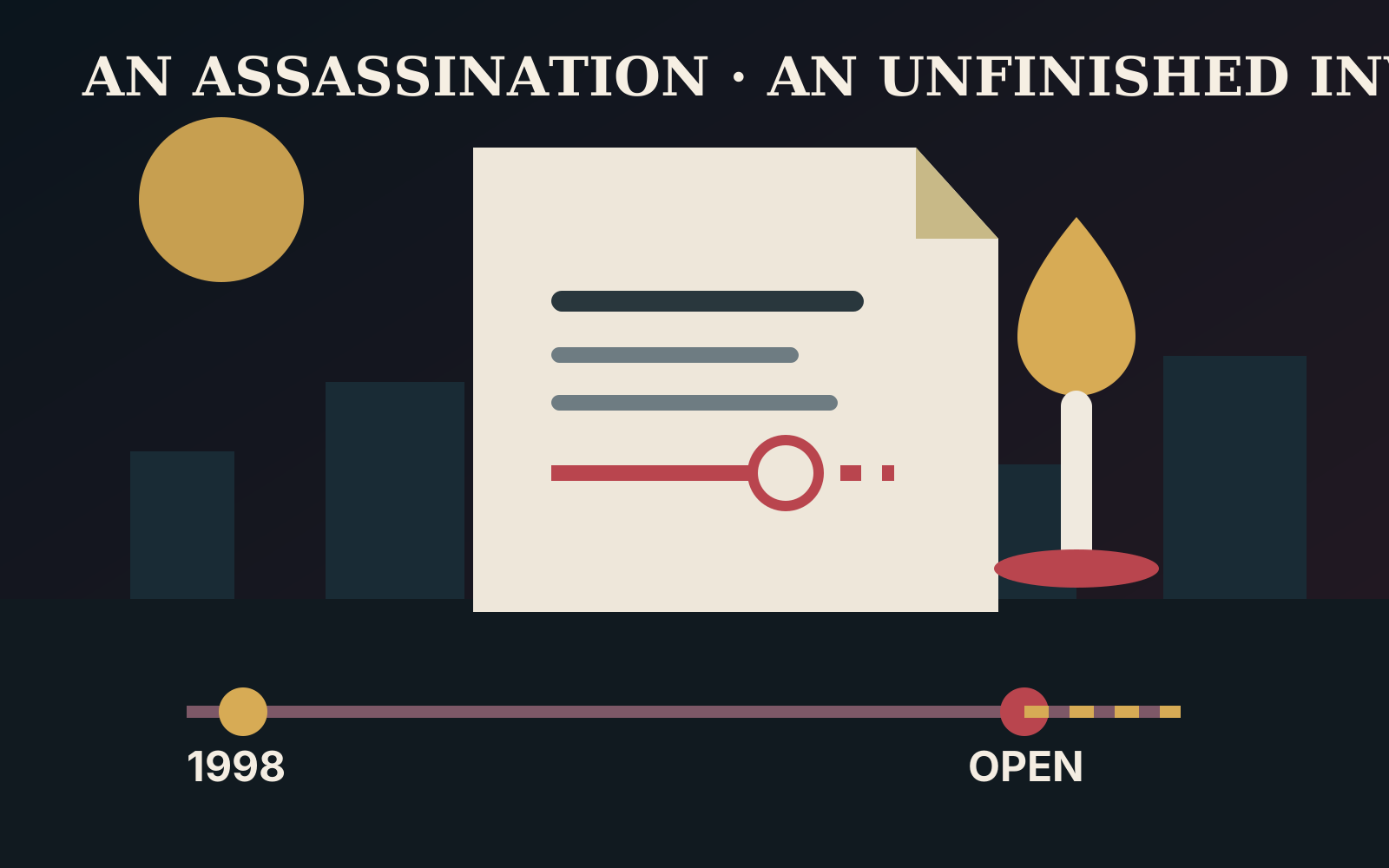
The artwork uses a memorial light, legal file and city outline. It does not invent a likeness, crime scene or piece of evidence.

Mongolia archive FAQ

Direct answers on the victim, convictions and current investigation.

Who was Sanjaasürengiin Zorig?

Zorig was a leader of Mongolia’s democratic movement, a member of the State Great Hural and acting Minister of Infrastructure when he was killed.

When and where was Zorig killed?

He was assassinated in his home in Ulaanbaatar on 2 October 1998.

Were people convicted in the case?

Three people were convicted after closed proceedings in 2016, but the process became associated with proven torture and major due-process concerns. Two were released in 2021, and the murder case was returned for further investigation.

Why is the case classified as unsolved?

The current IPU record says the investigation remains open and the true assassins or masterminds have not been established through a reliable completed process.

Is there a current investigation?

Authorities reported joint intelligence-police and parliamentary working groups. In February 2026, the IPU said it still lacked substantive information about their progress.
← Return to all country archives