Why this first file meets the standard
The case is documented across a Libyan Supreme Court record, a UN treaty body, established rights organizations and current court reporting.
The sources support a substantive account of the event, the delayed family notifications, the failed official inquiry, the 2019 limitation ruling, the 2021 reversal and the resumed Tripoli proceedings. The page does not treat a witness estimate as a forensic total or a prosecution allegation as a finding of guilt.
Future additions will require a distinct search intent, multiple reliable sources and a defensible procedural status. The number of pages is not treated as a measure of crime in Libya.
Libya archive FAQ
Direct answers on scope, status and editorial method.
What happened at Abu Salim Prison in June 1996?
After prisoners protested conditions on 28 June, Libyan security forces killed a large number of detainees on 29 June. Human Rights Watch reported a former prisoner’s estimate of around 1,200 deaths but could not independently verify his full account; the exact toll remains unresolved.
Why is the Abu Salim case classified as unsolved?
Libya has prosecuted dozens of defendants, but the proceedings have not produced a final criminal judgment establishing individual responsibility. Families also continue to seek a complete victim accounting and the location of remains.
Was anyone convicted for the Abu Salim killings?
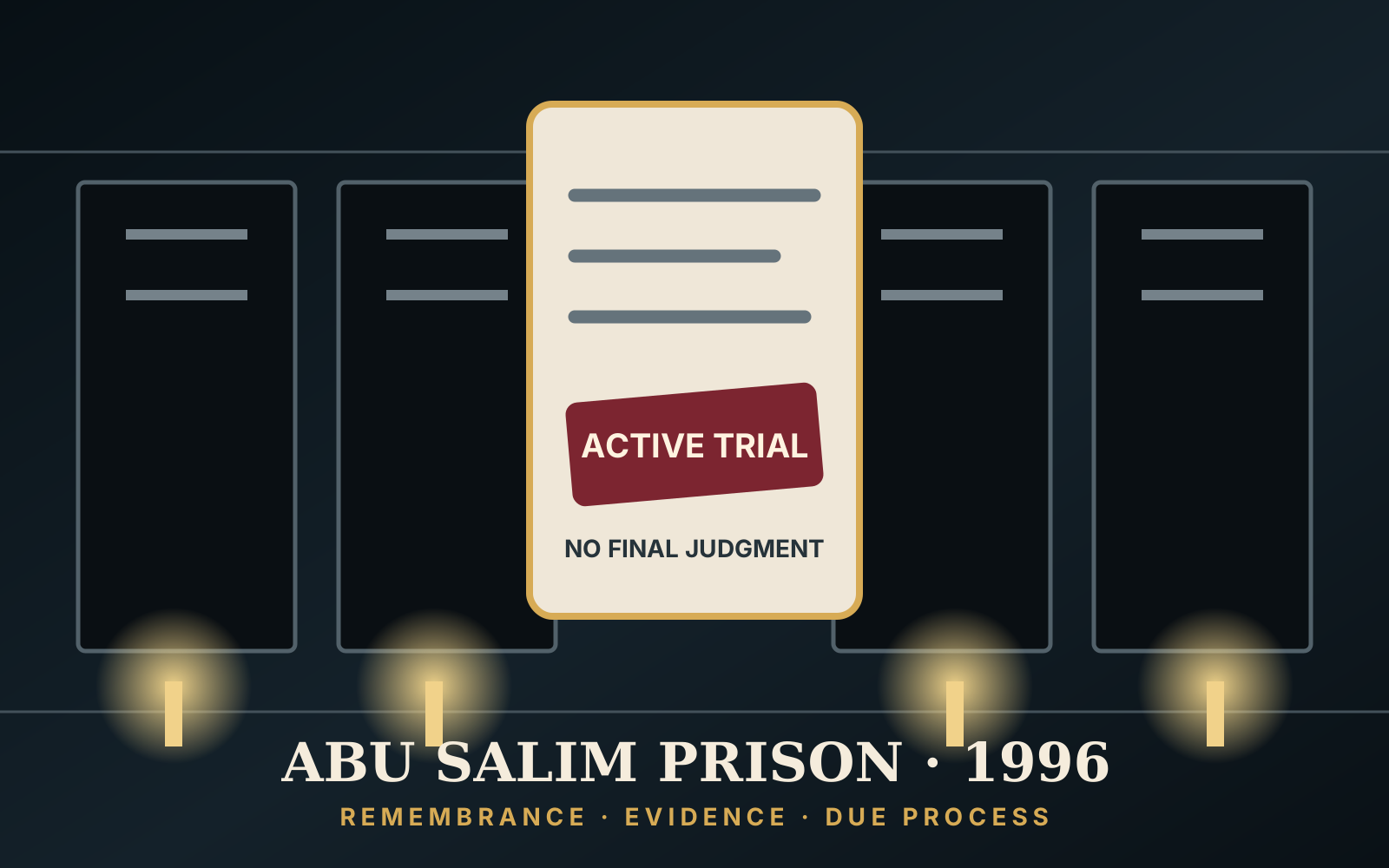
No final conviction for the 1996 killings was located as of 11 October 2026. A 2019 ruling treated the prosecution as time-barred, but Libya’s Supreme Court quashed that ruling in 2021 and returned the case for a new hearing.
What did Libya’s Supreme Court decide in 2021?
The Supreme Court held that the lower court had erred in applying limitation rules, quashed the judgment in full and remanded the case to a different criminal panel of the Tripoli Court of Appeal. It did not convict the defendants.
How many people were killed?
The exact number is not independently settled. Libyan groups and later rights reporting commonly cited about 1,200 or 1,269 victims. This page uses 'around 1,200' only with attribution and does not claim a verified final count.
What is the current status of the trial?
The latest reliable proceeding located was the seventeenth hearing on 15 June 2026, when the Tripoli Court of Appeal adjourned the case to 19 July 2026 and continued the detention of defendants already in custody. No final judgment was located by 11 October 2026.