Country archive · Guinea

Guinea true crime: documented cases and court outcomes

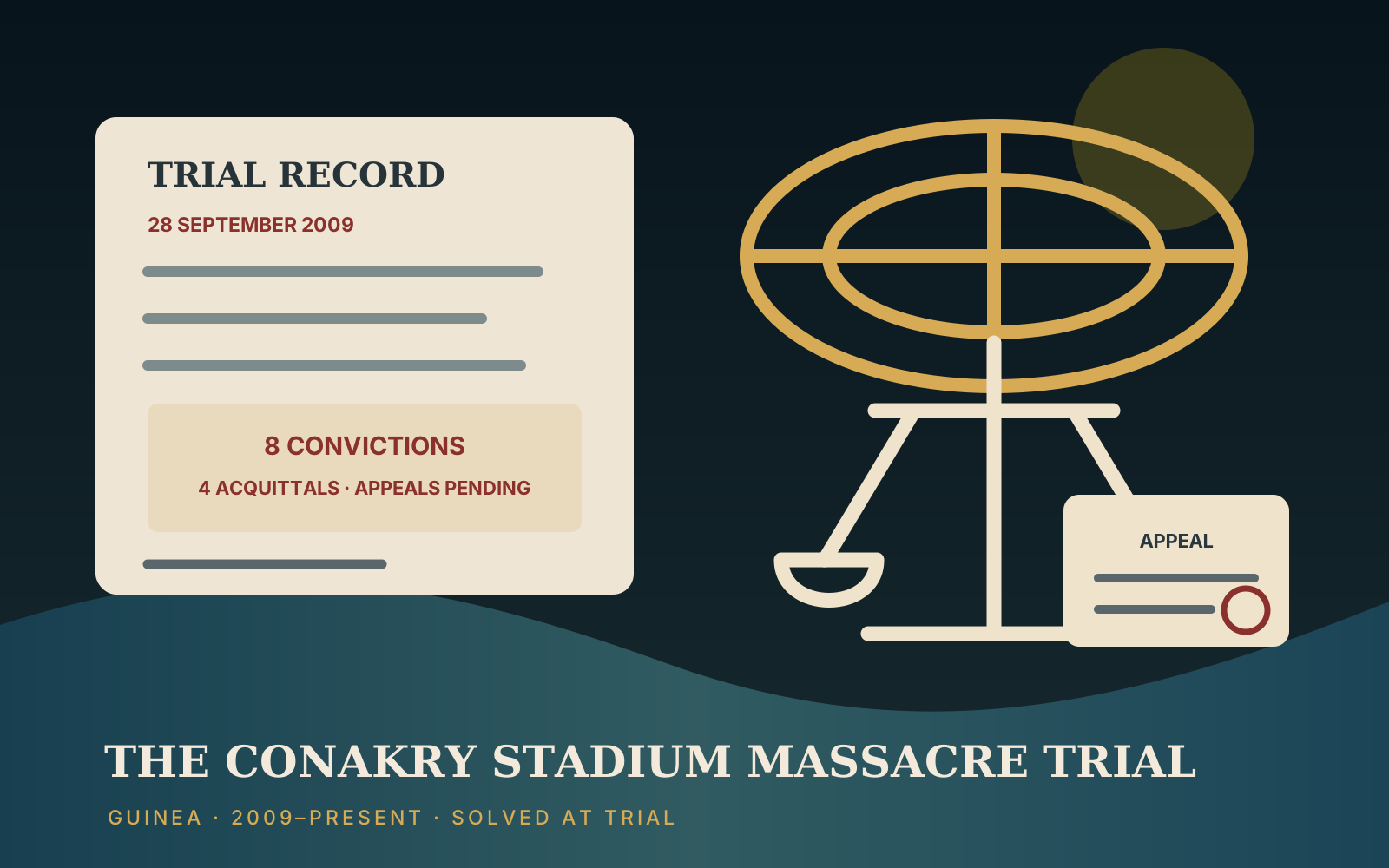
Direct answer: The Guinea archive currently contains one case with trial convictions: the prosecution arising from the 28 September 2009 attack on an opposition rally at a stadium in Conakry. On 31 July 2024, a Guinean court convicted former junta leader Moussa Dadis Camara and seven other defendants of crimes against humanity; four defendants were acquitted. The case is classified as solved at trial, with accountability incomplete because appeals remained pending, Camara was pardoned and released on 28 March 2025, and victim reparations and broader accountability remained contested.

1 documented case1 solved-at-trial case0 unresolved case filesLast reviewed: 17 October 2026
Editorial artwork for the Guinea case archive using the national flag, the Conakry peninsula, a stadium outline and a court file

Original editorial illustration; not a depiction of victims, defendants, the rally or a crime scene.

Advertisement

Solved cases

Cases with a verified trial judgment establishing individual criminal responsibility. Pending appeals, pardons and incomplete reparations are stated rather than concealed.

Unsolved cases

Documented cases in which no verified judgment has established individual criminal responsibility.

No unresolved Guinea case has yet met this archive’s full sourcing and editorial standards. This section will expand only when reliable records support a substantive page and a current status assessment.

How this archive handles evidence

The underlying attack, trial findings, appeals, pardon and reparations are kept distinct.

The stadium case relies on Human Rights Watch’s 2009 field investigation, the 2024 verdict as reported by Reuters and civil-society trial monitors, and 2025 assessments from Human Rights Watch, FIDH and Amnesty International. Those records corroborate the rally, the conduct attributed to security forces, the eight convictions and the post-verdict developments.

The file is placed in the solved section because a national court entered convictions after a nearly two-year trial. The label is deliberately qualified: most appeals had not been heard by July 2025, the former junta leader was pardoned while litigation continued, and organizations representing victims said compensation and full accountability were still unresolved.

The page does not equate a pardon with an acquittal, erase the four acquittals, or treat allegations against people who were not convicted as judicial findings. Descriptions of killings and sexual violence are limited to what is needed to understand the crimes and the judgment.

Frequently asked questions

Short answers about the archive and its classification.

How many Guinea cases are published?

One fully sourced case file is published.

Why is the stadium case in the solved section?

A Guinean court convicted eight defendants of crimes against humanity on 31 July 2024. The archive qualifies the label as “solved at trial” because appeals and reparations remained incomplete.

How many defendants were convicted?

Eight defendants, including former junta leader Moussa Dadis Camara, were convicted. Four others were acquitted.

Did the presidential pardon erase Camara’s conviction?

No. Human-rights organizations emphasized that the 28 March 2025 pardon did not absolve criminal responsibility or end the obligation to provide reparations. The appeal status is reported separately.

Are all accountability questions settled?

No. Appeals stalled after the verdict, some alleged perpetrators were not part of the judgment, and victim groups continued to raise concerns about compensation and enforcement.

Will unresolved Guinea cases be added?

Yes, but only when reliable sources can support a complete page and an accurate unresolved-status classification.

← Return to all country archives