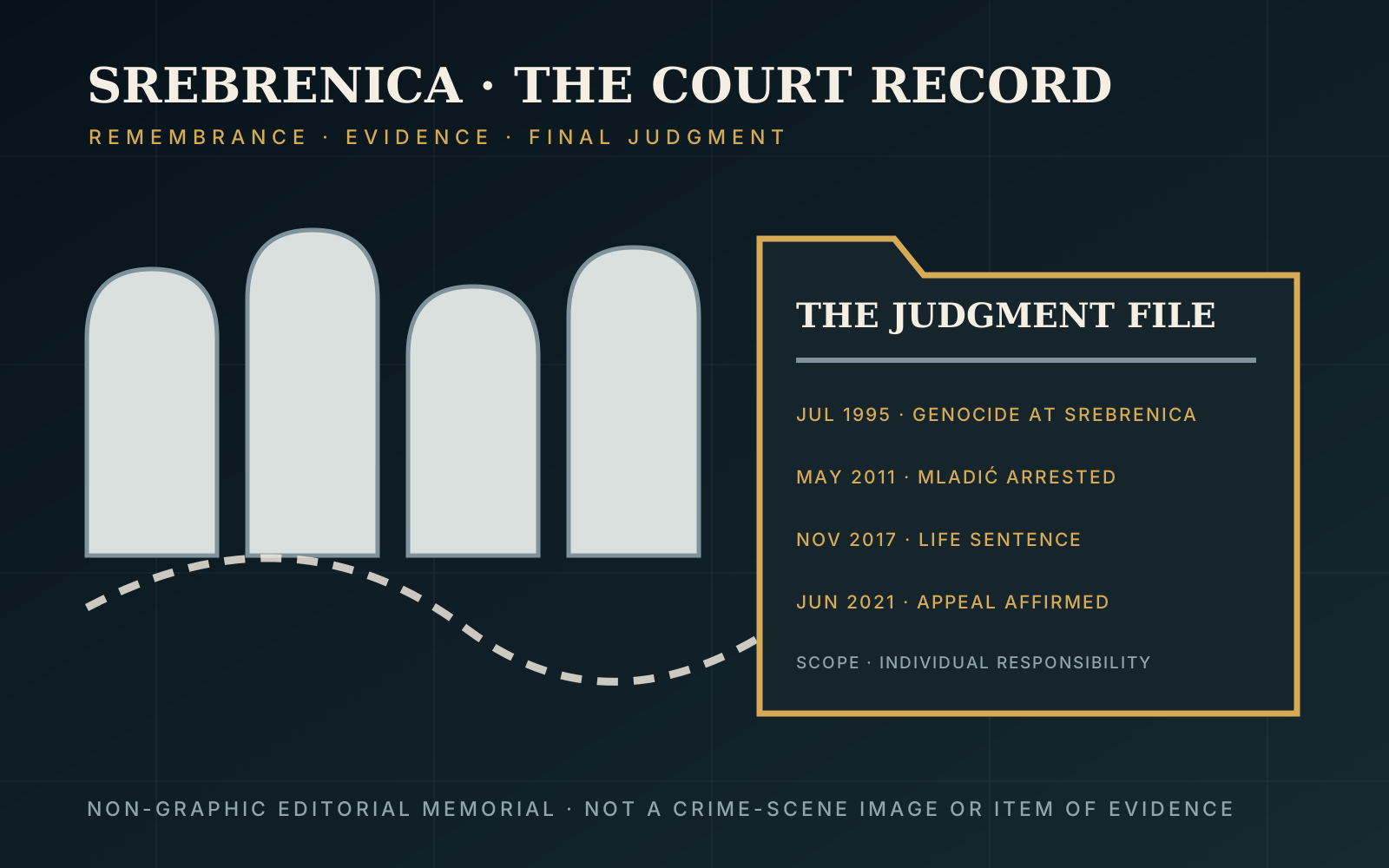
Case-status note: “Solved / adjudicated” refers only to Ratko Mladić's individual criminal responsibility established by the ICTY and affirmed by the UN Mechanism. It does not mean that one judgment accounts for every participant, every killing, every missing person or every related case. Criminal guilt is individual, not collective.
What happened at Srebrenica in July 1995?
Srebrenica was an eastern Bosnian enclave that the United Nations Security Council had declared a safe area in 1993. The ICTY record states that Bosnian Serb forces attacked the enclave beginning on July 6, 1995 and entered the town on July 11. Tens of thousands of Bosnian Muslim civilians moved toward the UN compound at Potočari, while many able-bodied men attempted to reach Bosnian-government territory on foot.
The trial record describes a coordinated separation, detention and killing operation. From July 12 to 14, forces organized the transfer of about 25,000 people—mostly women, children and elderly civilians—out of the enclave. Men and boys were separated from their families; others were captured from the column moving through the woods. Thousands were transported to detention and execution sites and systematically killed, principally between July 12 and 17.
How many people were killed?
Different reliable summaries answer slightly different questions. The ICTY's Srebrenica record states that the Krstić appeal established the execution of more than 7,000 Bosnian Muslim men and boys and that evidence across trials supported approximately 7,000 killings. Later memorial records and contemporary reporting commonly refer to more than 8,000 victims. This page does not manufacture a single exact number by blending those records.
The difference is not a dispute over whether genocide occurred. The ICTY states that Srebrenica was proved beyond reasonable doubt to be genocide. It reflects the distinction between facts established within particular trials, later identification work and broader commemorative counts.
What did the tribunal record establish?
The 2017 trial was built on an unusually large public record. The chamber sat for 530 trial days, heard evidence from 592 witnesses in total, admitted 9,914 exhibits and took judicial notice of roughly 2,000 previously adjudicated facts. Those numbers matter because the judgment was not based on a single testimony, photograph or intercepted order.
The chamber found that Bosnian Serb forces implemented an operation to murder thousands of Bosnian Muslims from Srebrenica, while senior members later attempted to conceal the crimes by moving remains from primary mass graves to more remote locations. It found that the physical perpetrators intended to destroy the Bosnian Muslims of Srebrenica as a substantial part of the protected group.
Who was Ratko Mladić?
Mladić became commander of the Main Staff of the Army of the Serbian Republic of Bosnia and Herzegovina, commonly called the VRS, on May 12, 1992. He remained in that command until at least November 1996. The first indictment against him was filed in July 1995. He was arrested in Serbia on May 26, 2011, transferred to the ICTY five days later and went on trial in May 2012.
The case was not limited to Srebrenica. The indictment and judgment also addressed the campaign of sniping and shelling against civilians in Sarajevo, forcible removal and crimes in municipalities, and the taking of UN personnel hostage. This page centers Srebrenica because that is the genocide conviction, while preserving the larger scope of the judgment.
The 2017 trial judgment
On November 22, 2017, the ICTY Trial Chamber convicted Mladić of genocide in the area of Srebrenica; persecution, extermination, murder, deportation and forcible transfer as crimes against humanity; and murder, terror, unlawful attacks on civilians and hostage-taking as violations of the laws or customs of war. It imposed life imprisonment.
The chamber did not convict him on every allegation. It acquitted him of genocide under Count 1 concerning crimes in several municipalities outside the Srebrenica count. That boundary is legally significant: saying “convicted of genocide” is accurate only when the location and count are not blurred.
The final 2021 appeal judgment
Both sides appealed. On June 8, 2021, the Appeals Chamber of the International Residual Mechanism for Criminal Tribunals rejected Mladić's challenges to the Srebrenica, Sarajevo, overarching and hostage-taking components, with identified dissents on parts of the ruling. It affirmed the convictions under Counts 2 through 11 and the life sentence.
The Appeals Chamber also dismissed the prosecution's appeal and left in place the acquittal on Count 1. The Mechanism lists the case as completed. That finality—not a suspicion, charge or arrest—is the basis for the adjudicated label used here.
What changed when Mladić died in 2026?
Mladić remained in United Nations custody after the appeal. The Associated Press reported that he died in a prison hospital in The Hague on August 27, 2026, aged 84. His death ended the service of his sentence but did not vacate the convictions or alter the completed appellate judgment.
The timing is included because it is part of the current procedural record. It should not displace the victims, survivor testimony or continuing work of identification and remembrance.
What exactly is resolved?
- Established crime: international tribunal judgments found that genocide was committed at Srebrenica in July 1995.
- Adjudicated defendant: Ratko Mladić was convicted of genocide at Srebrenica and other crimes in 2017.
- Final result: the Appeals Chamber affirmed the convictions and life sentence on June 8, 2021.
- Important limit: the separate Count 1 genocide acquittal concerning several municipalities remained in place.
- Not claimed: that this one judgment prosecuted every perpetrator or resolves the full historical and human record.
A victim-aware record
The tribunal's Srebrenica archive preserves more than 1,000 related witness testimonies across cases. Those accounts include survivors who lost spouses, children, parents and siblings, and people who described detention, expulsion and the search for missing relatives. The purpose of citing evidence here is accountability, not spectacle.
The accompanying illustration therefore uses abstract memorial forms, a map-like line and a court timeline. It does not depict a killing, imitate forensic evidence or invent the likeness of any victim or defendant.
Frequently asked questions
What happened at Srebrenica in July 1995?
After Bosnian Serb forces took the UN-declared safe area, thousands of Bosnian Muslim men and boys were systematically killed and about 25,000 women, children and elderly people were forcibly transferred.
What was Ratko Mladić convicted of?
He was convicted of genocide at Srebrenica, crimes against humanity, and violations of the laws or customs of war, including murder, terror, unlawful attacks on civilians and hostage-taking.
When did the judgment become final?
The Mechanism Appeals Chamber affirmed the convictions and life sentence on June 8, 2021.
Was Mladić convicted on every genocide count?
No. The Srebrenica genocide conviction was affirmed, while the acquittal on a separate genocide count concerning several municipalities remained in place.
Why is the case marked solved or adjudicated?
The label refers only to the completed tribunal case and Mladić's individual criminal responsibility. It does not claim that every perpetrator or related crime was adjudicated in this proceeding.
What happened to Mladić after the appeal?
He remained in United Nations custody serving the life sentence and died in a prison hospital in The Hague on August 27, 2026.