The Son of Sam Case
A citywide investigation, witness information and a parking record led police to David Berkowitz after a year of attacks and intimidating letters.
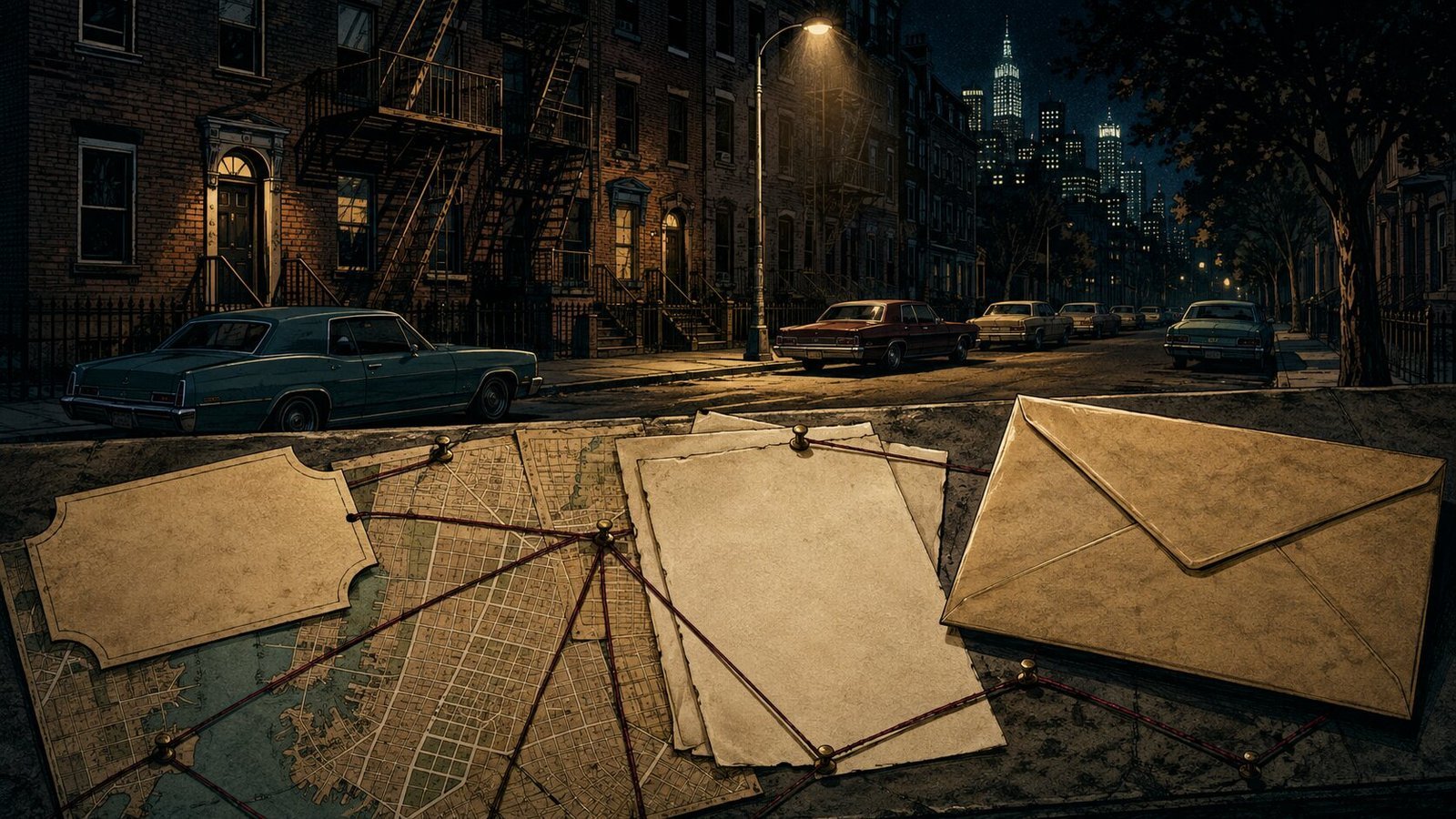
Between July 1976 and July 1977, a series of attacks in New York City killed six people and wounded seven. The offender sent letters to police and a newspaper columnist, encouraging an atmosphere of fear and spectacle. Investigators eventually traced a parking summons issued near the final attack to David Berkowitz of Yonkers. He was arrested on August 10, 1977, pleaded guilty to six murders in 1978 and received six sentences of 25 years to life.
A concise timeline
- The first fatal attack
Donna Lauria is killed and Jody Valenti is wounded in the Bronx.
- Attacks continue
Young people and couples are attacked across several New York boroughs.
- Letters shape the public story
Messages left for police and sent to columnist Jimmy Breslin popularize the name “Son of Sam.”
- A final attack and a local clue
A witness recalls nearby police activity; investigators review parking summonses issued in the area.
- Berkowitz is arrested
Police locate his car and arrest him outside his Yonkers apartment.
- Guilty pleas and sentences
Berkowitz pleads guilty to six murders and receives six consecutive terms of 25 years to life.
- Parole is denied again
A New York parole panel denies release at his twelfth appearance.
A case larger than its nickname
The offender's chosen label became one of the most recognizable names in American crime history. That fame can obscure the people attacked: Donna Lauria, Christine Freund, Virginia Voskerichian, Valentina Suriani, Alexander Esau and Stacy Moskowitz were killed; several others survived with lasting injuries.
Contemporary coverage amplified fear through repeated publication of threats, composite sketches and rumors. A responsible account does not reproduce the letters as entertainment. Their evidential importance lies in handwriting, language, delivery and the way they influenced investigative resources and public behavior.
How the investigation found Berkowitz
The case crossed borough boundaries and generated a large task force. Ballistic findings connected attacks, while witness descriptions varied. After the final shooting, investigators learned that vehicles had received parking summonses nearby. One record led to Berkowitz's car in Yonkers, where additional inquiries connected him to suspicious local incidents.
The parking record was not magical proof by itself. It narrowed attention to a vehicle and owner, which police then evaluated with other information. This is a useful investigative lesson: an ordinary administrative record can become important when it is placed in a verified time-and-location framework.
Conviction, claims and continuing sentence
Berkowitz was found competent, pleaded guilty and was sentenced in 1978. His early story about receiving supernatural commands was later described by him as a fabrication. Whatever its publicity value, that claim did not replace the court record of responsibility.
He first became eligible for parole in 2002 and has repeatedly been denied release. In 2024 a board again concluded that release was not appropriate. Parole review does not revisit guilt; it considers the legal sentence, conduct, risk, remorse and public safety under state law.
David Berkowitz pleaded guilty to six murders and remains imprisoned. Later alternative-accomplice theories have not displaced those convictions or produced a different court finding.
Follow another evidence trail
Sources and further reading
- Associated Press — 2024 parole decision
- New York State Archives — Son of Sam law history
- New York Courts — proceeds-of-crime law history
Last reviewed: August 9, 2026