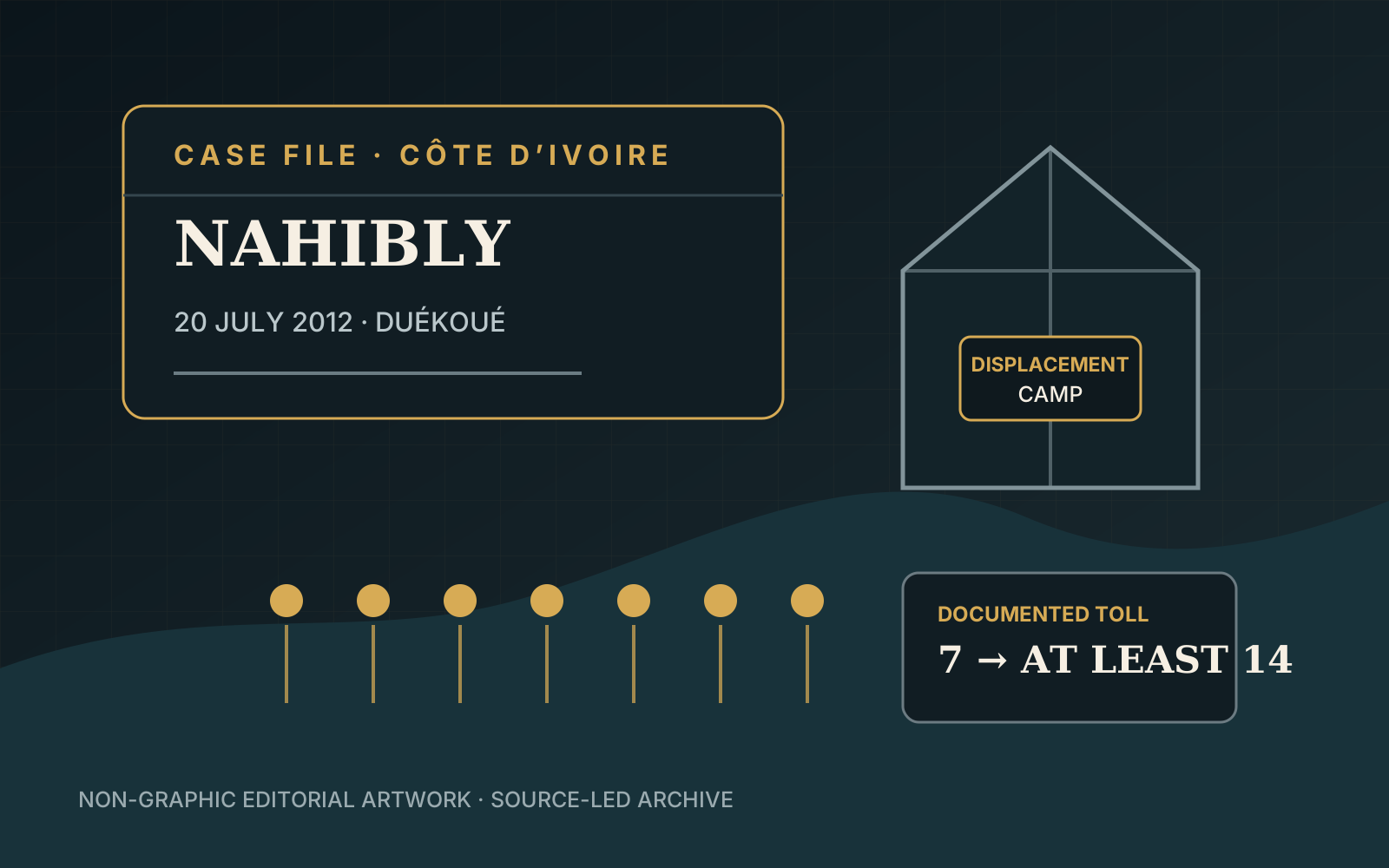
A camp for people already displaced
Nahibly housed people displaced by Côte d’Ivoire’s post-election conflict and continuing insecurity in the west. Before the attack, the International Organization for Migration said it had completed registration of nearly 3,000 internally displaced people at the UNHCR-managed site.
The camp was therefore a civilian humanitarian setting, not a military position. Its residents had already been uprooted, and the destruction of the site forced survivors to flee again.
The immediate trigger
UNHCR field reporting linked the assault to the overnight murder of a family in Duékoué’s Kokoma district on July 19–20. A group presenting itself as traditional hunters said it was pursuing suspects; UN personnel initially turned that group away.
That reported sequence explains the stated pretext for entering the camp. It does not establish that camp residents as a group were responsible for the earlier killings, nor does it justify collective retaliation.
July 20, 2012
Later that morning, a larger armed crowd reached the camp. IOM reported that armed groups ransacked Nahibly, killed seven people, looted property and set buildings on fire. Residents scattered into Duékoué and surrounding areas.
The seven-death figure was an early confirmed count. It should not be treated as a final total: access, displacement and disappearances complicated the accounting.
Why the death toll differs
One year later, Amnesty International estimated that at least 14 people had been summarily killed during the attack and said the exact figure was unknown. It also reported that a number of people disappeared.
This archive preserves both figures with their source and date. Seven describes the early humanitarian count; “at least 14” reflects Amnesty’s later investigation. They are not combined or presented as competing certainties.
Investigation and evidence
Amnesty’s anniversary review described exhumations and investigations but concluded that justice had not been delivered. Its title—“It looks like nothing ever happened here”—captured the organization’s criticism of the accountability response, not a judicial finding about a named defendant.
No reliable final judgment establishing an individual perpetrator’s criminal responsibility for the Nahibly attack was located in the sources reviewed for this dossier. Allegations concerning hunters, civilians, security personnel or peacekeepers therefore remain carefully separated from proven convictions.
A separate Duékoué crime file
Nahibly must not be merged with the Carrefour killings of March 2011. Both occurred in the Duékoué area and both involved mass violence, but they were distinct events separated by nearly sixteen months: the earlier massacre occurred during the post-election crisis, while Nahibly was an assault on a displacement camp in July 2012.
The archive maintains separate pages because the dates, immediate circumstances, victim groups, investigations and accountability records are materially different.
Current status
The file is classified as unresolved. The attack is well documented by international humanitarian organizations, but the precise death toll remains open and no final individual conviction was found.
A future judgment, official investigation report or verified identification of missing residents could change that status. Until then, the strongest defensible conclusion is that a documented camp attack caused multiple unlawful deaths and renewed displacement without complete accountability.
Questions that remain
- What is the final verified list of people killed or still missing after the attack?
- Which individuals planned, led and carried out the assault?
- What actions did security forces and international personnel take before and during the breach?
- Did any later national proceedings produce charge-specific findings or reparations?
Frequently asked questions
How many people died?
IOM reported seven deaths soon after the attack. Amnesty International later estimated that at least 14 people were summarily killed and said the exact number was unknown.
How many people lived in the camp?
IOM reported registering nearly 3,000 internally displaced people at the UNHCR-managed camp before the attack. That registration figure is used instead of a larger unsourced estimate.
Was this the same event as the 2011 Duékoué massacre?
No. The Carrefour killings occurred in March 2011; the Nahibly camp attack occurred on July 20, 2012.
Why is the case unresolved?
No final individual conviction for the Nahibly attack was located, and the exact number of people killed or missing remains uncertain.