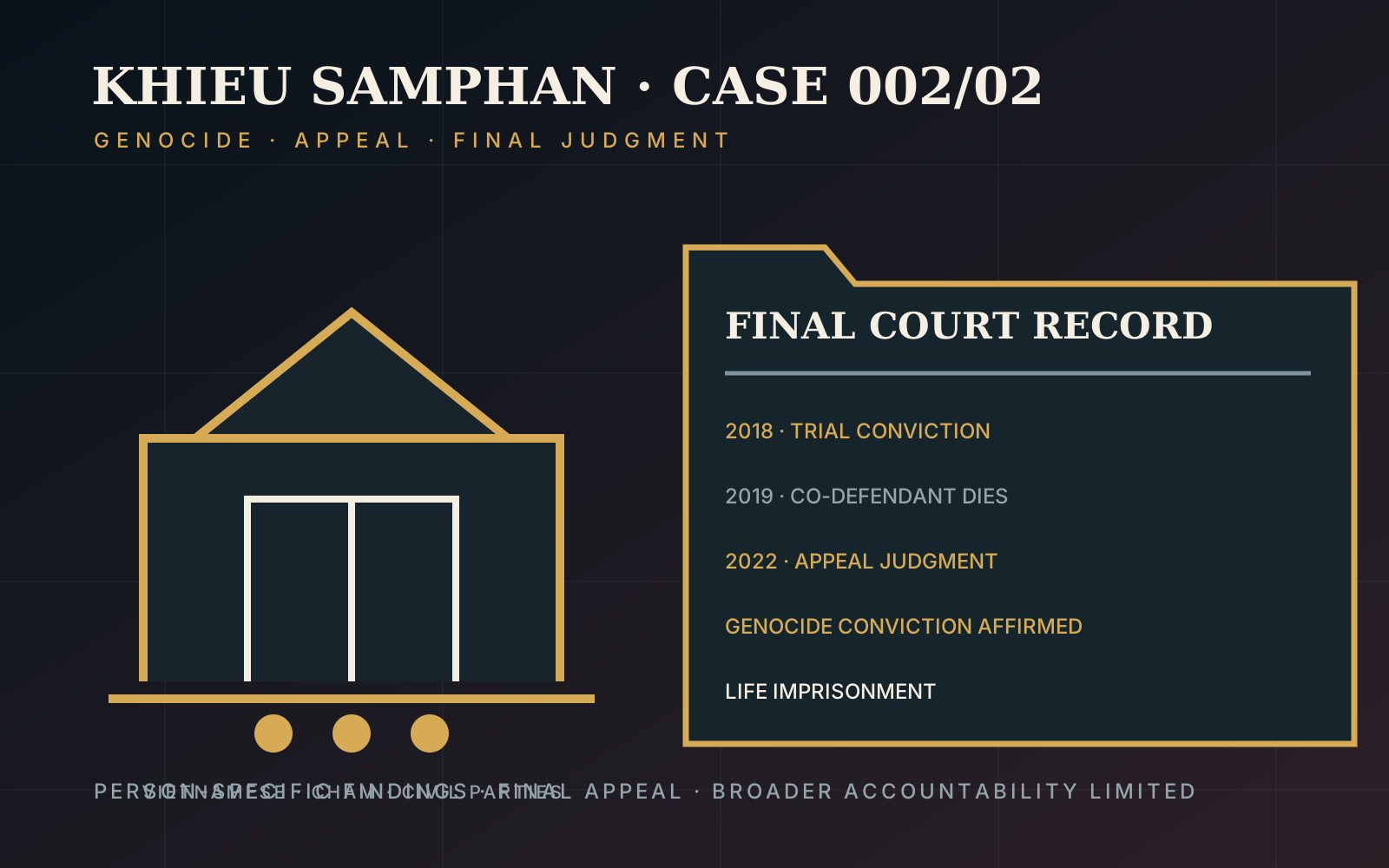
Case-status note: “Adjudicated” applies to Khieu Samphan and the convictions sustained in his appeal. It does not convert every death under Democratic Kampuchea into a genocide conviction, erase counts modified on appeal, or treat the terminated proceedings against deceased co-defendant Nuon Chea as a final appeal judgment.
What was Case 002/02?
The Extraordinary Chambers in the Courts of Cambodia, or ECCC, was a Cambodian court with international participation created to try senior leaders and those most responsible for crimes committed under Democratic Kampuchea. Case 002 was divided into separate trials because of its scale. The first addressed forced population movements and related crimes. Case 002/02 examined additional crime sites and policies, including security centers, worksites and cooperatives, forced marriage, religious persecution, and the treatment of Cham and Vietnamese communities.
Khieu Samphan had served as president of the State Presidium, making him the public head of state of Democratic Kampuchea. He denied that his position gave him effective responsibility for the regime's crimes. The judges assessed his conduct within the Communist Party leadership, his public support for policies, and the evidence connecting the leadership to criminal operations.
Victims and legally distinct findings
The Khmer Rouge regime caused mass death through executions, forced labor, starvation, persecution, detention and other abuses. Yet the legal term genocide in Case 002/02 applied to protected groups and specific intent proved for particular conduct; it was not a blanket label for every victim.
The Trial Chamber convicted Khieu Samphan of genocide through killings of members of the Vietnamese ethnic, national and racial group. It did not convict him of genocide against the Cham. The appeal judgment nevertheless maintained crimes-against-humanity findings concerning religious persecution of the Cham, as well as racial persecution of Vietnamese people and other criminal policies.
The 2018 trial judgment
On November 16, 2018, the Trial Chamber pronounced judgment against Khieu Samphan and Nuon Chea. The proceeding had included 274 hearing days, testimony from 114 witnesses, 63 civil parties and eight experts, and evidence concerning eight crime sites and several national policies. Both defendants received life imprisonment.
For Khieu Samphan, the convictions included genocide against the Vietnamese, crimes against humanity and grave breaches of the Geneva Conventions. His life sentence in Case 002/02 was merged with the life term imposed in Case 002/01. The separate stages matter: a trial judgment can be appealed, and only the result after appeal supports the archive's “final” label.
Nuon Chea's death during appeal
Nuon Chea, the other defendant in Case 002/02, died on August 4, 2019, while appellate proceedings were pending. The Supreme Court Chamber terminated further proceedings against him. This page therefore does not present his trial verdict as though it completed the same appellate path as Khieu Samphan's.
Khieu Samphan continued his appeal. His lawyers challenged the reasoning, evidence and scope of responsibility. During the 2021 appeal hearings he again denied involvement in genocide and crimes against humanity. Those denials were arguments before the court, not findings.
The final 2022 appeal judgment
On September 22, 2022, the Supreme Court Chamber delivered the final appeal judgment. It affirmed Khieu Samphan's conviction for genocide through killings of Vietnamese people and confirmed his life sentence. It also affirmed numerous crimes-against-humanity and grave-breach findings, while modifying or reversing parts of the trial judgment where the evidence or legal reasoning did not meet the appellate standard.
The official disposition is the controlling record. The final result was not merely that an elderly former leader lost an appeal; it was a reasoned judgment preserving a person-specific conviction and sentence after review. The appeal completed proceedings in Case 002.
Sentence and custody
Khieu Samphan's life sentence runs concurrently with the life sentence from Case 002/01. In January 2023, he was transferred from the ECCC detention facility to Kandal provincial prison to continue serving the sentence. Transfer to a national prison did not alter the conviction.
The ECCC's active trials ended with the 2022 judgment, but the court's residual work includes preserving archives, supporting victims and disseminating the record. Only three senior Khmer Rouge figures received convictions from the tribunal: Duch, Nuon Chea and Khieu Samphan. The limited number does not diminish the individual findings, but it explains why accountability is often described as selective and incomplete.
Why this is not a duplicate of the S-21 case
The archive already contains a page on Kaing Guek Eav, known as Duch, who directed the S-21 security center and was tried in Case 001. Case 002/02 concerned different defendants and a much wider body of alleged senior-leadership responsibility, multiple crime sites and nationwide policies. S-21 evidence formed part of the later case, but the prosecutions, defendants, judgments and scopes are legally distinct.
Verified timeline
- April 1975–January 1979: the Khmer Rouge governs Democratic Kampuchea.
- September 2007: the ECCC opens Case 002 against senior leaders.
- November 16, 2018: the Trial Chamber convicts Khieu Samphan and Nuon Chea in Case 002/02 and imposes life terms.
- August 4, 2019: Nuon Chea dies while his appeal is pending; proceedings against him are terminated.
- August 2021: Khieu Samphan's appeal hearings conclude.
- September 22, 2022: the Supreme Court Chamber affirms Khieu Samphan's genocide conviction and life sentence.
- January 30, 2023: Khieu Samphan is transferred to Kandal provincial prison to serve the sentence.
Frequently asked questions
What was Khieu Samphan convicted of?
Genocide against the Vietnamese, crimes against humanity and grave breaches of the Geneva Conventions.
Was he convicted of genocide against the Cham?
No. His genocide conviction concerned killings of Vietnamese people. Separate crimes-against-humanity findings addressed persecution of the Cham.
When did the conviction become final?
September 22, 2022, when the Supreme Court Chamber pronounced the appeal judgment.
What happened to Nuon Chea?
He died in August 2019 while his appeal was pending, and the appellate proceedings against him were terminated.
Is this the Duch case?
No. Duch was tried in Case 001 for directing S-21. Case 002/02 involved different defendants and broader crimes and policies.