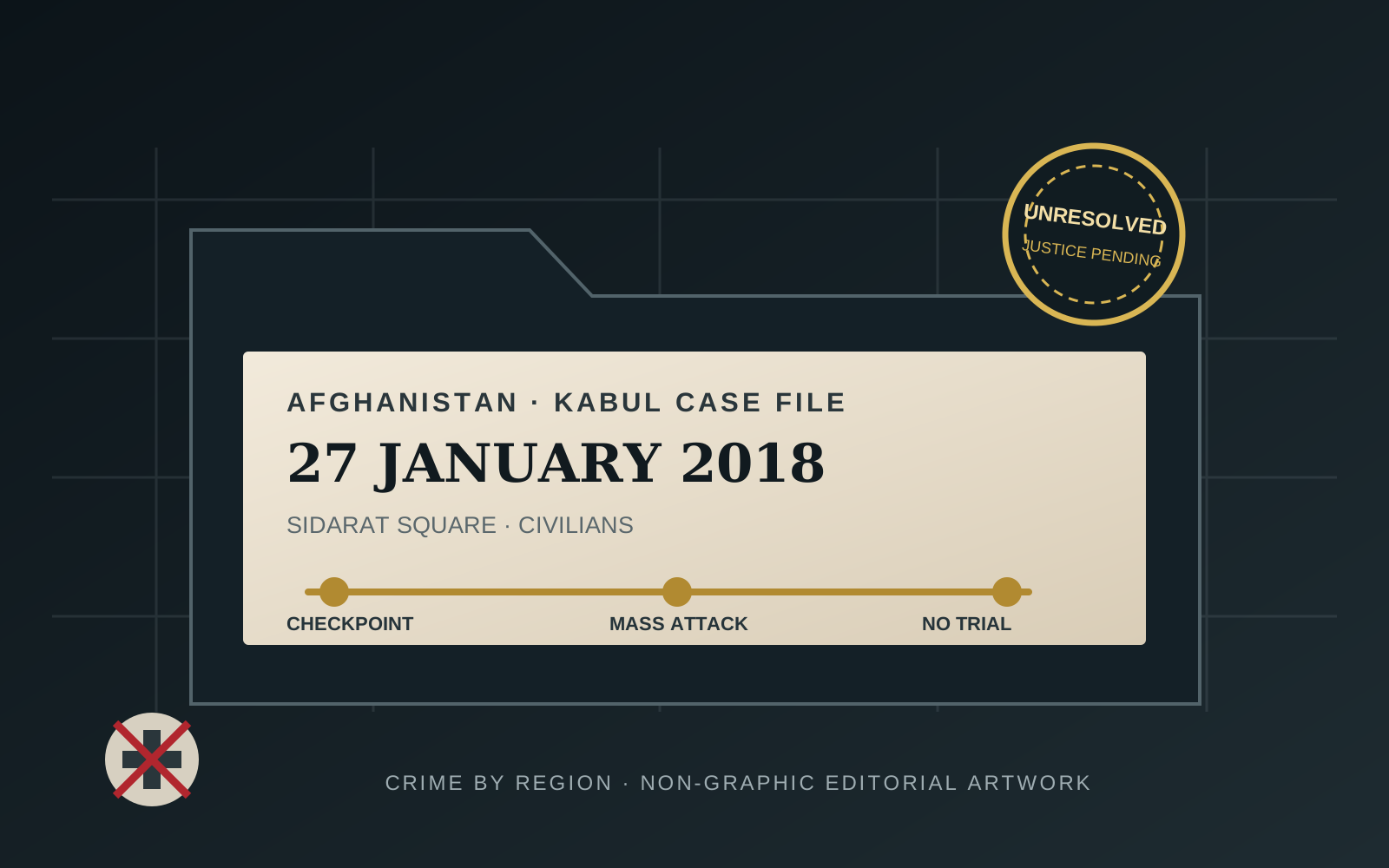
Case-status note: “Unsolved / partial” separates the Taliban's public claim from a court-tested case against individual planners. The suicide driver died at the scene. No later prosecution or judgment assigning responsibility to additional named people was located.
A week of attacks
Kabul entered the final weekend of January 2018 after a series of attacks had already intensified civilian fear. One week earlier, gunmen attacked the Intercontinental Hotel. On January 24, an assault targeted the Save the Children office in Jalalabad. The ambulance bombing then struck the center of the capital on January 27.
The area around Sidarat Square contained government offices, businesses, a hospital and routes used by large numbers of civilians. Security checkpoints were intended to restrict hostile vehicles, but the appearance and protected purpose of an ambulance created a way to exploit those controls.
The vehicle and the checkpoints
Investigative reporting and United Nations accounts described a vehicle packed with explosives and marked as an ambulance. The driver reportedly passed an initial checkpoint by presenting the vehicle as carrying a patient. Security personnel stopped it near a second checkpoint, where the explosives were detonated.
The blast affected people moving through an ordinary urban space: workers, patients, relatives, shopkeepers and passersby. It damaged nearby buildings and overwhelmed medical services. This archive does not reproduce graphic images or descriptions. The scale is established by the verified casualty record and the testimony of survivors.
The use of medical markings was more than concealment. It abused the protected and trusted function of emergency transport. The International Committee of the Red Cross publicly condemned the misuse of an ambulance, and the United Nations condemned the indiscriminate attack on civilians.
Two casualty counts, both attributed
Afghan authorities initially revised the toll several times. On January 28, officials announced 103 people killed and 235 injured. Those figures became the most frequently repeated immediate count.
UNAMA later applied its own civilian-casualty verification methodology and recorded 114 civilians killed and 229 injured. The difference is not necessarily evidence that one source was careless. Immediate hospital and government totals and later mission verification can use different records, inclusion rules and standards of confirmation.
This file uses the UNAMA total when describing its verified civilian record and retains the Afghan government's 103/235 announcement as the contemporaneous official count. It does not merge the figures or choose whichever number appears more dramatic.
Taliban responsibility claim
The Taliban claimed responsibility and presented government security institutions as the target. The large concentration of civilians in the affected area and the predictable effect of an explosives-laden vehicle made the civilian harm central to international condemnation.
An organizational claim is important evidence of attribution, especially when it contains operational details. It is still not the same thing as a judgment proving which commanders selected the target, who prepared the vehicle, who facilitated access or who knew the precise plan. Those individual questions were not answered in a public criminal case located for this review.
Officials also made allegations about cross-border support. Those claims are not treated here as established facts because no court judgment tested them in connection with this attack.
What the public record establishes
The immediate mechanism, date, location and Taliban claim are well documented. The driver was killed in the explosion, eliminating the possibility of interrogating or trying the direct attacker. Security authorities announced investigations and shared accusations about the network behind recent attacks.
What the reviewed public record does not provide is a completed evidentiary chain from the vehicle to named planners followed by arrest, trial and judgment. Intelligence assertions, diplomatic allegations and organizational statements can guide investigation; they cannot be substituted for adjudicated individual responsibility.
Victims and the absence of justice
Human Rights Watch revisited the bombing on its fifth anniversary in January 2023 and reported that survivors and victims' families still lacked justice. The organization placed the attack within a wider pattern in which grave crimes against Afghan civilians produced little meaningful accountability.
The political transformation of Afghanistan in August 2021 further altered the prospects for a domestic investigation. The organization that claimed the bombing became the de facto authority. That change in power did not resolve the case, compensate victims or create a transparent judicial account of the planning chain.
No reliable later prosecution or conviction was located in the review completed September 12, 2026. The status remains unsolved or partial despite the widely accepted organizational attribution.
Why this attack remains distinct
The Kabul ambulance bombing is not interchangeable with other attacks in the same week or with later attacks in the capital. It involved a separate date, location, method and victim group. Its use of emergency-medical cover also raised a specific threat to humanitarian trust: when an ambulance is weaponized, real patients and health workers may face greater suspicion at checkpoints.
Keeping the case distinct does not fragment one event for quantity. It prevents the casualties and evidence from being blended with the Intercontinental Hotel attack, the Jalalabad Save the Children assault or other Kabul bombings that had different operational records.
Questions still unanswered
The public record leaves unresolved who assembled the vehicle, how the attacker obtained medical markings, whether others conducted surveillance, which commanders approved the operation and whether any living participant was ever detained. It also leaves victims without a transparent forum in which the evidence and competing allegations could be tested.
Frequently asked questions
When and where did the bombing happen?
On January 27, 2018, near Sidarat Square in central Kabul.
How did the vehicle pass security?
Reports said the driver used a vehicle marked as an ambulance and claimed to be carrying a patient at the first checkpoint before being stopped near a second.
How many civilians were killed?
Afghan officials announced 103 deaths and 235 injuries; UNAMA later verified 114 civilians killed and 229 injured. Both counts are attributed here.
Who claimed responsibility?
The Taliban claimed responsibility. That organizational claim is separated from criminal responsibility for unnamed individual planners.
Was anyone prosecuted?
No prosecution or conviction for planning the attack was located in the source review completed September 12, 2026.