What is established?
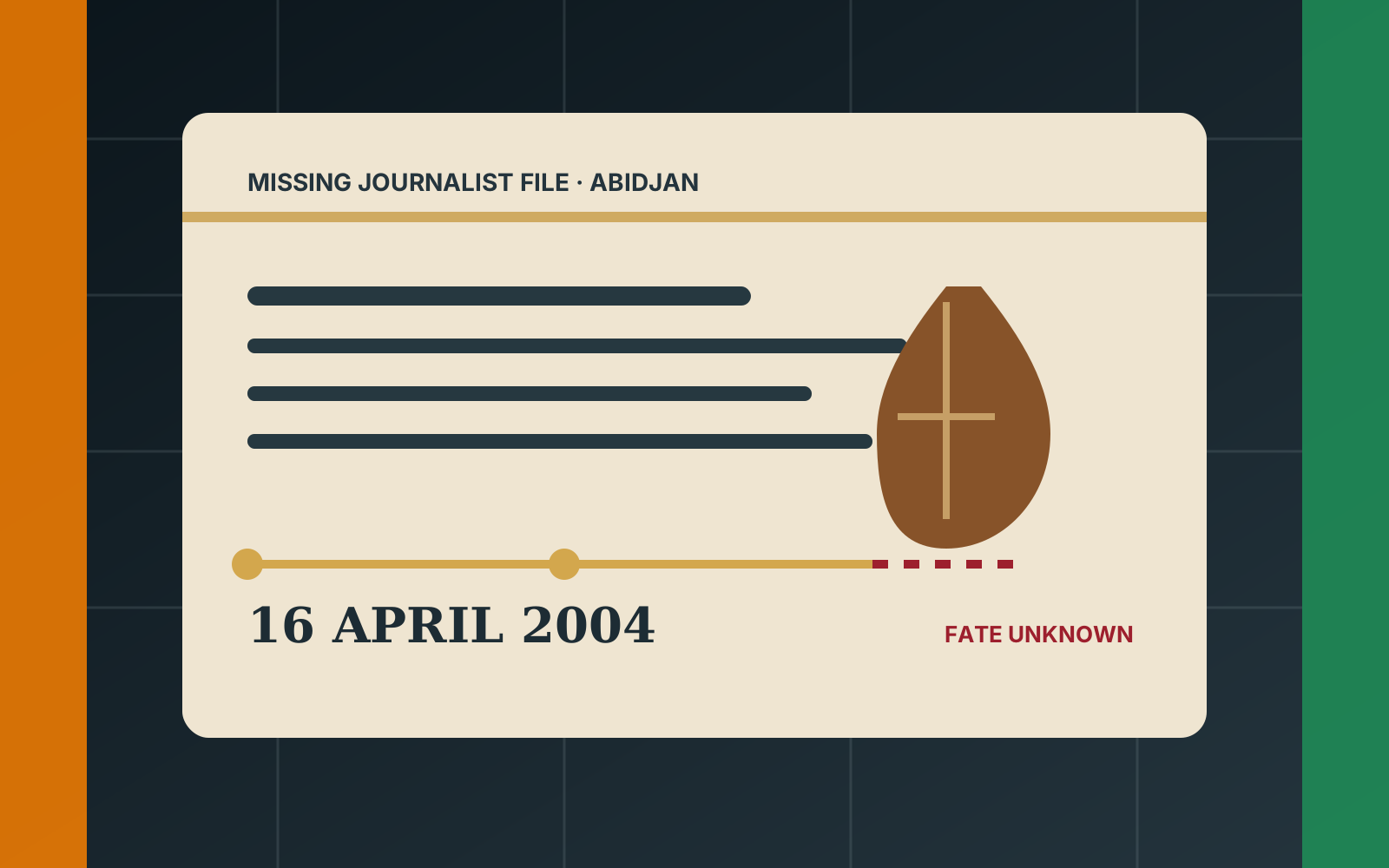
Kieffer was last seen on April 16, 2004 after going to a shopping-centre parking lot in Abidjan for a meeting. His car also disappeared, his mobile line was cut and he made no further contact. He held French and Canadian citizenship and specialized in economic affairs, natural resources and the cocoa trade.
CPJ and RSF documented that Kieffer had been examining politically sensitive allegations involving cocoa profits, economic networks and corruption. A French investigation opened after his family filed a kidnapping complaint. Ivorian proceedings also examined people connected with the last known meeting, but the inquiries did not produce a final conviction.
The journalist and his reporting
Kieffer had worked for the French financial newspaper La Tribune before reporting and consulting in West Africa. He contributed to French and Ivorian publications and was known for detailed work on commodity networks and the cocoa industry.
At the time, Côte d’Ivoire was divided by conflict, and cocoa revenue sat at the intersection of politics, business and armed power. That context made his reporting consequential, but it does not prove a single motive or identify the people responsible for his disappearance.
The last confirmed movements
RSF recorded that Kieffer was last seen at about 1 p.m. in an Abidjan shopping centre. Later investigative reporting identified the planned meeting as one with businessman Michel Legré, who was related by marriage to then-first lady Simone Gbagbo.
Legré became a central witness and suspect in the early inquiry. He was detained in Côte d’Ivoire, questioned by a French judge and later provisionally released. His statements named several people, but those accusations were disputed and never became final criminal findings.
French and Ivorian investigations
Kieffer’s family filed a complaint in France twelve days after the disappearance, and RSF joined the case as a civil party. French judges sought testimony and cooperation in Côte d’Ivoire. CPJ reported arrests and questioning, including the 2006 detention in France of former Ivorian army officer Jean-Tony Oulaï.
Years of requests, hearings and political promises followed. RSF repeatedly described the investigation as stalled and criticized the lack of responses to formal requests from French judges. The death of key witness Michel Legré in 2016 further narrowed possible avenues.
Unconfirmed remains and unresolved fate
Investigators examined remains found in western Côte d’Ivoire in 2012, but the sources reviewed do not establish that they were conclusively identified as Kieffer’s. The archive therefore does not state that his body was recovered.
Later RSF country assessments continued to describe the disappearance as unresolved. No reliable final judgment located for this page establishes the abductors, the place of detention, the cause of death or the person who ordered the crime.
Questions still without answers
Who arranged the parking-lot meeting as an abduction? Where was Kieffer taken? Was he killed, and if so when and where? Which part of his reporting, business activity or political contacts prompted the crime? The public record contains theories and accusations, but not a final adjudicated account.
Verified timeline
- April 16, 2004
Kieffer arrives for a meeting at an Abidjan shopping centre and disappears. - April 28, 2004
His family files a kidnapping complaint in France. - 2004–2005
French and Ivorian investigators question and detain people connected with the last known meeting; no final prosecution resolves the case. - January 2006
French authorities detain former Ivorian officer Jean-Tony Oulaï for questioning. - 2012
Human remains found in western Côte d’Ivoire are examined, without a conclusive public identification as Kieffer. - 2015–2017
RSF reports that formal French requests for Ivorian cooperation remain unanswered and that the investigation is stalled. - 2019–2021
Press-freedom monitors continue to list the disappearance as unresolved.
Sources and verification notes
Contemporaneous reporting establishes the disappearance. Later CPJ and RSF records document the investigative history and continuing absence of a final outcome.
- Reporters Without Borders — Initial disappearance alertApril 21, 2004 · last known location, missing vehicle, reporting background and early status.
- Committee to Protect Journalists — DisappearedMay 2005 · detailed reporting on Kieffer’s work, cocoa investigation and early inquiry.
- RSF — Investigation must be reactivatedApril 11, 2019 · abduction location, planned meeting and continuing investigative failure.
- CPJ database — Guy-André Kieffer missingCurrent case classification · victim and unresolved status.
Frequently asked questions
When did Kieffer disappear?
On April 16, 2004, after arriving for a meeting in Abidjan.
What was he investigating?
Corruption and questionable practices in the cocoa economy and other political-business networks.
Was his body found?
No remains have been conclusively identified as his.
Was anyone convicted?
No final conviction for his abduction or presumed killing was located.
Why is the case classified as unsolved?
His fate and the identities and responsibility of the perpetrators remain unestablished by a final judgment.
Does the page accuse political figures?
No. It attributes documented allegations and does not convert them into proven responsibility.