The Great Train Robbery
A Royal Mail train robbery became a landmark forensic investigation, with hideout fingerprints helping turn a celebrated legend into a record of convictions and harm.
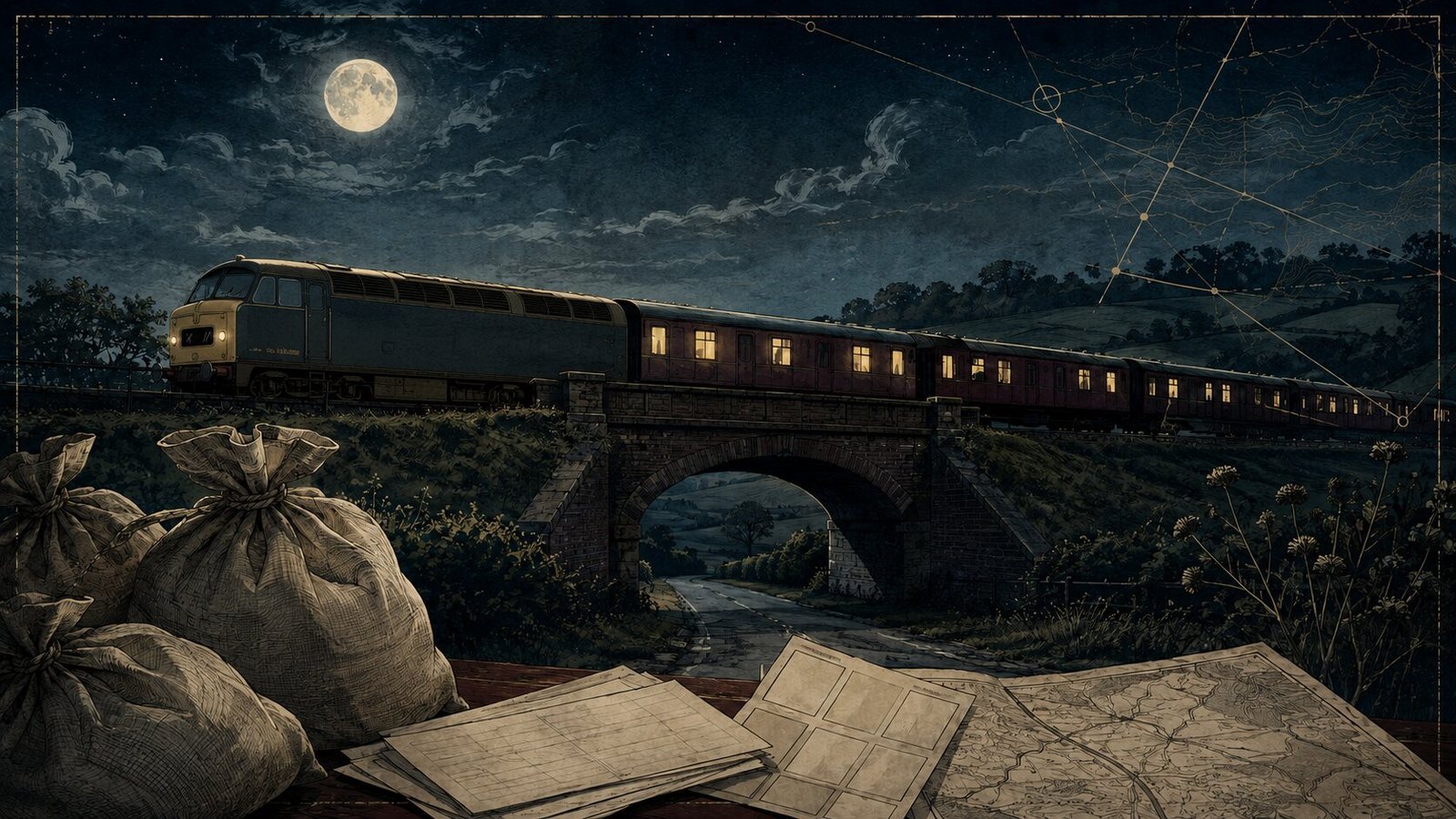
In the early hours of August 8, 1963, a gang stopped a Royal Mail train traveling from Glasgow to London near Ledburn in Buckinghamshire and stole about £2.6 million. Driver Jack Mills was seriously injured. The offenders escaped to Leatherslade Farm, where fingerprints and other evidence helped police identify members of the group. Most were convicted the following year, although several escaped custody or remained abroad for long periods.
A concise timeline
- The mail train is stopped
The Glasgow–London service is halted near Bridego Bridge and high-value mail is taken.
- Police find Leatherslade Farm
The abandoned hideout contains fingerprints and objects connected to the gang.
- Arrests follow
Investigators match evidence, trace associates and recover part of the stolen money.
- The principal trial
Aylesbury Assizes hears the case and imposes long prison sentences.
- Escapes and returns
Several convicted men escape or flee overseas; later arrests and returns extend the story.
- Records enter the archive
Files and exhibits document the forensic work behind a case often retold as folklore.
What happened—and what popular culture edits out
The size of the theft and the later lives of gang members made the robbery a durable British legend. Films and memoirs often emphasize planning, personalities and escapes. That framing can minimize the train crew and postal workers who were placed in danger, especially Mills, whose injury remained central to public understanding of the offense.
Calling the event ingenious does not change its legal character. It was a coordinated theft involving coercion and violence. The site therefore focuses on verified evidence and outcomes rather than providing a procedural blueprint.
Forensics at the farm
Leatherslade Farm became the investigation's most important location. The gang had intended to remove traces, but police recovered fingerprints and other material that could be compared with criminal records and witness information. The evidence helped link individuals to a place used immediately after the robbery.
The popular version sometimes reduces the breakthrough to a single board game. In reality, forensic scenes produce collections of items whose value depends on position, handling and corroboration. The farm evidence worked within a wider inquiry involving vehicles, money, communications and known associations.
Trials, recovery and myth
Most principal participants received convictions in 1964. Some sentences were exceptionally long for robbery, generating debate at the time. Escapes by Ronnie Biggs and others prolonged the public story, while only part of the stolen money was recovered.
A solved status does not mean every pound was traced or every participant had the same legal outcome. It means the core offense resulted in established convictions. The unresolved financial and fugitive chapters explain why the case continued to generate headlines long after the trial.
This archive describes the evidence, court outcomes and impact without detailing methods that could facilitate burglary, railway interference or evasion.
Follow another evidence trail
Sources and further reading
- The National Archives — Great Train Robbery forensic history
- British Transport Police — history of the robbery
- UK Parliament — historical discussion
Last reviewed: August 9, 2026