What is established?
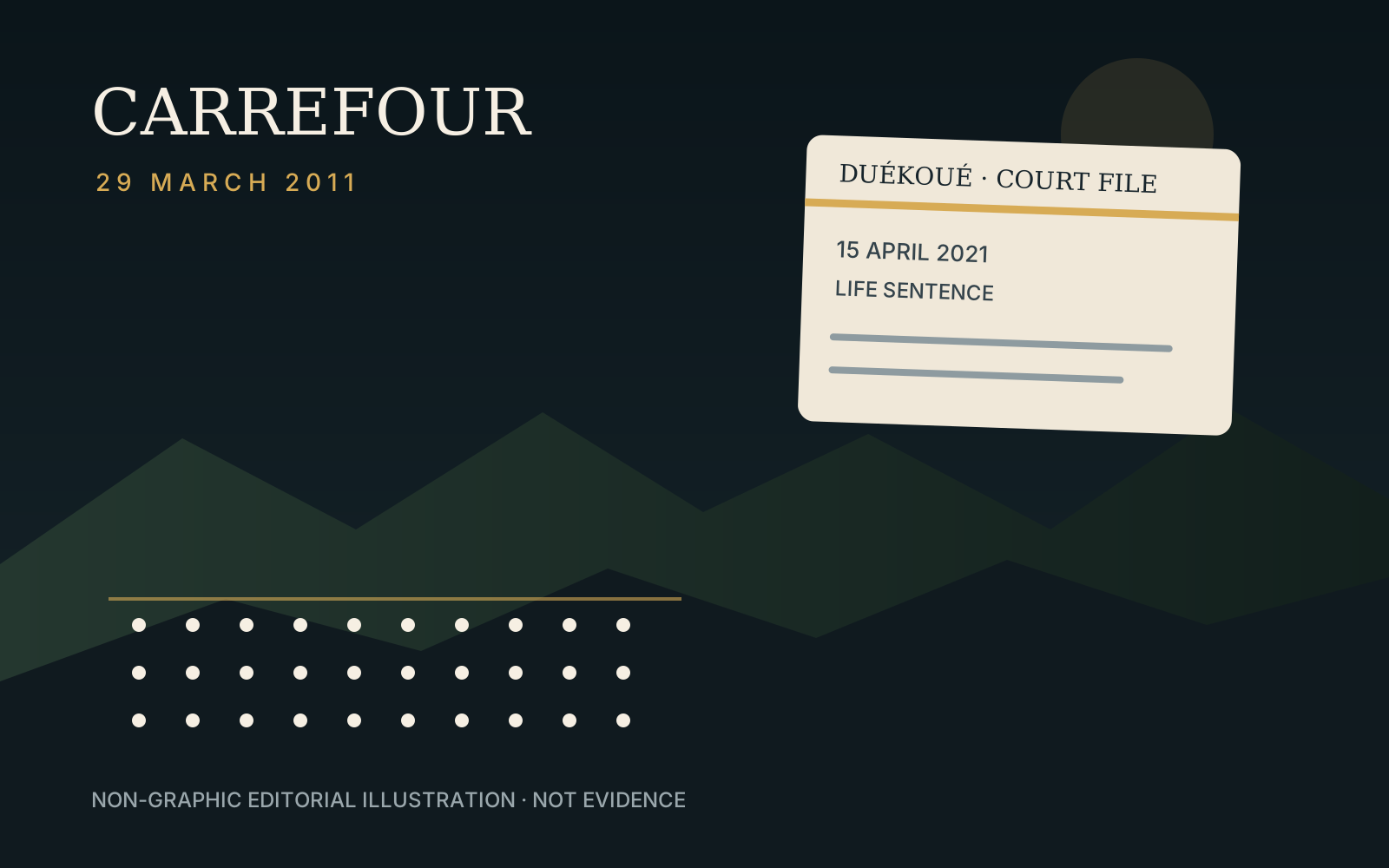
Large-scale killings occurred in Duékoué as forces supporting Alassane Ouattara captured the western city during Côte d’Ivoire’s 2010–2011 post-election conflict. Human Rights Watch concluded that members of the Republican Forces and allied militias carried out retaliatory killings in the Carrefour district on March 29, particularly against Guéré men and boys regarded as aligned with Laurent Gbagbo.
Casualty figures remain irreconcilable. The United Nations reported about 300 deaths, while the Red Cross counted more than 800. These figures are presented with attribution rather than blended into a single dramatic number.
Post-election conflict in western Côte d’Ivoire
The crisis followed Laurent Gbagbo’s refusal to accept the internationally recognized result of the November 2010 presidential election. Violence escalated between forces loyal to Gbagbo and forces supporting Ouattara.
Western Côte d’Ivoire had already suffered years of land disputes, ethnic tension, militia activity and cross-border violence. Both sides committed serious abuses during the 2011 offensive. Recording crimes attributed to pro-Ouattara forces does not erase killings committed by pro-Gbagbo militias before and during the same campaign.
The killings in Carrefour
Pro-Ouattara forces took effective control of Duékoué on March 29. Human Rights Watch documented fighters moving through Carrefour, separating or identifying people by ethnicity and perceived political affiliation, and killing civilians who were no longer participating in combat.
The Guéré community was particularly targeted. Witness evidence described victims taken from homes, checkpoints and hiding places. This archive avoids graphic detail that is unnecessary to understand the criminal conduct.
Why the death toll differs
The United Nations reported approximately 300 people killed in the Duékoué violence. The International Committee of the Red Cross reported more than 800 bodies. Different geographic boundaries, collection periods and methods may explain part of the gap, but the reviewed sources do not provide a definitive reconciliation.
The trial reporting also used varying totals. The page therefore does not state that a particular number was proven beyond reasonable doubt against Ouérémi personally.
Arrest and delayed trial
Ouérémi, a Burkinabé-born militia leader long active around Mount Péko, was arrested in May 2013. His detention followed years of criticism that people aligned with the victorious side of the conflict had largely escaped prosecution.
The trial opened in Abidjan in March 2021. Ouérémi faced accusations including mass murder, rape, sequestration and inhuman treatment. He denied sole responsibility and described himself as operating within a larger pro-Ouattara command structure.
The April 2021 judgment
On April 15, 2021, the Abidjan court sentenced Ouérémi to life imprisonment. FIDH, participating alongside 34 victims, described the prosecuted acts as crimes against humanity. International reporting recorded the judgment as the first major conviction of a figure aligned with Ouattara for crimes from the post-election crisis.
No reliable source reviewed for this page established a comprehensive final trial of every alleged commander or participant in the Carrefour killings. The case is therefore classified as adjudicated in part, with wider responsibility unresolved.
What remains unresolved?
Which commanders ordered or knowingly permitted the operation? How many armed groups participated? Why did casualty records differ so widely? Which other individuals could be charged on the evidence? The Ouérémi judgment answered one part of the accountability question without closing the broader case.
Verified timeline
- November 2010
A disputed presidential election triggers a national political crisis. - March 2011
Forces supporting Ouattara advance through western Côte d’Ivoire; pro-Gbagbo forces also commit killings in the region. - March 29, 2011
Pro-Ouattara forces take Duékoué; large-scale killings occur in the Carrefour district. - April 2011
International organizations publish sharply different casualty counts, from about 300 to more than 800. - May 18, 2013
Amadé Ouérémi is arrested near Mount Péko. - March 2021
His trial opens in Abidjan. - April 15, 2021
The court sentences Ouérémi to life imprisonment. - September 2026
No comprehensive final accounting of all alleged perpetrators and commanders is located.
Sources and verification notes
Rights investigations establish the killings and attribution patterns. Trial reporting confirms the proceedings and judgment, while preserving disputes over the toll and wider responsibility.
- Human Rights Watch — One year on, Duékoué massacreMarch 29, 2012 · capture of Duékoué, targeted Guéré victims and accountability failures.
- Human Rights Watch — They Killed Them Like It Was NothingOctober 5, 2011 · post-election chronology, witness evidence and responsibility analysis for both sides.
- Amnesty International — Both sides responsible for grave crimesMay 25, 2011 · conflict-wide attribution and legal context.
- Africanews — Ouérémi on trialMarch 25, 2021 · trial opening and divergent United Nations and Red Cross figures.
- FIDH — Ouérémi sentenced to lifeApril 2021 · conviction, crimes-against-humanity classification and victim participation.
- TV5MONDE — Life sentence and accountability debateDecember 24, 2021 · judgment and the unresolved responsibility of other actors.
Frequently asked questions
When did the principal killings occur?
On March 29, 2011, after pro-Ouattara forces took control of Duékoué.
How many people died?
The United Nations reported about 300 deaths; the Red Cross counted more than 800. The difference remains explicit.
Who was targeted?
Human Rights Watch documented particular targeting of Guéré men and boys perceived as Gbagbo supporters.
Who was convicted?
Amadé Ouérémi received a life sentence in April 2021.
Did that resolve the whole case?
No. Wider operational and command responsibility remains incomplete.
Were crimes committed only by one side?
No. Independent investigations documented grave crimes by both pro-Gbagbo and pro-Ouattara forces.