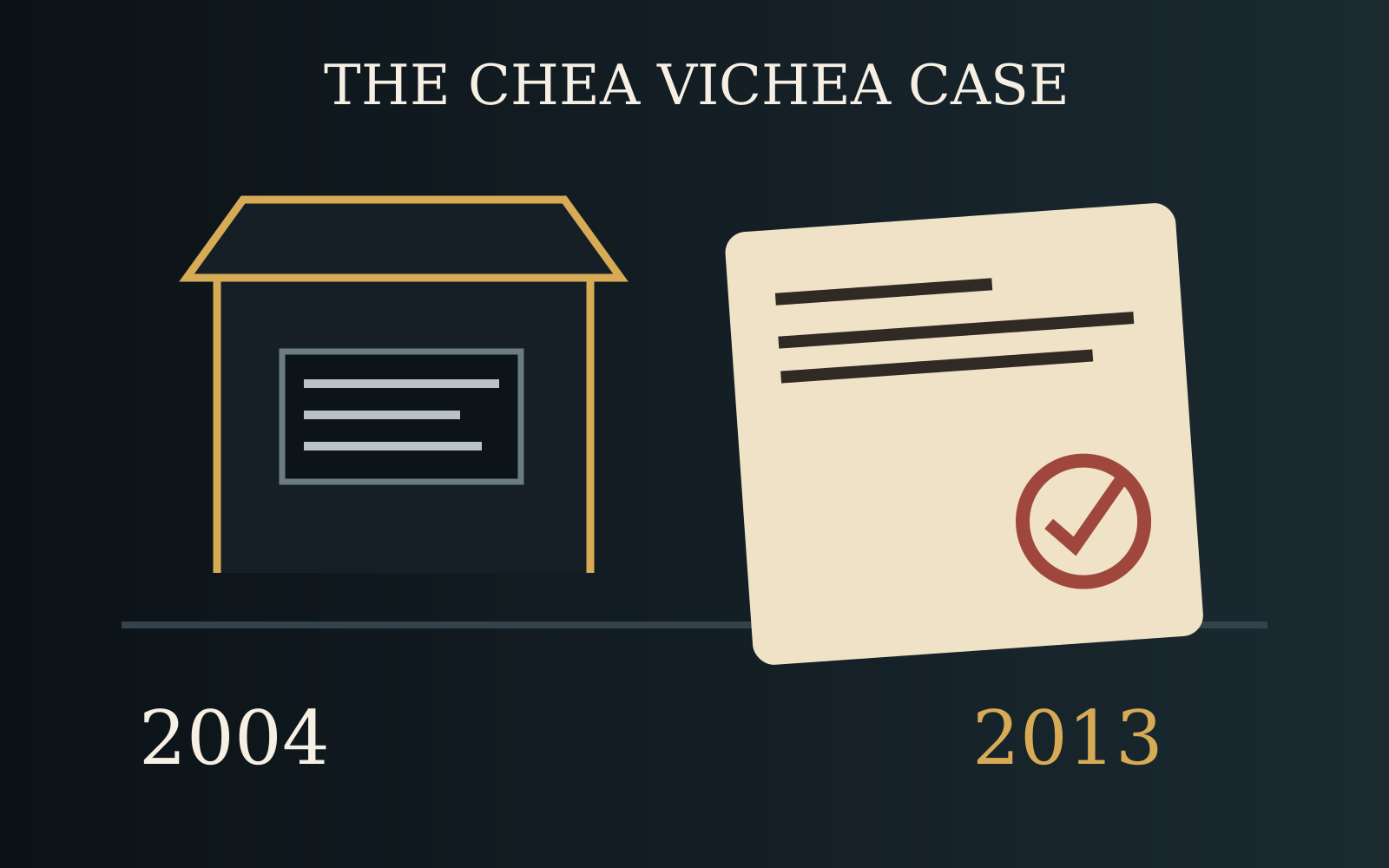
Case-status note: The murder remains unsolved. Born Samnang and Sok Sam Oeun were convicted in 2005 but acquitted in 2013. This file attributes the shooting to no unproved person.
What happened to Chea Vichea?
On the morning of January 22, 2004, Chea Vichea was reading a newspaper at a street kiosk near Wat Langka in Phnom Penh when a gunman approached and shot him. He died at the scene. The daylight killing removed one of Cambodia's most visible independent labor leaders.
Chea Vichea was president of the Free Trade Union of Workers of the Kingdom of Cambodia, or FTUWKC. International labor and human-rights organizations treated his death as an assassination within a wider climate of violence and intimidation directed at union representatives. No final judgment, however, identified who ordered the killing or proved a motive.
The legal history is equally important. Police quickly arrested Born Samnang and Sok Sam Oeun. They were convicted and sentenced to 20 years in 2005 despite serious evidentiary objections. After years of litigation, the Supreme Court acquitted both men on September 25, 2013. Correcting those convictions did not solve the murder.
The victim and his public role
Chea Vichea organized and represented garment workers when that sector was central to Cambodia's export economy. The United States government, condemning the killing on the day it occurred, identified him as FTUWKC president and called for a prompt investigation.
His public position meant the consequences extended beyond his family. Labor groups feared that violence could silence organizers and workers seeking representation. The International Labour Organization later examined the murder within its freedom-of-association procedures.
Political claims about who benefited from his death have circulated for years. They remain allegations, not court findings. This dossier confines its conclusion to what reliable records support: he was deliberately killed, the original prosecution failed, and no actual perpetrator has been judicially identified.
The early investigation
Born Samnang and Sok Sam Oeun were arrested within days. Born Samnang initially signed a confession and then retracted it, saying police had coerced him. Amnesty International documented his alibi and the absence of direct evidence linking either man to the shooting. Sok Sam Oeun consistently denied involvement.
A judge initially dismissed the case for lack of evidence. That decision was reversed and the prosecution continued. Rights monitors reported witness intimidation and that the woman who operated the newsstand did not identify the accused as the killers.
An allegation of coercion is not the same as a conviction of officers for torture. Amnesty and other monitors treated the confession as unreliable and recorded Born Samnang's account. This page does not claim that a named officer was criminally convicted for coercing him.
The 2005 convictions
On August 1, 2005, the Phnom Penh Municipal Court convicted Born Samnang and Sok Sam Oeun. Each received a 20-year prison sentence. Amnesty International reported that the prosecution presented no direct evidence and that the trial failed basic fairness standards.
The convictions created two distinct injustices: Chea Vichea's family still lacked a credible account of who killed him, while two men faced lengthy imprisonment on a defective case. The victim's family did not treat the verdicts as a reliable resolution.
For archive classification, a conviction alone is not enough. A later acquittal means there is no standing judgment against those defendants, and the weaknesses of the original case cannot be hidden behind the word “convicted.”
Release, renewed imprisonment and acquittal
On December 31, 2008, the Supreme Court released both men on bail and ordered further proceedings. They had spent almost five years in prison. The decision offered temporary relief but did not end the prosecution.
On December 27, 2012, the Court of Appeal upheld the original convictions and returned both men to prison. Amnesty International said no new evidence had been presented. The renewed incarceration made the final review especially consequential.
On September 25, 2013, the Supreme Court acquitted Born Samnang and Sok Sam Oeun and ordered their release. The UN human-rights office described the result as the reversal of two wrongful convictions. Those acquittals are final for the status recorded here.
What the acquittals mean
The acquittals established that the prosecution had not proved the two defendants' guilt. They did not identify a replacement suspect, determine who fired the shots or establish who, if anyone, planned the assassination.
That distinction protects both the victim and the acquitted men. Calling the case solved because two people once received sentences would repeat the failed prosecution's central error. Naming a rumored organizer would create another unsupported conclusion.
LICADHO's continuing archive states that the actual perpetrators were never brought to justice. At a January 2025 commemoration, Cambodian labor and civil-society representatives were still calling for a credible investigation.
Current status
The defensible status is unsolved / no standing conviction. The deliberate killing is documented and the court history extensive, but the shooter and any organizer remain unidentified.
No reliable source reviewed through September 15, 2026 reported a later final conviction for the assassination. The 2013 acquittals remain the last decisive judicial event located for the original defendants.
This case also shows why wrongful-conviction history belongs in true-crime reporting. An acquittal is not a detail to minimize; it changes who can legally and ethically be described as responsible.
Questions that remain
Who shot Chea Vichea? Was the gunman acting alone? Who planned the attack, and why? What evidence was lost during the flawed early investigation? Those questions remain unanswered in a final judicial record.
A responsible account cannot replace those gaps with political inference. It can record the concrete failures: the rapid focus on two men later acquitted, the years they lost in prison, and the continuing absence of accountability for the victim's death.
Frequently asked questions
Who was Chea Vichea?
Chea Vichea was president of the Free Trade Union of Workers of the Kingdom of Cambodia and a prominent advocate for garment workers.
When and where was he killed?
He was shot outside a newsstand near Wat Langka in Phnom Penh on January 22, 2004.
Who was convicted?
Born Samnang and Sok Sam Oeun were convicted in 2005 and sentenced to 20 years, but the Supreme Court acquitted them on September 25, 2013.
Why were the convictions criticized?
Monitors documented absent forensic evidence, disputed identification, alibis and a confession Born Samnang said was extracted under coercion.
Was anyone finally convicted?
No standing conviction was located. The two convicted men were acquitted and the actual perpetrators remain unidentified.
What is the status?
Unsolved. The acquittals corrected wrongful convictions but did not establish who killed Chea Vichea.