Country archive · Burundi

Burundi true crime: documented cases and court outcomes

Direct answer: The Burundi archive currently contains one case with a trial judgment: the 2009 murder of anti-corruption activist Ernest Manirumva in Bujumbura. In May 2012, the Higher Instance Court of Bujumbura convicted 14 people and imposed terms from 10 years to life. The case is classified as solved at trial, with full accountability unresolved because major investigative leads were not pursued, a civil-party appeal had produced no decision in the latest detailed legal follow-up, and Manirumva’s organization was still calling for the full truth in April 2026.

1 documented case1 solved-at-trial case0 unresolved case filesLast reviewed: 18 October 2026
Editorial artwork for the Burundi case archive using the national flag, a map outline and a reviewed court file

Original editorial illustration; not a depiction of Ernest Manirumva, any defendant, the killing or a crime scene.

Advertisement

Solved cases

Cases with a verified judgment establishing criminal responsibility. A trial verdict and full accountability are treated as separate questions.

Unsolved cases

Documented cases in which no verified judgment has established individual criminal responsibility.

No unresolved Burundi case has yet met this archive’s full sourcing and editorial standards. This section will expand only when reliable records support a substantive page and a current status assessment.

How this archive handles evidence

The killing, convictions, investigative criticism, appeal record and continuing call for accountability are kept distinct.

The Manirumva file uses contemporaneous reporting from Amnesty International and Human Rights Watch, Reuters’ account of the convictions, Human Rights Watch’s detailed reviews of the investigation and trial, and a 2026 report on OLUCOME’s continuing demand for full justice.

The file is in the solved section because a national court convicted 14 people. The label is deliberately qualified: the verdict did not answer every question about planning or motive, organizations monitoring the proceedings said important leads were ignored, and later reporting described no significant progress toward fuller accountability.

The page does not identify untried people as perpetrators, convert allegations about motive into established fact, or imply that criticism of the process automatically erased the convictions. It reports each procedural fact at its verified level.
Frequently asked questions

Short answers about the archive and its classification.

How many Burundi cases are published?

One fully sourced case file is published.

Why is the Manirumva case in the solved section?

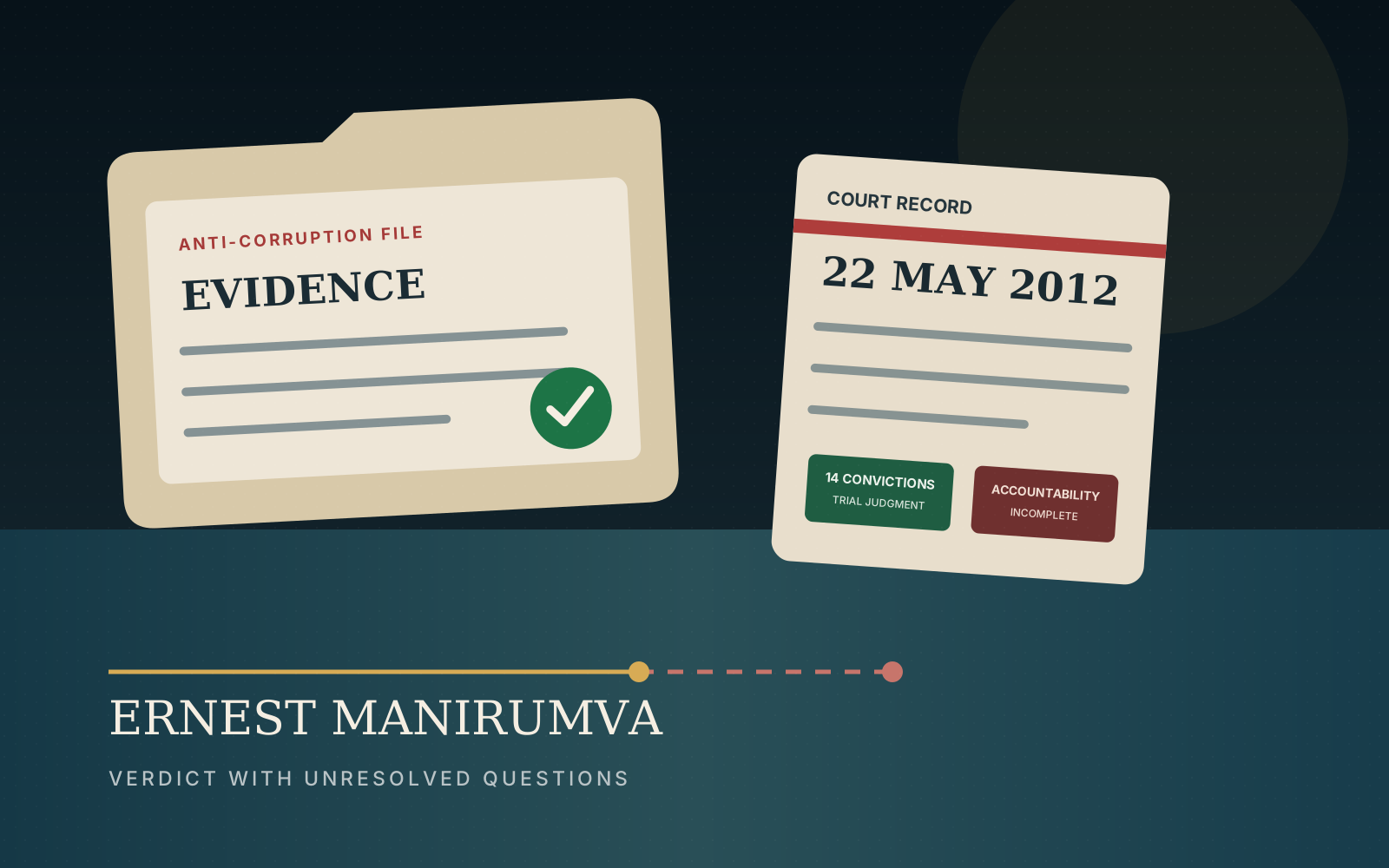
The Higher Instance Court of Bujumbura convicted 14 people on 22 May 2012. The archive qualifies the label because the judgment did not resolve major questions about the wider crime.

How many people were convicted?

Fourteen people. Contemporary monitoring reported eight life sentences for murder, three 20-year sentences for complicity and three 10-year sentences for failure to inform authorities or assist a person in danger.

Did the trial establish the full motive and chain of responsibility?

No. The court entered convictions, but human-rights organizations said potentially important leads involving senior police and security figures were not investigated.

Was there an appeal?

The civil party appealed to Burundi’s Supreme Court in June 2013. Human Rights Watch reported in April 2019 that no decision had been issued; this page does not claim a later outcome without a reliable court record.

Is the case completely finished?

No. OLUCOME was still demanding that the full truth be established in April 2026, so the archive describes the adjudicated case as solved at trial while marking broader accountability as unresolved.

← Return to all country archives