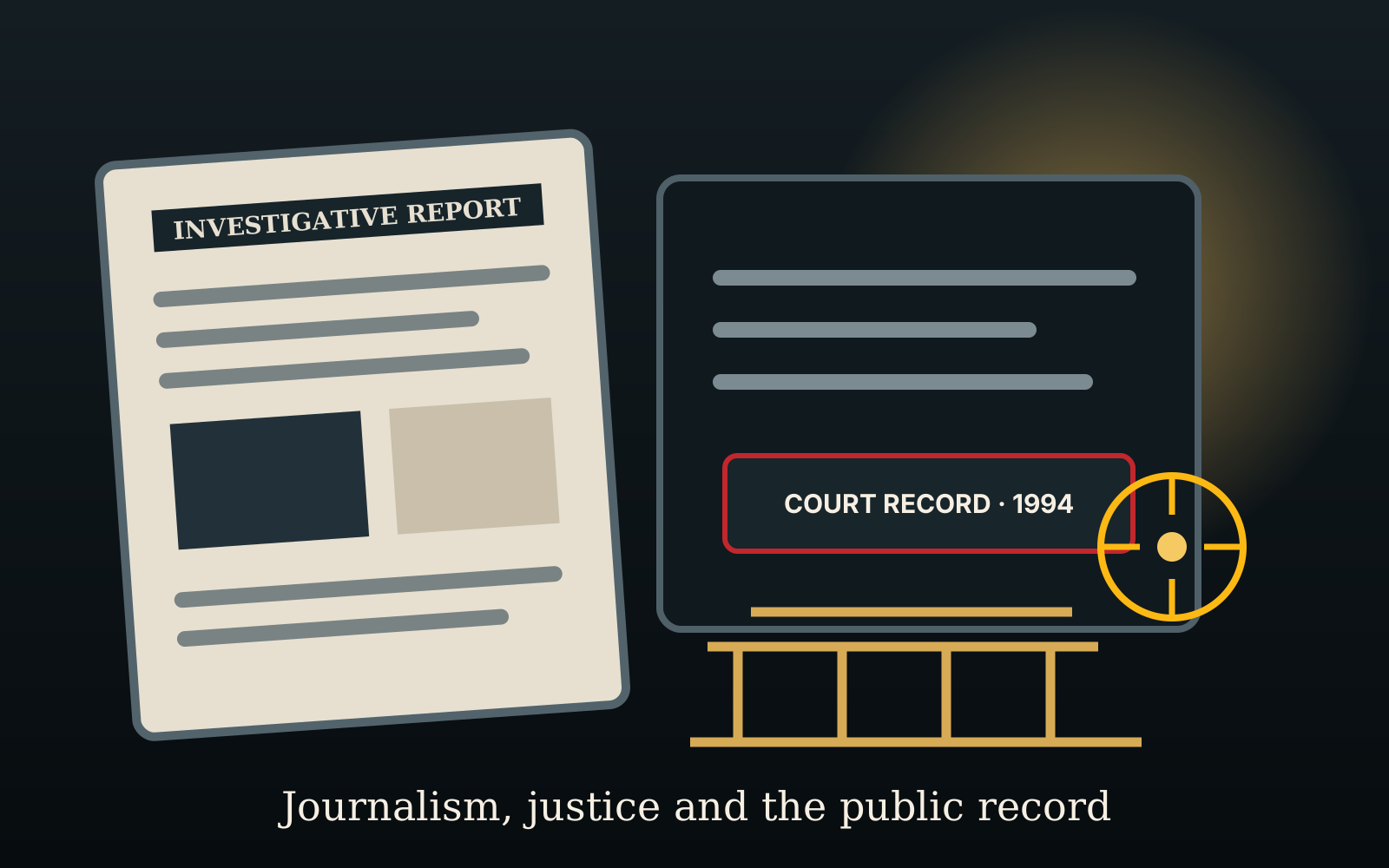
How this archive classifies the case
“Solved / adjudicated” means courts assigned criminal responsibility to four defendants. It does not endorse capital punishment, erase Amnesty International’s due-process concerns or imply that every historical claim about the Vilnius Brigade was tested at trial.
Why begin with this case?
The record is unusually strong: Lithuania’s foreign ministry, the Committee to Protect Journalists, Amnesty International and contemporary institutional reports independently preserve the killing, motive, prosecution and outcome.
Why symbolic artwork?
The flag bands, newspaper pages, archive files, court columns and memorial light are editorial symbols. They do not portray Lingis, the defendants, the shooting or evidence as documentary imagery.
Lithuania archive FAQ
Who was Vitas Lingis?
Vitas Lingis was a 33-year-old Lithuanian investigative journalist and deputy editor of Respublika who reported on corruption and organized crime.
When and where was Vitas Lingis murdered?
He was shot near his home in Vilnius on 12 October 1993 as he was leaving for work.
Was the murder solved?
Yes. Lithuanian authorities convicted four people in 1994: the man found to have ordered the killing, the gunman, an accomplice and the driver.
Why was Vitas Lingis targeted?
Contemporary source records link the killing to his reporting on organized crime. Amnesty International reported that the order was retaliation for his refusal to withdraw articles about the Vilnius Brigade.
What happened to Boris Dekanidze?
He was sentenced to death on 10 November 1994 for ordering the murder. After review and a rejected clemency request, Lithuania executed him on 12 July 1995.
Does the solved classification endorse the death penalty?
No. The classification records that criminal responsibility was adjudicated. Amnesty International opposed the execution and raised concerns about whether the review satisfied the right to appeal.
← Return to all country archives