Jordan after Black September
Wasfi al-Tal became prime minister again in 1970 during the violent confrontation between the Jordanian state and Palestinian armed organizations commonly known as Black September. By 1971, Jordanian forces had driven the principal fedayeen formations from the kingdom.
Tal’s senior role made him a prominent enemy of militants who blamed Jordan’s leadership for the campaign. That political context explains the stated motive attached to the assassination, but it does not replace evidence about the people who planned and carried out the shooting.
The Cairo trip
Tal traveled to Cairo for Arab League defense meetings. A declassified U.S. intelligence memorandum written immediately after his death recorded that the assassination would intensify an already unstable regional atmosphere.
On November 28, Tal returned to the Sheraton Hotel with Jordanian officials after a meeting. Gunmen opened fire near the entrance. Tal was fatally wounded; Jordan’s foreign minister, Abdullah Salah, was also reported injured.
Black September’s claim
The Black September Organization claimed responsibility. Contemporary and later accounts connected the operation to retaliation for the 1970–71 fighting in Jordan and the death of Palestinian commander Abu Ali Iyad.
The claim establishes organizational attribution in the public record. It does not by itself establish the criminal responsibility of every person later arrested, nor does it prove broader allegations about governments or officials that circulated afterward.
Arrests and proceedings
Egyptian authorities arrested four suspects. News footage preserved by the Associated Press archive shows accused men appearing before the court and later records their release.
The proceeding ended in February 1972 without convictions. Sources variously describe the disposition as release, release on bail or an acquittal-like termination; this archive uses the narrower common fact: the defendants were released and no final conviction resulted.
The victim and public impact
Tal had served three terms as Jordan’s prime minister and remained one of King Hussein’s closest political allies. His killing in a foreign capital during an inter-Arab meeting transformed a national political conflict into an international assassination case.
Jordan repatriated his body and held a state funeral. Commemorations continue to present him as a major figure in the kingdom’s modern political history, while his role in Black September remains deeply contested in Palestinian narratives.
What the record establishes
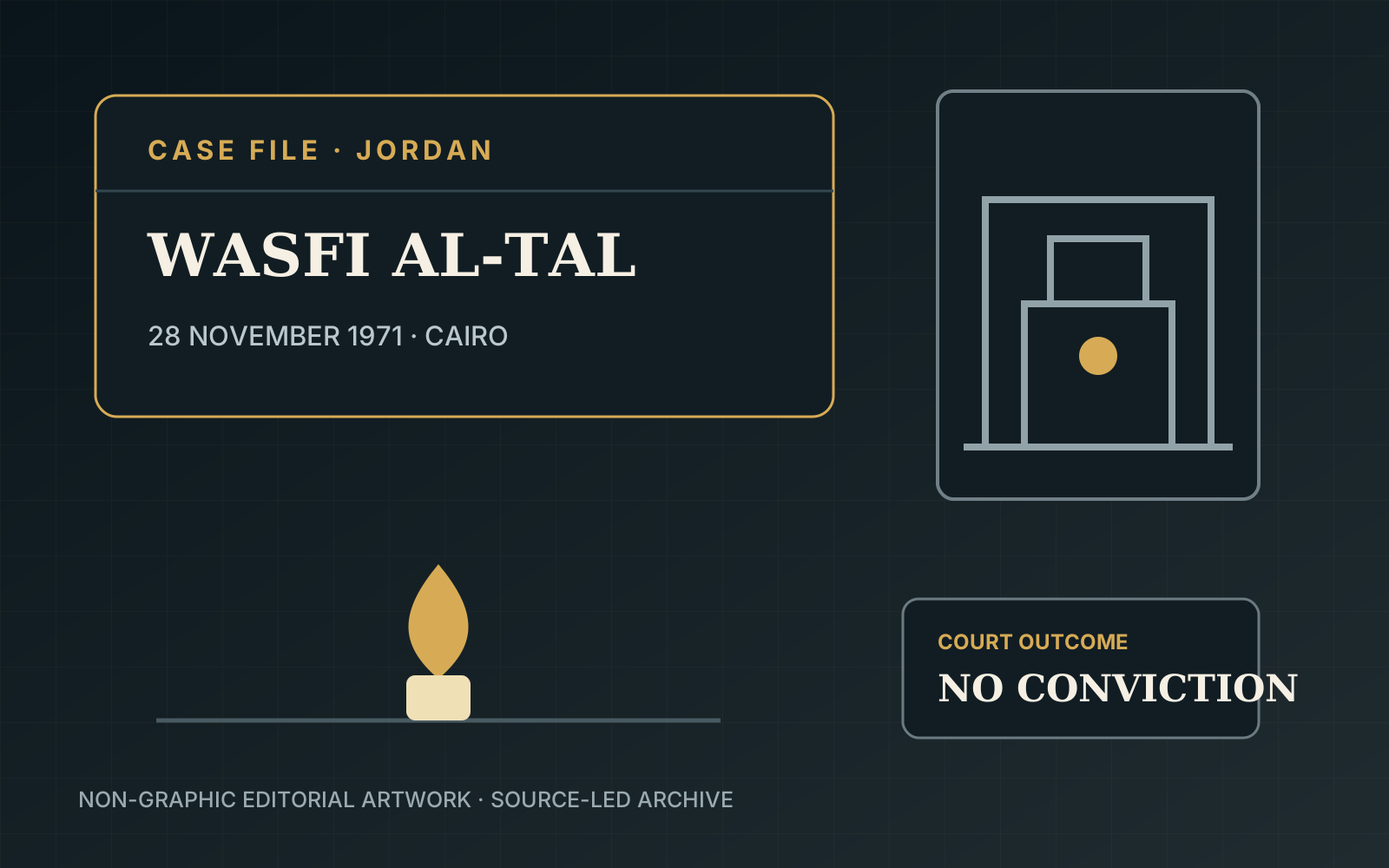
The record supports four bounded conclusions: Tal was assassinated in Cairo on November 28, 1971; Black September claimed the operation; four suspects were arrested; and the Egyptian proceeding ended without convictions.
It does not support describing the released defendants as convicted assassins or presenting later political allegations as judicial findings. The case is classified as an adjudicated proceeding with no conviction.
Questions that remain
- What evidence did the Egyptian court accept or reject before ordering release?
- Who exercised operational command beyond the arrested men?
- Were all planners ever identified in a judicial record?
- Why do later sources use different legal labels for the proceeding’s end?
Frequently asked questions
Where did the assassination occur?
At the Sheraton Hotel in Cairo, Egypt, while Tal was attending Arab League meetings.
Who claimed the attack?
The Black September Organization claimed responsibility.
How many suspects were arrested?
Four suspects were arrested by Egyptian authorities.
Were they convicted?
No. The proceeding ended with their release in February 1972.