What happened at the Madımak Hotel
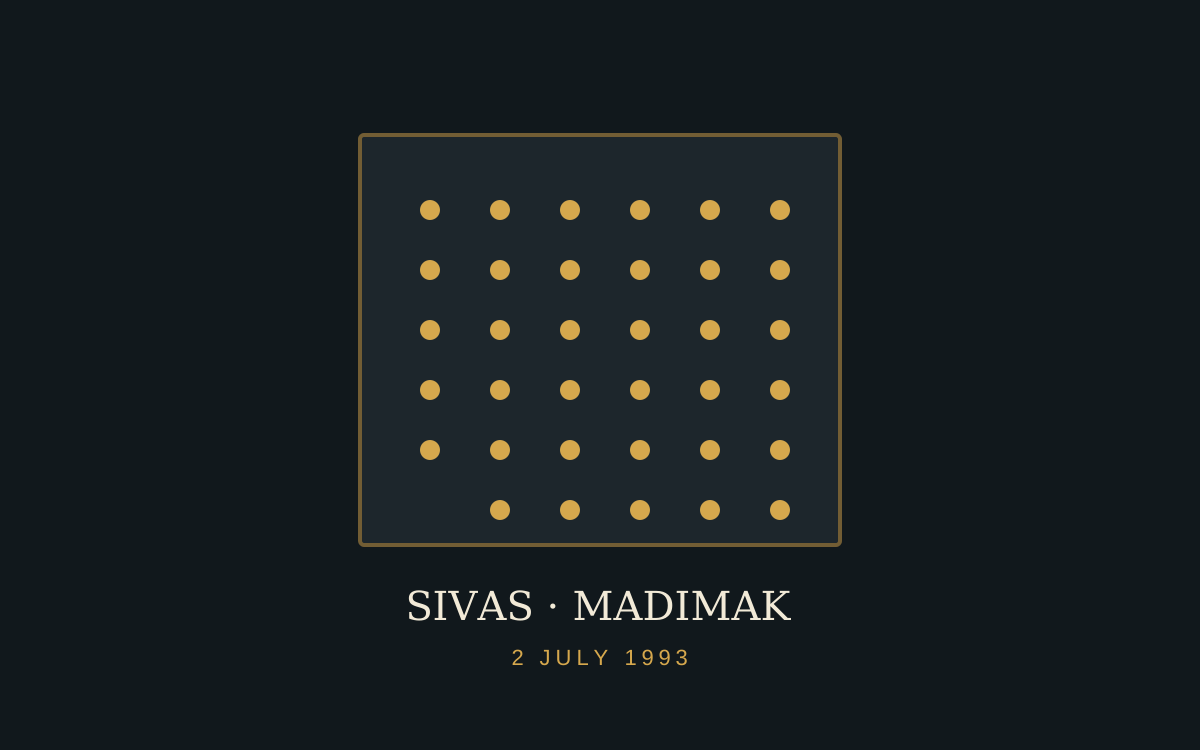
Writers, musicians, intellectuals and other participants in the Pir Sultan Abdal cultural festival were staying at the Madımak Hotel in Sivas on July 2, 1993. A large hostile crowd gathered outside during the day. The hotel was set on fire. Thirty-three festival participants and two hotel employees died inside. Two people from the crowd also died during the wider events, which is why some histories give an overall death toll of 37.
The people killed inside included prominent artists and writers as well as less famous festival participants and hotel staff. This page uses the 35 hotel deaths for the core criminal case because that is the victim count repeatedly used in the major prosecution history.
A long and changing prosecution
Authorities prosecuted 124 people. The first major judgment in December 1994 produced a mixture of prison terms and acquittals. That judgment did not end the case. Higher-court review led to retrials and substantially different outcomes for many defendants.
In November 1997, 33 defendants received death sentences and 14 others received prison terms. Procedural defects led to another round of litigation. In June 2000, 33 defendants were again sentenced to death. When Turkey abolished the death penalty in 2002, those capital sentences were converted into life imprisonment under the new legal framework.
Convictions do not close every question
The existence of major convictions is not disputed. But it would be inaccurate to describe every dimension of the massacre as completely resolved. Some defendants remained fugitives for years, later proceedings were affected by limitation questions, and individual cases continued well after the main verdicts.
For example, a life sentence imposed on defendant Bülent Düğenci was upheld by the Court of Cassation in 2012. At the same time, proceedings against other defendants became bound up in arguments over statutes of limitations and whether the massacre should be treated as a crime for which limitation periods could not extinguish responsibility.
The 2026 Constitutional Court ruling
Families of people killed in the hotel pursued a constitutional application arguing that the judicial process had failed to provide an effective investigation and accountability. On July 23, 2026, Turkey's Constitutional Court unanimously found a violation of the procedural aspect of the right to life in the Madımak case and awarded non-pecuniary damages to applicants.
That ruling does not erase the convictions already obtained. Instead, it confirms that a case can contain substantial criminal adjudication while still falling short of full procedural accountability. Crime by Region therefore classifies this file as partially adjudicated.
Timeline
July 2, 1993: the Madımak Hotel is attacked and set on fire during the Sivas cultural festival; 35 people inside die.
October 1993: the first hearings begin in the major criminal prosecution.
December 26, 1994: the first large verdict imposes different prison terms and acquittals.
November 28, 1997: 33 defendants receive death sentences; 14 others receive prison terms.
June 16, 2000: after retrial, 33 defendants are again sentenced to death.
2002: abolition of the death penalty converts the capital sentences to life imprisonment.
July 23, 2026: the Constitutional Court finds a procedural violation of the right to life.
Current status
The massacre has been extensively adjudicated but not fully resolved as an accountability process. Numerous defendants received severe final sentences, including life imprisonment after abolition of capital punishment. Yet the long history of fugitives, limitation decisions and the Constitutional Court's 2026 finding means that complete accountability cannot be stated without qualification.
Sources
- Anadolu Agency — case history, defendants and victim count, February 15, 2024
- Bianet — Constitutional Court right-to-life ruling, July 23, 2026
- Anadolu Agency — Court of Cassation upholds a later life sentence, March 8, 2012
- Human Rights Watch — legal opinion discussing limitation and the Sivas proceedings