A government born in a coup
On April 29, 1992, junior officers overthrew President Joseph Saidu Momoh. Captain Valentine Strasser became chairman of the National Provisional Ruling Council, also called the Supreme Council of State. The new authorities suspended the 1991 Constitution, declared a state of emergency and introduced sweeping detention powers.
More than 50 former ministers and officials were arrested after the takeover. Many remained at Pademba Road Prison without charge or trial. Among them were James Bambay Kamara, a former minister of state and inspector general of police, and Lieutenant-Colonel James Yaya Kanu.
Two alleged coup plots
The military government attributed the executions to alleged conspiracies on November 21 and December 28, 1992. Seventeen people arrested after the November allegation were said to have been sentenced to death. The authorities then ordered the execution of nine more people linked to the December allegation.
Kamara and Kanu were included in the second group even though both had been imprisoned since April. Amnesty International noted that the authorities gave no explanation for how the two men could have joined an outside plot while detained.
A tribunal created weeks earlier
The special military tribunal had been established by decree in mid-December. Amnesty's initial urgent action described five military members who might not have had legal training. A government communiqué later described a four-member military or police panel, presided over by a senior army officer and assisted in theory by a legal adviser.
The practical safeguards were more troubling than the formal structure. A local human-rights organization told Amnesty that neither defence lawyers nor a legal adviser attended the hearing. The condemned had no opportunity to appeal to an independent court.
December 29, 1992
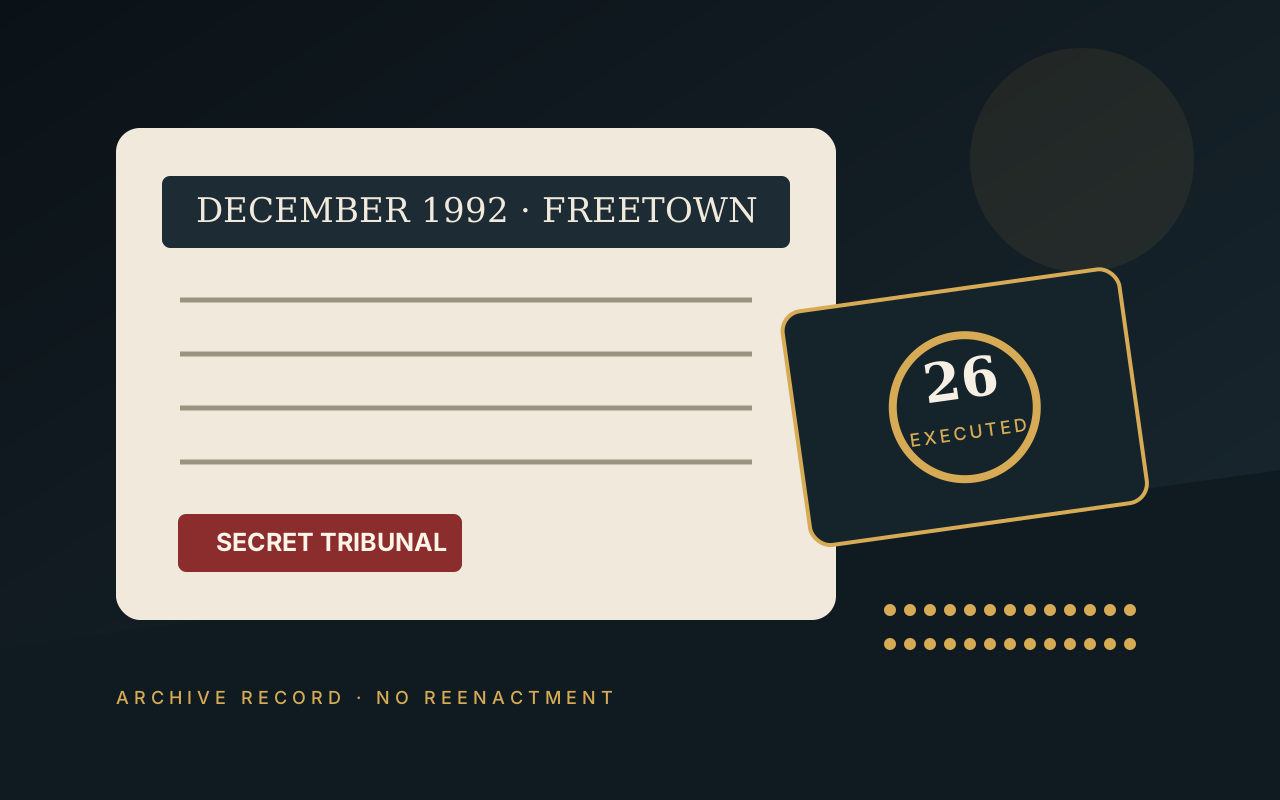
An initial Amnesty alert reported that the executions were believed to have occurred on December 30. Its January 11 follow-up corrected the date to December 29 after a government communiqué confirmed that all 26 had been executed by firing squad in Freetown.
The confirmed group comprised 17 military or police personnel and nine civilians, including a journalist and one woman. The confirming authority of the military council endorsed the death sentences and ordered that they be carried out immediately.
Kamara, Kanu and the other victims
Kamara and Kanu became the best-known names in the group because of their former positions and their months-long imprisonment before the alleged December plot. The documentary record, however, treats the event as the killing of 26 people, not merely two prominent officials.
Amnesty's later updates described hurried, secret and grossly unfair proceedings. By January 29, it said the victims had been executed after proceedings in which all rights of defence were denied—or, in some instances, possibly after no trial at all. It also recorded allegations of torture, carefully identifying them as reports rather than judicial findings.
Was there a coup attempt?
The military government's communiqué said the condemned were guilty of treason for two coup attempts. Later Amnesty reporting said unofficial sources disputed whether either attempt had occurred and alleged that the plots were used to remove political threats.
Those claims were never tested through an open, independent process. The responsible editorial conclusion is therefore narrow: the executions are confirmed; the fairness of the stated proceedings is gravely compromised; and the underlying coup allegations remain disputed.
Further detainees at risk
After the killings, other soldiers, prison staff, a student and an imam were detained or sought over the same alleged conspiracies. Amnesty warned that they too risked summary proceedings and execution. A March 1993 alert again cited the December killings when calling for access to lawyers and open trials.
The later alert also separated three additional deaths, officially described as crossfire, from the 26 confirmed executions. Because their circumstances and evidentiary basis differed, this page does not add them to the principal count.
Accountability and historical record
The Sierra Leone Truth and Reconciliation Commission later preserved submissions and documentary material on the December 1992 proceedings. Its archive reproduces the Amnesty record, helping keep the case inside the country's formal memory process.
No later final criminal judgment assigning individual responsibility for ordering or carrying out the 26 executions was located for this publication. Absence of a located judgment is not proof that no inquiry ever occurred; it is the boundary of the verifiable public record reviewed here.
Questions still unanswered
- What evidence, if any, supported each person's treason accusation?
- Which of the 26 received any hearing before execution?
- Who selected the defendants and approved the immediate sentences?
- Were torture allegations ever independently investigated?
- Did later national processes identify the execution team or command chain?
Frequently asked questions
How many people were executed?
The government confirmed 26: 17 military or police personnel and nine civilians.
Were they executed on December 29 or 30?
Amnesty's first alert reported December 30, then corrected the date to December 29 after the government communiqué.
Were the treason convictions reliable?
The proceedings lacked defence counsel and appeal, and later reporting said some victims may not have been tried at all. This archive does not treat the findings as reliable adjudications.
Was anyone convicted for the executions?
No later final accountability judgment was located for this publication.