Classification note: This file is Unsolved / Partial. The coordinated attacks and Saudi identification of 12 dead attackers are documented. Identification and attribution are not the same as a complete court record establishing the responsibility of every organizer, facilitator and surviving participant.
Warnings before the attacks
In early May 2003, Saudi authorities publicized a list of 19 wanted men after weapons and explosive material were discovered in Riyadh. United States officials had also warned that terrorists might be in the final stages of planning attacks against Western interests in the kingdom.
The warnings did not identify the precise time and three targets that would be struck. The compounds housed Saudi and foreign residents, including employees connected to commercial and defense work. Treating them only as “Western compounds” obscures the Saudi, Arab and Asian victims.
Three coordinated attacks
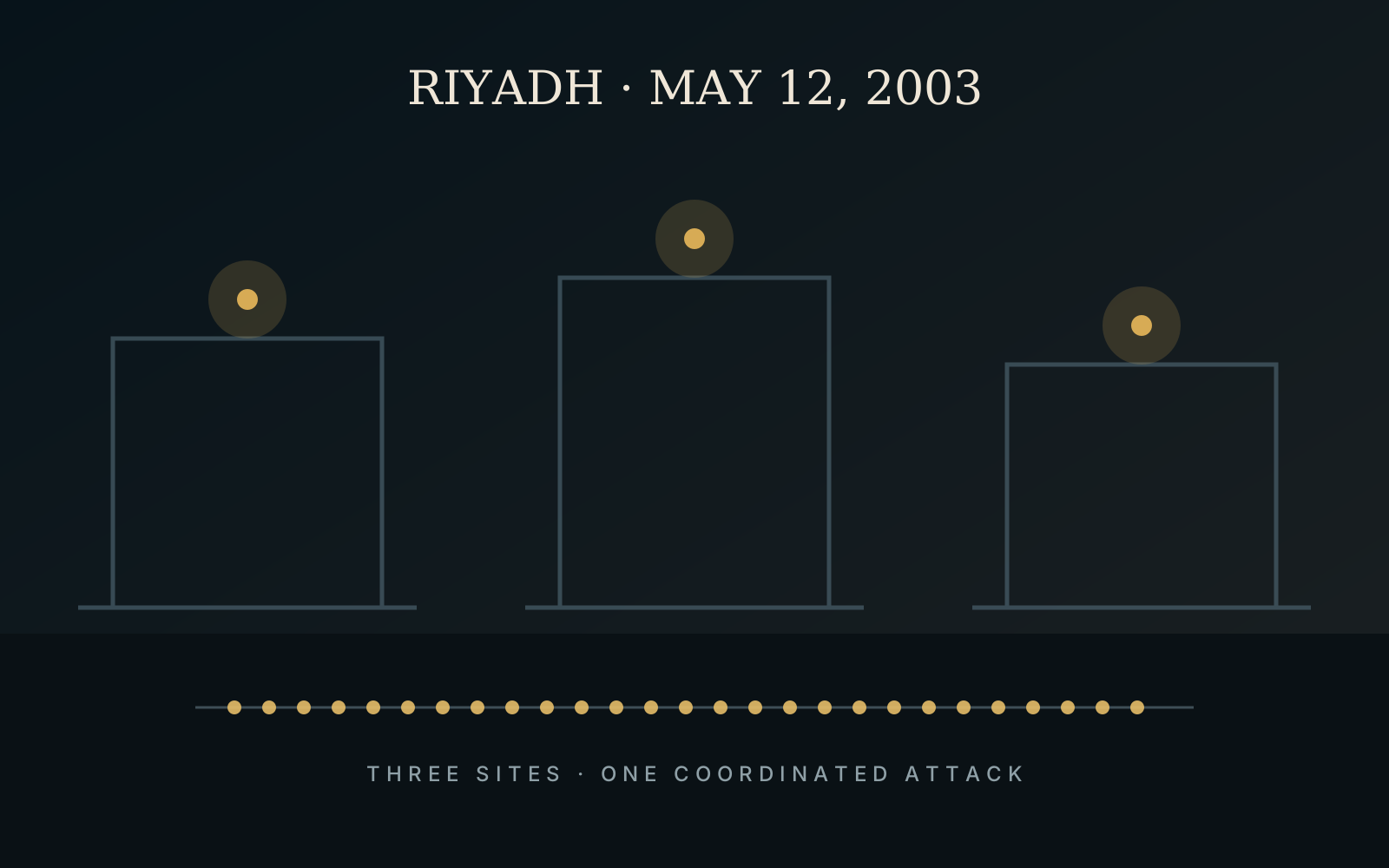
Late on May 12, armed teams approached Al Hamra Oasis Village, Dorrat Al Jadawel and the Vinnell Corporation compound. Gunmen attacked guards and forced or attempted entry before vehicle bombs exploded. The attacks occurred within a short period, showing operational coordination rather than three unrelated incidents.
At Al Hamra, attackers entered after shooting at security personnel and residents. At Jadawel, resistance at the gate prevented the bomb vehicle from penetrating as far into the compound. At Vinnell, the attackers breached the entrance and detonated a bomb near residential buildings. The blasts damaged homes and left survivors searching through shattered rooms in darkness.
A changing death toll
Casualty reports shifted during the first days as bodies were identified and wounded people died. Some contemporary reports stated 34, 35 or 36 deaths without always separating attackers from victims. Later summaries commonly count 39 deaths in all: at least 27 victims and 12 attackers. More than 160 people were wounded; some sources placed the number above 190.
The victims included Saudis and nationals of several other countries. Eight Americans ultimately died, along with Filipinos, Jordanians, Lebanese, Australians, a British citizen, an Irish citizen and a Swiss citizen in widely published nationality breakdowns. This archive uses the supported minimum and makes the attacker component explicit rather than presenting a disputed aggregate as settled.
Identification and attribution
On June 7, 2003, Saudi authorities announced that DNA evidence had identified 12 attackers who died during the operation. Five had appeared on the wanted list issued days before the bombings. Authorities described the men as part of the al-Qaeda network operating inside Saudi Arabia.
Contemporary reporting and later accounts attribute the operation to al-Qaeda in Saudi Arabia. Claims about particular planners outside the attack teams are more contested. This page does not label a named person a convicted mastermind unless a qualifying judgment supports that conclusion.
Security campaign and later attacks
The bombings became an inflection point in Saudi Arabia’s campaign against al-Qaeda cells. Raids, arrests and gun battles followed. Some suspects surrendered or were killed in later operations, but those outcomes are not silently converted into convictions for this specific attack.
A separate truck-bomb attack struck the Al-Muhaya compound in western Riyadh on November 8, 2003. It was part of the same period of violence but is not counted as another part of the May incident. The 1996 Khobar Towers bombing and 2004 Khobar massacre were also distinct crimes and already have separate files.
Current status
The immediate attackers are identified in the official record and died during the operation. The broader criminal record remains partial: public reporting does not provide a complete, transparent final judgment resolving all alleged organizers, logistical supporters and surviving participants.
For that reason, the file does not use “solved” merely because authorities attributed the attack to an organization or because later security operations dismantled cells. It remains open editorially to better court records or official case-specific documentation.
Frequently asked questions
Were 39 victims killed?
No. The widely used figure of 39 includes 12 attackers. At least 27 victims were killed. Some contemporary reports used different totals before the components were clarified.
Is this the Khobar Towers bombing?
No. Khobar Towers was attacked in 1996 in eastern Saudi Arabia. These coordinated attacks struck three Riyadh compounds in May 2003.
Does attribution to al-Qaeda equal a court conviction?
No. Attribution may rest on intelligence, official identification and organizational evidence. A conviction requires adjudication of an individual defendant.
Sources
- CBS News archive — May 14, 2003Contemporary reporting on the three compounds, victims, attackers and early casualty revisions.
- Associated Press via Wired — June 11, 2003FBI bulletin context, contemporary fatality reporting and the Saudi identification of attackers.
- Council on Foreign Relations — Terrorism in Saudi Arabia timelineHistorical context for the May attacks and subsequent anti-al-Qaeda campaign.