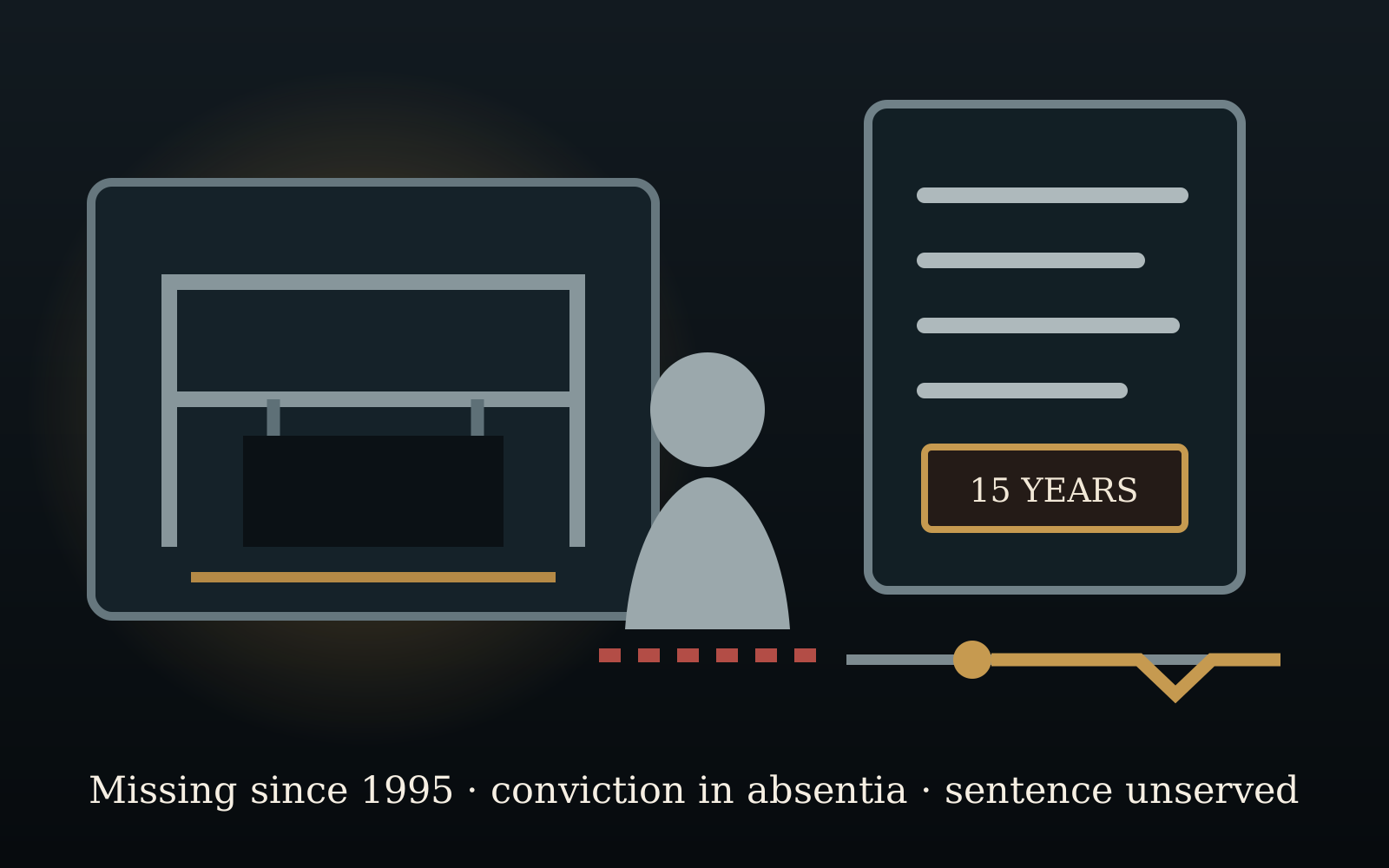
Status boundary: The Serious Crimes Court convicted Ilir Kumbaro in absentia in 2012 and imposed a fifteen-year sentence for torturing Remzi Hoxha and causing his death. That judicial finding is distinct from unresolved questions about Hoxha’s remains and the execution of the sentence. Co-defendants Avni Koldashi and Arben Sefgjini were found guilty of lesser offences, but the court applied a 1997 amnesty and dismissed those cases. This page does not present disputed political-motive claims as established fact.
Taken from a Tirana workplace
Remzi Hoxha was a forty-year-old businessman, married and the father of five children. Amnesty International reported that he had moved to Tirana in 1992 after political activity in support of the Albanian national cause and had previously lived in what was then the Former Yugoslav Republic of Macedonia.
On 21 October 1995, men wearing civilian clothes drove him away from his workplace. Witnesses later said the vehicle was associated with SHIK, Albania’s intelligence service. His family quickly reported the disappearance and approached state institutions, but received no reliable account of his fate or whereabouts.
The evidence of two surviving detainees
The later proceedings also concerned Ziso Kristopulli and Avdyl Loshaj, two men detained during the same period who survived. Their accounts became important to reconstructing how the intelligence operation worked and what occurred in custody.
Amnesty reported in 2004 that two defendants acknowledged participating in the detention of Hoxha and Kristopulli while denying involvement in torture or knowledge of Hoxha’s fate. Recording those qualified admissions matters: participation in a detention is not the same as an admission to every alleged act.
An investigation repeatedly delayed
The first investigation produced little progress. In 2003, after intervention by Albania’s Ombudsperson, authorities reopened the case and detained former SHIK officers on allegations including abduction, hostage-taking and torture with serious consequences. Releases and dropped charges followed, and a further investigation opened in 2006.
The prolonged process left the Hoxha family without a judicial answer for seventeen years. It also complicated cross-border enforcement after Kumbaro was located in Britain under another identity and became the subject of extradition proceedings.
Kumbaro disappears during the extradition case
British authorities arrested Ilir Kumbaro in 2008. He was wanted in Albania in connection with the detention and torture case. While on bail in London, he failed to attend the December 2011 extradition proceedings and disappeared.
Amnesty later criticized the removal of his electronic tag, saying it allowed him to leave unnoticed. Reporting in 2025 said British police had renewed a public search for him. No reliable source reviewed for this page reported that the sentence had been executed.
The 2012 judgment and its limits
On 22 November 2012, the Serious Crimes Court in Tirana convicted three former SHIK members for their roles in the detention and subsequent torture of Hoxha and in the detention and torture of Kristopulli and Loshaj. Kumbaro, tried in absentia, received fifteen years for torturing Hoxha and causing his death.
Avni Koldashi and Arben Sefgjini were found guilty of arbitrary acts and deprivation of freedom. The judge ruled that a 1997 amnesty covered those offences and dismissed the cases against them. Amnesty concluded that all three defendants therefore remained free and that the ruling had not delivered full justice.
A conviction without recovery or closure
The conviction established criminal responsibility against Kumbaro under the court’s judgment, but it did not locate Hoxha’s remains or bring the absent defendant into custody. Those are separate measures of accountability, and both remain central to the family’s search for truth.
This archive therefore classifies the case as unresolved. The label does not erase the conviction; it reflects the missing remains, the unserved sentence and the absence of a complete, verified account of where Hoxha was taken after detention.
Case timeline
- 21 October 1995 Men in civilian clothes take Remzi Hoxha from his workplace in Tirana; he is not seen by his family again.
- 2003 The investigation reopens after intervention by Albania’s Ombudsperson; former SHIK officers are detained for investigation.
- 2006 Albania’s Prosecutor General opens another investigation after earlier efforts fail to resolve the case.
- October 2008 British police arrest Ilir Kumbaro during extradition proceedings.
- December 2011 Kumbaro fails to attend the London extradition case and disappears while on bail.
- 22 November 2012 The Serious Crimes Court sentences Kumbaro in absentia to fifteen years; amnesty ends the cases against two co-defendants.
- 2025 Albanian reporting says British police renewed the public search for Kumbaro; Hoxha’s remains remain missing.
Questions readers ask
Who was Remzi Hoxha?
He was a forty-year-old businessman, political activist, husband and father of five who had moved to Tirana in 1992.
When did Remzi Hoxha disappear?
Men in civilian clothes took him from his Tirana workplace on 21 October 1995.
What connected the disappearance to SHIK?
Witnesses reportedly identified the vehicle as belonging to SHIK, and the later criminal proceedings concerned former SHIK officers.
Was anyone convicted?
Yes. Ilir Kumbaro was convicted in absentia in 2012 and sentenced to fifteen years for torturing Hoxha and causing his death.
What happened to the other defendants?
Avni Koldashi and Arben Sefgjini were found guilty of lesser offences, but the court applied a 1997 amnesty and dismissed the cases against them.
Why is the case still classified as unresolved?
Hoxha’s remains have not been recovered, Kumbaro’s sentence has not been shown to have been served, and the complete circumstances after detention remain unestablished.