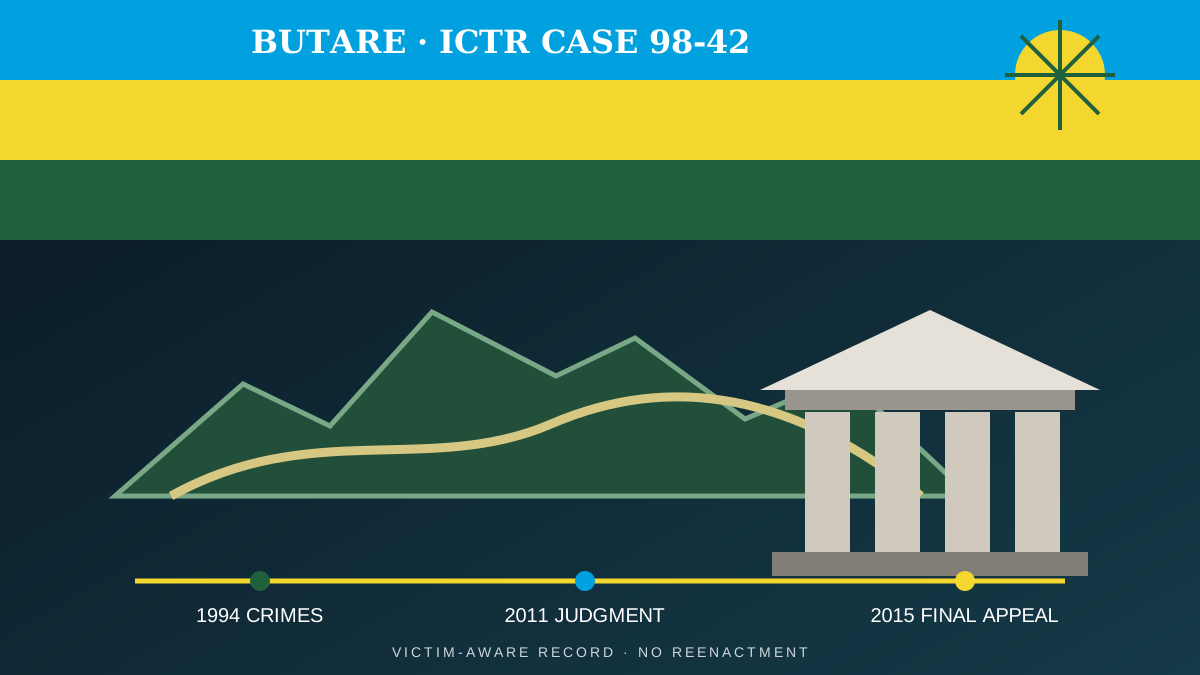
Case-status note: “Solved / adjudicated” refers to the crimes and defendants decided in ICTR Case No. ICTR-98-42. It does not mean that every crime committed in Butare during the genocide, or every person responsible, was addressed in this single proceeding.
What was the Butare genocide case?
The ICTR joined six defendants in a proceeding commonly called the Butare case: Pauline Nyiramasuhuko, Arsène Shalom Ntahobali, Sylvain Nsabimana, Alphonse Nteziryayo, Joseph Kanyabashi and Élie Ndayambaje. Their positions varied, as did the conduct and modes of responsibility alleged against them. The trial therefore produced defendant-specific findings rather than one undifferentiated verdict.
This page focuses on Nyiramasuhuko and the final appellate boundary of her case. She had served as Rwanda's minister for family and women's development. Her son, Ntahobali, was also tried and convicted in the same proceeding.
Crimes at the Butare Prefecture Office
Large numbers of Tutsi civilians sought refuge at the Butare Prefecture Office. The Tribunal examined attacks during which people were abducted, killed and raped. The final appeal record distinguishes a Mid-May Attack, the Night of Three Attacks, and attacks during the first half of June 1994.
The Appeals Chamber affirmed findings that Nyiramasuhuko ordered the killing of Tutsis who had taken refuge at the office during identified attacks. It also affirmed her superior responsibility for failing to prevent and punish rapes carried out by Interahamwe after her orders. These are judicial findings from the final judgment, not allegations added by the archive.
The conspiracy and genocide findings
The Tribunal found that Nyiramasuhuko entered an agreement with members of the Interim Government, on or after April 9, 1994, to kill Tutsis in Butare Prefecture. The Appeals Chamber affirmed the conviction for conspiracy to commit genocide.
It also affirmed convictions for genocide, extermination as a crime against humanity, and violence to life, health, and physical or mental well-being as a serious violation of Common Article 3 of the Geneva Conventions and Additional Protocol II. Each legal label reflects elements the prosecution had to prove; they should not be collapsed into a generic description of wartime violence.
The 2011 trial judgment
On June 24, 2011, the Trial Chamber convicted all six defendants on varying counts. Nyiramasuhuko received life imprisonment. The proceeding was notable because an international criminal tribunal had convicted a woman of genocide and because the judgment addressed rape through both crimes-against-humanity and command-responsibility frameworks.
The trial was exceptionally long: hearings began in 2001, closing arguments concluded in 2009 and judgment came in 2011. That duration later mattered to the sentence on appeal.
What changed on appeal?
On December 14, 2015, the Appeals Chamber reversed Nyiramasuhuko's conviction for persecution as a crime against humanity and entered an acquittal on that count. It affirmed her remaining convictions for conspiracy to commit genocide, genocide, extermination, serious humanitarian-law violations, rape as a crime against humanity and outrages upon personal dignity within the precisely stated modes of responsibility.
The Appeals Chamber also found that her right to be tried without undue delay had been violated and that the violation caused prejudice. It reduced the life sentence to 47 years, with credit for detention since her arrest on July 18, 1997. Recording the reversal and sentence reduction is essential to an accurate account of the final result.
Arsène Shalom Ntahobali's separate responsibility
Ntahobali's convictions included direct participation in killings and rapes, ordering rape and aiding and abetting rape. The Appeals Chamber reversed his persecution conviction but affirmed the other listed convictions and reduced his life sentence to 47 years, also because of undue delay.
Family relationship is not a substitute for individual proof. The page identifies Nyiramasuhuko and Ntahobali's mother-son relationship because it is part of the case history, while keeping their acts and convictions separate.
A victim-aware legal record
The judicial language is dense, but its subject is human harm: civilians sought protection at a government office and were instead abducted, killed and subjected to sexual violence. The archive avoids graphic retelling and does not reproduce testimony merely for shock.
Sexual violence is included because it formed part of the final convictions, not as a sensational detail. Survivor identities protected by the Tribunal remain protected here.
What is final, and what is not claimed?
- Final convictions: core genocide, extermination, rape-related and humanitarian-law convictions against Nyiramasuhuko were affirmed in 2015.
- Reversed count: persecution as a crime against humanity was reversed and an acquittal entered.
- Final sentence: 47 years, reduced from life because undue delay violated her rights and caused prejudice.
- Separate co-defendant: Ntahobali's responsibility and sentence were adjudicated independently.
- Not claimed: that this trial resolved every crime committed in Butare or replaced the histories of survivors and victims.
Frequently asked questions
Who was Pauline Nyiramasuhuko?
She was Rwanda's minister for family and women's development during the 1994 genocide and one of six defendants tried jointly in the ICTR's Butare case.
What crimes did the final appeal judgment affirm?
The Appeals Chamber affirmed convictions for conspiracy to commit genocide, genocide, extermination as a crime against humanity, serious violations of humanitarian law, and superior responsibility for rape and outrages upon personal dignity.
Did the Appeals Chamber affirm every conviction?
No. It reversed Nyiramasuhuko's conviction for persecution as a crime against humanity and entered an acquittal on that count.
What sentence did Pauline Nyiramasuhuko receive?
The Trial Chamber imposed life imprisonment in 2011. The Appeals Chamber reduced the sentence to 47 years in 2015 after finding undue delay that caused prejudice.
Why is this case separate from the Akayesu case?
The Akayesu case concerned crimes in Taba commune and a different defendant. The Butare case concerned separate defendants, locations, attacks and judicial findings.
Was Arsène Shalom Ntahobali also convicted?
Yes. The Appeals Chamber affirmed multiple convictions against Ntahobali, reversed his persecution conviction and reduced his life sentence to 47 years.