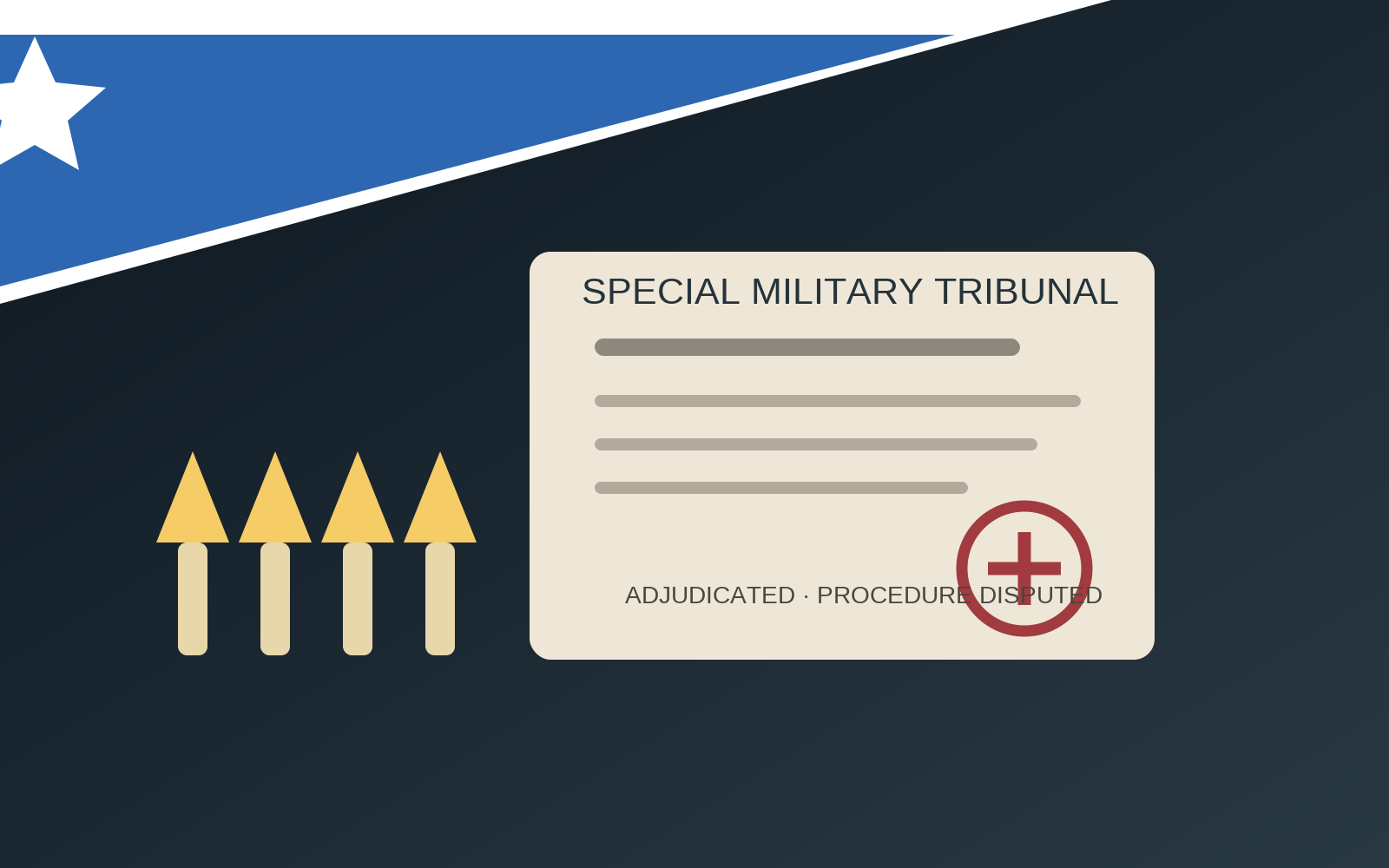
A scandal inside the state
Cuban authorities arrested General Arnaldo Ochoa Sánchez on 12 June 1989 and detained other armed-forces and Interior Ministry officials soon afterward. The accusations involved corruption, illegal commerce and cooperation with Colombian traffickers moving cocaine through Cuban waters toward the United States.
Ochoa was one of Cuba’s most decorated military officers, with service in overseas campaigns. Antonio de la Guardia was a senior Interior Ministry officer. Their rank turned the case into a crisis for the government rather than an ordinary narcotics prosecution.
Charges and defendants
A special military tribunal tried Ochoa and other officials. Contemporary accounts and a later Immigration and Refugee Board of Canada research response describe fourteen officers convicted in the central proceeding. Prosecutors accused members of the group of helping the Medellín cartel use Cuban territory or waters and of accepting bribes; other charges included hostile acts against a foreign state and illegal trade.
Four men received death sentences: Ochoa, Colonel Antonio de la Guardia Font, Major Amado Padrón Trujillo and Captain Jorge Martínez Valdés. Ten other officers were sentenced to prison terms ranging from ten to thirty years.
A televised military trial
The trial lasted only days and was broadcast on Cuban television. The defendants made admissions, and the military tribunal returned convictions. Cuba’s Supreme Court declined to overturn the death sentences, and the Council of State—headed by Fidel Castro—unanimously refused commutation.
Those procedural facts do not settle whether the process was fair. Human Rights Watch noted that Defence Minister Raúl Castro had demanded exemplary punishment before the trial began. Amnesty International issued urgent appeals concerning the death penalty and unfair-trial risk. The United States’ 1989 human-rights report described the proceeding as a show trial, while also acknowledging that the full story remained unclear.
Four executions
At dawn on 13 July 1989, Ochoa, de la Guardia, Padrón and Martínez were executed by firing squad. Cuban state media announced the deaths. Appeals for clemency had come from Amnesty International, other human-rights organizations and Pope John Paul II.
The ten other convicted officers remained subject to lengthy prison sentences. The executions made the case irreversible: later doubts about evidence, political motive or judicial independence could not be tested through a retrial of the four men.
What remains disputed
The existence of the arrests, tribunal, convictions, unsuccessful appeals and executions is not seriously disputed. The uncertainty concerns why Ochoa became the central defendant, how independently the tribunal acted and whether the admissions were reliable in the political environment of the proceedings.
Contemporary reporting recorded speculation that Ochoa was regarded as a possible rival to the Castro leadership. That theory was never established through an independent judicial finding and is presented here as a contested interpretation, not as fact. Conversely, a conviction by the special military tribunal is not treated as proof that the process met international fair-trial standards.
Editorial status
This archive classifies the case as adjudicated because a Cuban tribunal entered convictions, the country’s Supreme Court and Council of State rejected relief, and the sentences were carried out. The label does not endorse the trial’s fairness. “Adjudicated, due process disputed” is more accurate than either “unproven rumor” or “fully resolved.”
No reliable source located during the review completed on 11 October 2026 showed that the convictions had been formally vacated. The record instead remains a documented historical prosecution shadowed by enduring questions about political control and capital punishment.
Timeline
- 12 June 1989: Ochoa is arrested; other officials are detained afterward.
- 30 June 1989: Proceedings before a special military tribunal begin.
- 7 July 1989: Four death sentences and ten prison terms are reported.
- 10–11 July 1989: The Council of State refuses commutation after judicial review.
- 13 July 1989: Ochoa, de la Guardia, Padrón and Martínez are executed.
Questions and answers
Who was executed?
Arnaldo Ochoa Sánchez, Antonio de la Guardia Font, Amado Padrón Trujillo and Jorge Martínez Valdés.
Were other people convicted?
Yes. Ten other officers received prison terms, according to contemporary reporting summarized by Canada’s Immigration and Refugee Board.
Why is the status qualified?
The convictions and executions are documented, but independent observers raised serious concerns about the speed, political pressure and fairness of the proceeding.
Sources
- Immigration and Refugee Board of Canada — convictions and executions research response, 30 November 1994Government research synthesis of defendants, charges, sentences, executions and competing political interpretations.
- Reuters via The Washington Post — executions, 13 July 1989Contemporaneous reporting on the four executions, convictions, review and clemency appeals.
- Amnesty International — Urgent Action 216/89, 2 July 1989Contemporaneous death-penalty and fair-trial concerns.
- Human Rights Watch — Human Rights Activists Behind Bars in Cuba, July 1989Political and procedural context, including calls for punishment before trial.
- U.S. Department of State — 1989 Country Report on Human Rights PracticesContemporary assessment of the executions and disputed political motivation.
- UPI — special military court proceedings, 30 June 1989Contemporaneous account of the arrests, charges and tribunal opening.