Case-status note: “Solved / adjudicated” refers to Nicos Metaxas's guilty pleas and the sentences imposed for seven murders. It does not mean that the failures in earlier missing-person investigations were resolved by the same judgment, or that a court found every institution or official criminally responsible.
What were the Mitsero murders?
The Mitsero murders were a series of seven killings in Cyprus between September 2016 and August 2018. The victims were five women and two girls aged six and eight. The adult victims came from the Philippines, Romania and Nepal; contemporary reporting identified most as migrant domestic workers who had travelled to Cyprus for employment.
The case takes its common name from the abandoned copper-mine area near Mitsero, where the first discoveries were made. Other recoveries occurred at a man-made lake and a military firing-range well in Nicosia District. Those locations help explain the name, but the case is fundamentally about seven people and the accountability established in court—not about a landscape turned into spectacle.
How did the investigation begin?
On April 14, 2019, unusually heavy rain brought the body of a 38-year-old Filipina woman to the surface of a flooded shaft at an abandoned mine. People visiting the area reported the discovery. Within days, investigators had connected the victim to an online contact and arrested Metaxas, then a 35-year-old captain in the Cypriot National Guard.
A second Filipina victim, 28-year-old Arian Palanas Lozano, was recovered from the shaft four days after the first discovery, according to reporting carried by ABC News from Reuters and the Associated Press. The inquiry expanded into a two-month search across mine and lake sites, supported by specialist teams. The final recovery was the six-year-old daughter of one of the women.
Who were the victims?
The seven victims were five women and two daughters of victims. Reliable accounts identify national connections to the Philippines, Romania and Nepal and emphasize that the women were foreign workers in Cyprus. That shared vulnerability became central to the public response because their disappearances had been reported before the murder investigation began.
This archive names only people whose identities are directly supported in the cited reporting and avoids repeating disputed biographical detail. Mary Rose Tiburcio, 38, was the woman whose discovery triggered the investigation; Arian Palanas Lozano, 28, was recovered shortly afterward. The remaining victims are represented here collectively rather than through unsourced reconstruction.
What evidence produced the court result?
This was not a trial built around a disputed suspect identification. Contemporary reports state that Metaxas was traced after the first recovery, provided information that directed investigators to additional locations, and ultimately admitted the murders in court. Recovery work corroborated the existence of seven victims across the sites identified during the inquiry.
The procedural record is unusually clear at its endpoint. Cyprus Mail reported that Metaxas pleaded guilty to 12 charges: seven counts of premeditated murder and five abductions. The court therefore did not sentence him on rumor, an untested police theory or a pending charge. It sentenced him after formal admissions of guilt.
The June 24, 2019 judgment
On June 24, 2019, the Nicosia criminal court imposed seven life sentences. Five were consecutive terms for the murders of the five women. Two were concurrent terms for the murders of the girls, whose deaths occurred at the same time as the murders of their mothers. The court described the offenses as a campaign against defenseless women and rejected the idea that personal mitigation could justify leniency for premeditated murder.
The Guardian and ABC News described the sentence as the toughest imposed in the Republic of Cyprus's post-independence history. That comparison provides national context; it is not used here to rank suffering or sensationalize the case.
Why is the case classified as solved?
- Named defendant: Nicos Metaxas was identified and brought before the Nicosia criminal court.
- Formal outcome: he pleaded guilty to seven premeditated murders and five abductions.
- Sentence: the court imposed seven life sentences on June 24, 2019.
- Status boundary: the solved label covers his criminal responsibility for the seven murders.
- Not claimed: that the sentence resolved every failure in the earlier handling of missing-person reports.
What happened after scrutiny of the police response?
The murders produced a separate crisis of institutional confidence. Reporting documented that the women and girls had been declared missing, yet their cases were not investigated with the urgency later shown after the first body was found. Migrant workers and civil-rights groups held vigils and demonstrations, arguing that the victims' nationality and employment status had contributed to official indifference.
As the scale of the case became public, Justice Minister Ionas Nicolaou resigned and President Nicos Anastasiades dismissed police chief Zacharias Chrysostomou. Cyprus Mail reported that a committee had been appointed to examine possible police missteps. Those actions are part of the public record, but they should not be converted into criminal findings that the cited court did not make.
Why the case matters beyond the conviction
The record shows how a solved homicide case can still leave a broader accountability question. Metaxas's responsibility was adjudicated, but the path to discovery exposed gaps in whose disappearances receive attention. The distinction matters for search engines, readers and future researchers: a completed prosecution and an institutional controversy can coexist without being collapsed into one legal status.
It also changes how the case should be told. Treating the women only as entries in an offender's chronology repeats the imbalance that public protests challenged. Their migration, work and families are relevant because they shaped both their vulnerability and the response to their disappearances—not because they provide a dramatic backdrop.
A victim-aware visual and editorial record
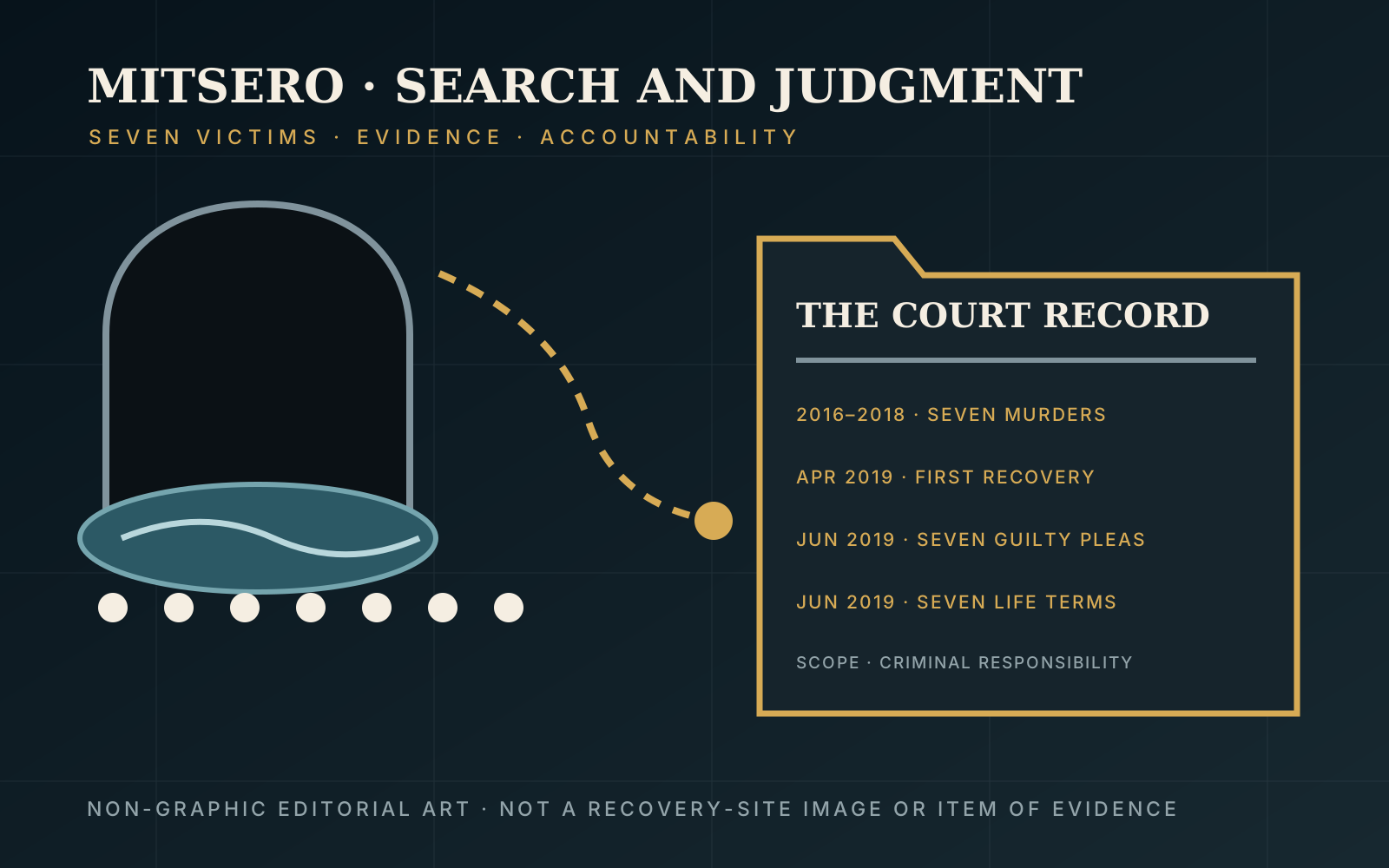
The accompanying illustration uses an abstract mine opening, water line, search path and court-file timeline. It does not depict a body, simulate a recovery, or borrow a real person's likeness. The visual supports orientation while making clear that it is editorial art.
The page also avoids reproducing the defendant's claimed explanations for the killings. A guilty plea establishes responsibility; it does not make every self-description reliable, clinically meaningful or necessary to understanding the victims, investigation and judgment.
Frequently asked questions
What were the Mitsero murders?
They were seven murders committed in Cyprus between September 2016 and August 2018: five women and two girls.
How was the case discovered?
Heavy rain exposed the body of a 38-year-old woman in an abandoned mine shaft on April 14, 2019. That discovery began the investigation that led to Metaxas.
What did Nicos Metaxas plead guilty to?
On June 24, 2019, he pleaded guilty to 12 charges involving seven premeditated murders and five abductions.
What sentence did the court impose?
Seven life sentences: five consecutive terms for the women and two concurrent terms for the girls.
Why is this case marked solved or adjudicated?
The criminal responsibility and sentences were established in court through guilty pleas and the June 24, 2019 judgment.
Did the conviction resolve the police-response controversy?
No. The label does not determine every question about how earlier missing-person reports were handled.