The abduction and ransom demand
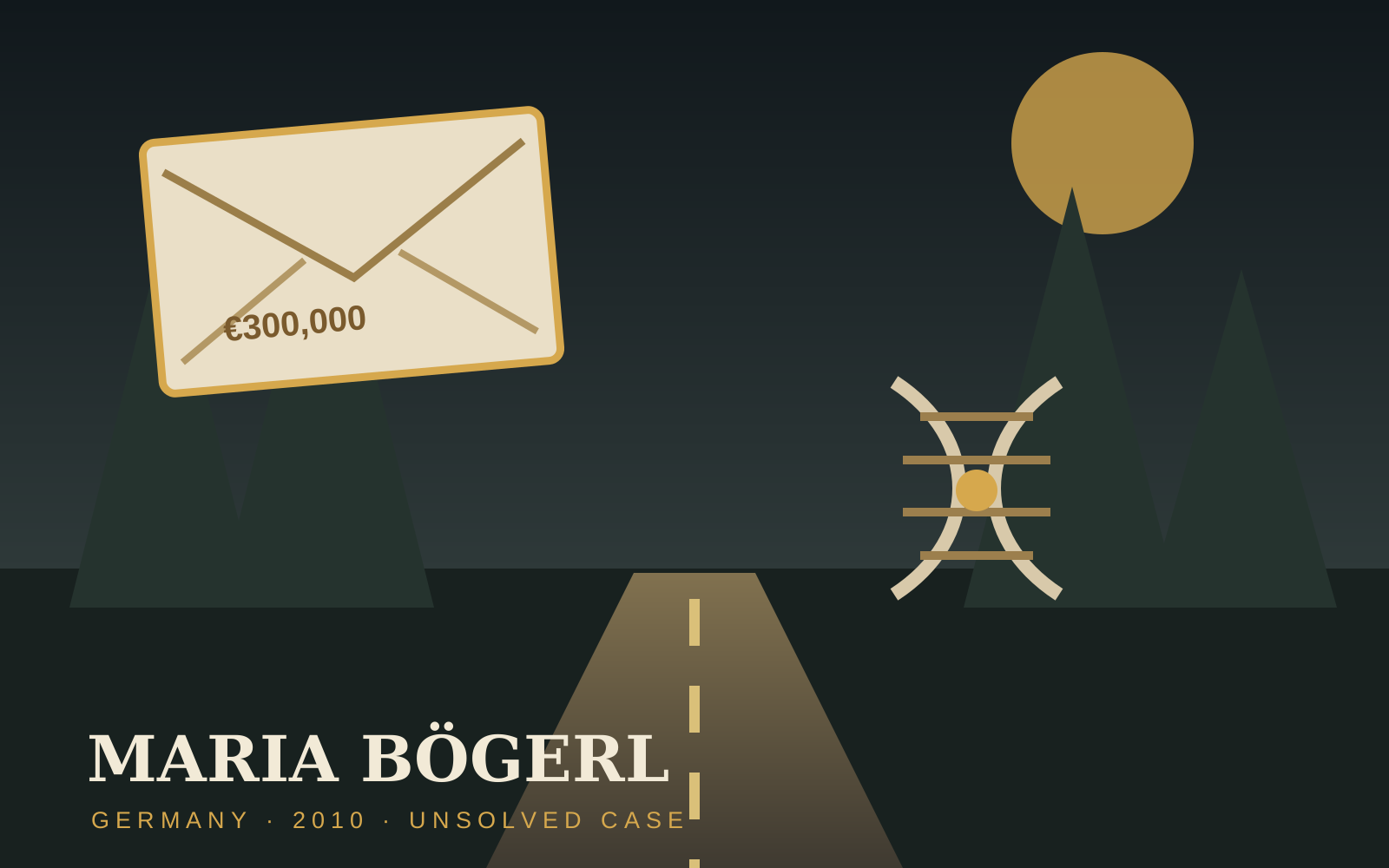
Maria Bögerl disappeared from her home in Heidenheim-Schnaitheim on May 12, 2010. That same day, her husband received a telephone ransom demand for €300,000. Investigators treated the disappearance as a kidnapping and mobilized a large search effort.
The ransom was to be left near the A7 motorway. According to later reporting based on police and prosecution accounts, the money could not be placed at the specified location within the narrow deadline. It was eventually deposited, but it was not collected and communication with the kidnapper ended.
Searches and discovery
Police searched extensively around Heidenheim. Maria's mobile phone was recovered and her car was later found at Neresheim Abbey. Despite those discoveries, she remained missing for weeks.
On June 3, 2010, a walker found Maria's body at the edge of woodland between Nietheim and Niesitz, a short distance from the area connected to the ransom handover. The case became a murder investigation.
A DNA-led investigation
Investigators collected and evaluated more than 10,000 leads over the following years. One of the most important pieces of evidence was a DNA trace that authorities described as attributable to a male offender. Large-scale voluntary DNA screening was carried out among thousands of men in the region, but no match identified the killer.
The case repeatedly returned to public attention through appeals and renewed forensic work. Investigators also checked numerous tips and potential suspects. None led to charges for Maria's kidnapping and murder.
Why the investigation was suspended
In August 2023, the Ulm police headquarters and Ellwangen public prosecutor's office announced that the active investigation was being suspended because there were no further promising investigative approaches at that time. Authorities emphasized that the case was not legally closed forever.
Murder has no statute of limitations in Germany. The file remains with Ulm police, and investigators can reopen active proceedings if new evidence emerges. The male DNA trace remains an important unresolved lead.
Timeline
May 12, 2010: Maria Bögerl is abducted from her home in Heidenheim-Schnaitheim; a €300,000 ransom demand follows.
May 13, 2010: the ransom is not collected and contact with the kidnapper ends.
Mid-May 2010: Maria's phone and car are recovered during the search.
June 3, 2010: a walker finds Maria's body in woodland between Nietheim and Niesitz.
2010–2023: police investigate more than 10,000 leads, conduct DNA screening and make repeated public appeals without identifying a perpetrator.
August 14, 2023: police and prosecutors suspend active investigation because no further viable leads remain, while stating that the case can be reopened.
2025: retrospective reporting continues to describe the murder as unsolved.
Current status
The kidnapping and murder of Maria Bögerl remains unsolved. No perpetrator has been convicted or formally established in the public record. Active investigation was suspended in 2023 after more than 13 years, but new evidence — particularly a future match to the offender DNA trace — could restart the case.
Sources
- Associated Press — investigation suspended after 13 years without identifying a suspect, August 2023
- SWR — documented chronology of the abduction, ransom attempt, searches and later suspension
- Südwest Presse / dpa — DNA trace, more than 10,000 leads and 2023 investigative status
- WEB.DE — 15-year retrospective confirming the case remained unsolved in May 2025