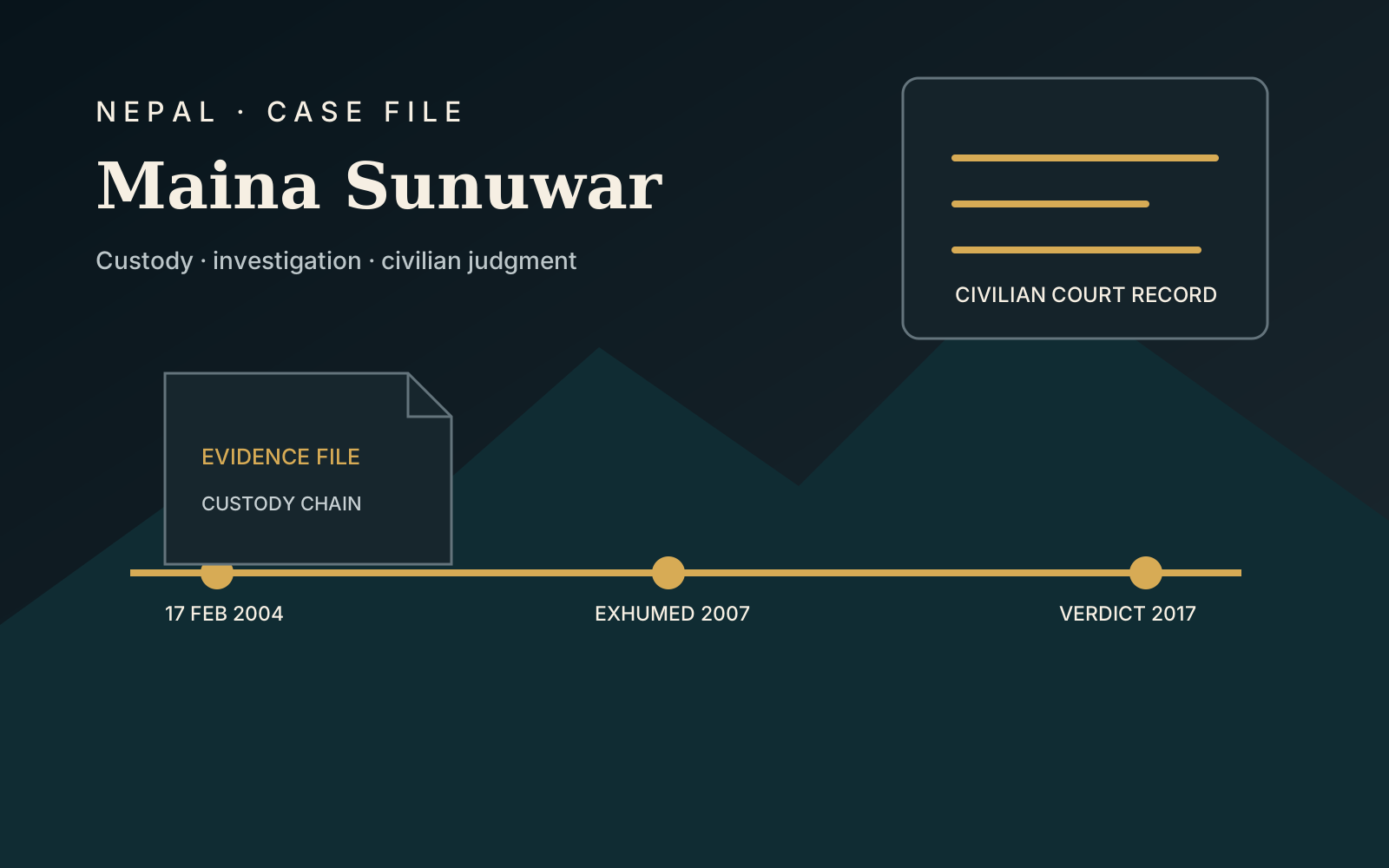
Case-status note: Maina's case is classified “Solved / adjudicated” because the Kavrepalanchok District Court convicted Bobby Khatri, Sunil Adhikari and Amit Pun of murder in 2017. The defendants were absent, the Nepal Army later challenged the judgment, and this review did not locate a reliable final Supreme Court ruling or confirmation that the sentences were enforced.
What happened to Maina Sunuwar?
Maina Sunuwar was taken from her home in Kharelthok on February 17, 2004 during Nepal's armed conflict. The UN human-rights office reported that army personnel were looking for her mother, Devi Sunuwar, after allegations that the family had links to Maoists. When Devi was not there, the soldiers took Maina instead.
She was transported to the Birendra Peace Operations Training Centre at Panchkhal. The army's later inquiry acknowledged that officers used an improper interrogation. The UN's detailed review found that Maina was subjected to torture and died in custody. This page omits graphic descriptions and focuses on the custody chain, institutional response and court record.
A custody death concealed
After Maina died, personnel buried her body inside the military compound and produced a version claiming she had been shot while trying to escape. Her family was not promptly given an honest account of what happened or access to her remains.
Persistent work by Maina's mother, lawyers and human-rights groups forced the case into public view. The UN Office of the High Commissioner for Human Rights documented inconsistencies in the army's account and called for a full civilian investigation. Maina's remains were exhumed from the training-centre grounds in March 2007.
The limited court-martial
A military court convicted three officers in 2005 of using improper interrogation methods and failing to follow procedures when disposing of Maina's body. They received six-month penalties that were treated as already served through confinement to barracks.
That process did not determine criminal responsibility for torture or murder. OHCHR, Amnesty International and Human Rights Watch repeatedly argued that Nepal's ordinary justice system retained responsibility to investigate the killing and prosecute those responsible.
The civilian prosecution
A civilian complaint was filed, but years of resistance and disputes over military versus civilian jurisdiction delayed the case. Court orders required the police and prosecutors to proceed. The defendants did not appear despite summonses and an arrest warrant.
On April 16, 2017, the Kavrepalanchok District Court convicted retired Colonel Bobby Khatri and retired Captains Sunil Adhikari and Amit Pun of murder. Captain Niranjan Basnet was acquitted. Rights organizations described the punishment as life imprisonment under the law then applied; contemporary accounts equated that term with 20 years.
The distinction between the two proceedings is essential. The 2005 military penalties concerned procedural and disciplinary offenses. The 2017 civilian judgment was the first murder conviction in Maina's death.
Convictions without confirmed custody
The 2017 trial proceeded without the accused present. Amnesty International reported that the three convicted former officers were believed to have left Nepal after the court-martial process. The United Nations welcomed the verdict but urged the government to implement it without delay.
In September 2017, the Nepal Army filed a petition asking the Supreme Court to overturn the convictions. The International Commission of Jurists later argued that the petition lacked a valid legal foundation and would undermine accountability. No reliable final decision on that petition was located in this review through September 14, 2026.
What is established—and what is not?
It is established that Maina died after an abusive military interrogation and that a civilian district court convicted three retired officers of murder. It is also established that Basnet was acquitted and must not be described as convicted.
What remains unclear in the published record is whether the three convicted men were ever arrested to serve their sentences and whether the Supreme Court finally disposed of the army's petition. The case therefore has a verified adjudication but incomplete sentence enforcement.
Why Maina's case matters
Maina's case became a test of whether conflict-era abuses by security forces could be tried in ordinary courts. The verdict showed that civilian prosecution was legally possible, but the long delay and uncertain enforcement also showed the distance between a judgment and practical accountability.
The archive centers Maina rather than the institutional struggle alone. She was a child taken in place of an adult the soldiers sought. Her family's insistence on truth transformed a concealed custody death into a documented national case.
Frequently asked questions
When did Maina Sunuwar die?
She died in Nepal Army custody on February 17, 2004.
Who was convicted?
Bobby Khatri, Sunil Adhikari and Amit Pun were convicted of murder in 2017; Niranjan Basnet was acquitted.
Was the military trial a murder conviction?
No. The court-martial imposed minor penalties for improper interrogation and disposal procedures.
Were the 2017 sentences enforced?
The defendants were absent, and reliable confirmation that they entered custody was not located.