The cooperative and the land dispute
The Las Hojas community was associated with the Asociación Nacional Indígena Salvadoreña, or ANIS. The IACHR record traced the immediate background to a land dispute that began after ANIS purchased property near Las Hojas in 1978. The cooperative later received threats, and local Civil Defense members reportedly maintained a list of people described as subversives.
That history matters because it places the massacre within both the Salvadoran civil war and a localized conflict involving Indigenous land, civilian organization and military power.
The military operation
Shortly after dawn on February 22, 1983, roughly 200 soldiers entered the cooperative from several directions, assisted by local Civil Defense members. Residents were taken from homes and workplaces. Witnesses described detainees being led toward the Cuyuapa River with their thumbs bound.
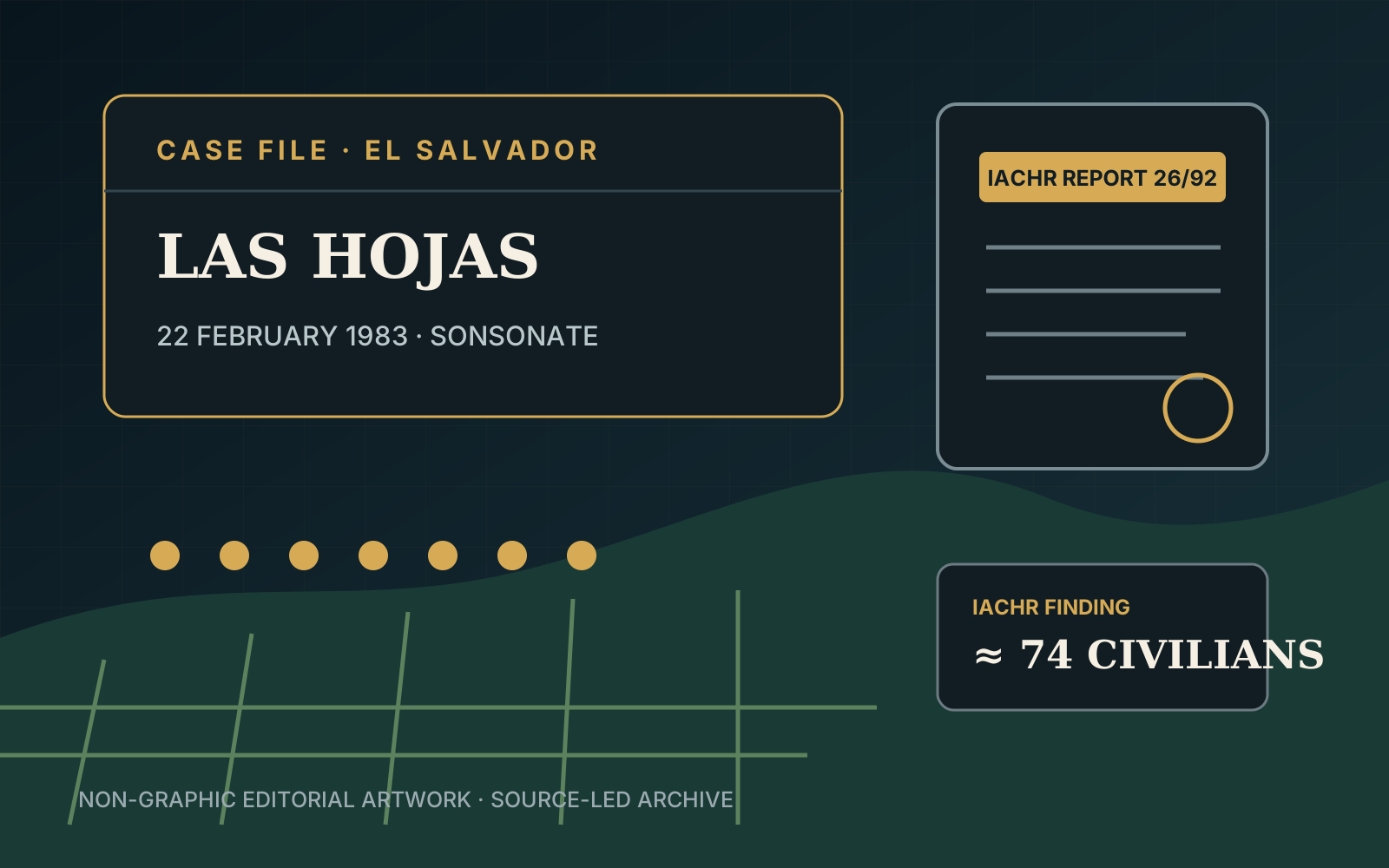
The IACHR record stated that identified victims had been shot at close range. It accepted the complaint’s account and ultimately declared the state responsible for the summary and extrajudicial execution of approximately 74 civilians.
Victims and identification
The final Commission report named fifteen victims while recognizing a much larger overall toll. The difference reflects the limits of formal identification in the record, not a conclusion that the remaining reported deaths did not occur.
This page therefore uses the Commission’s formulation—approximately 74 civilian victims—and does not manufacture a complete list where the official decision did not provide one.
Domestic proceedings
A criminal case opened in Sonsonate in April 1983. Thirteen people were charged in relation to fifteen murders, and six were detained. Courts dismissed most charges, prosecutors moved to reopen the case, and an appellate court later ordered defendants to stand trial.
In 1987 the legislature enacted an amnesty. Salvadoran courts then applied it to Las Hojas, dismissing the case. In 1988 the Supreme Court’s Criminal Chamber acknowledged that a military operation had occurred, that soldiers and Civil Defense members participated, and that fourteen participants had been identified; it nevertheless held that the amnesty covered the crime.
The Inter-American Commission decision
Petitioners brought Case 10.287 to the IACHR. El Salvador repeatedly failed to provide requested information during the proceedings. On September 24, 1992, the Commission accepted the reported facts and declared the state responsible for the executions.
The decision found violations of the rights to life, personal integrity, due process and judicial protection. It recommended a complete and impartial investigation, identification and prosecution of those responsible, prevention measures, reparations and compensation.
Why the amnesty mattered
The Commission concluded that applying the amnesty foreclosed effective investigation, prosecution and civil redress. The ruling treated that outcome as incompatible with El Salvador’s obligations under the American Convention.
This procedural history is unusually well documented: charges were not merely absent. They were filed, litigated, revived and then extinguished through an amnesty applied by domestic courts.
Current status
No final criminal conviction of an individual defendant for the Las Hojas massacre was located in the sources reviewed for this file. State responsibility and the failure of judicial protection are established in the IACHR record; personal criminal responsibility remains unadjudicated.
The case is therefore classified as unresolved individual accountability, not as an unverified event and not as a solved prosecution.
Questions that remain
- Were all victims eventually identified and formally recorded?
- Did later proceedings revisit the defendants after the amnesty framework changed?
- What reparations were delivered to survivors, relatives and the ANIS community?
- Which command decisions preceded the operation?
Frequently asked questions
Why does the page say “approximately 74”?
That is the IACHR’s final formulation. The decision named fifteen victims but accepted evidence of a much larger overall toll.
Were suspects charged?
Yes. A domestic case charged thirteen people, but the proceedings ended after courts applied the 1987 amnesty.
Was anyone convicted?
No final individual criminal conviction was located.
Did the IACHR find El Salvador responsible?
Yes. The Commission found state responsibility and multiple violations of the American Convention in Report 26/92.