What happened to Ibni Oumar Mahamat Saleh?
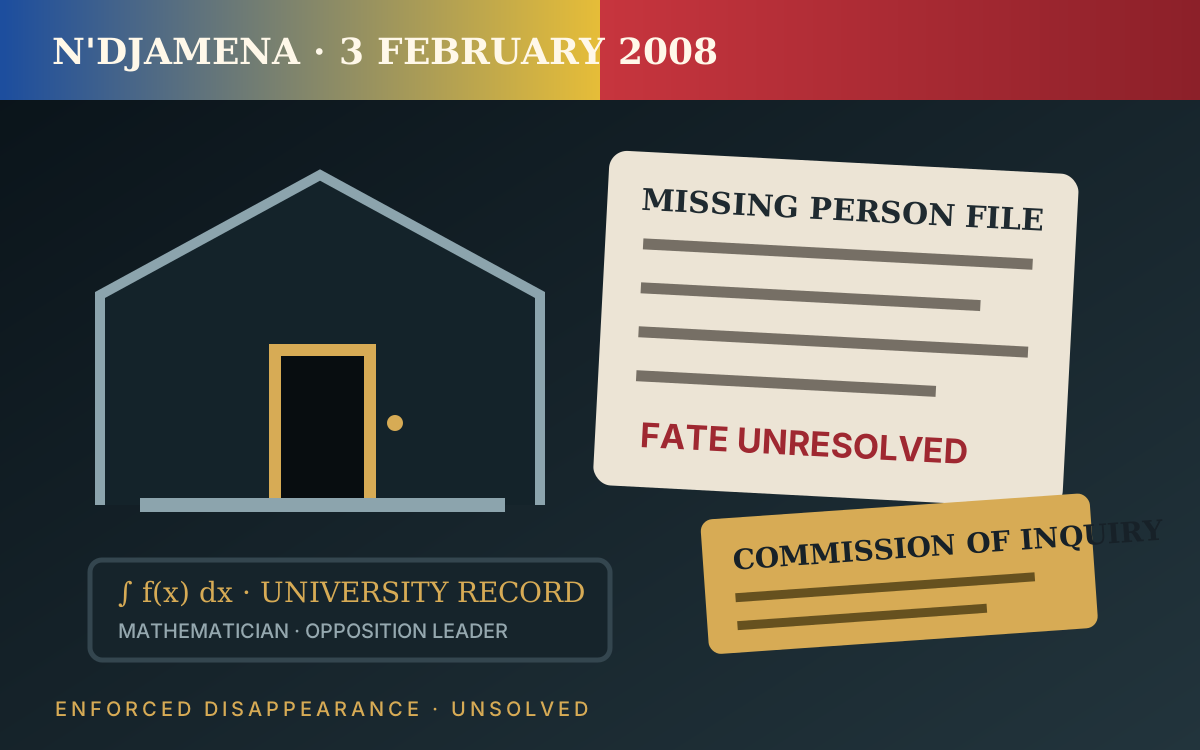
Ibni Oumar Mahamat Saleh was a mathematician, former government minister and one of Chad's most prominent non-armed opposition leaders. On February 3, 2008, the day after rebel forces were pushed back from N'Djamena, witnesses said armed men arrived at his home and took him away.
Two other opposition figures, Lol Mahamat Choua and Ngarlejy Yorongar, were also detained during the same crackdown. They later reappeared. Ibni did not.
The official commission attributed the arrest to Chadian defense and security forces. It did not identify a convicted individual responsible for Ibni's subsequent disappearance or establish a complete, judicially tested account of his death.
A mathematician and opposition leader
Ibni was known beyond party politics. He studied mathematics in France, taught at the University of N'Djamena and served in government before becoming a leading opposition figure. He headed the Party for Liberties and Development and chaired a coalition of opposition parties.
His political role matters to the context, but it does not by itself prove why a particular person ordered his detention. The reviewed evidence supports the fact of an arrest during a broader security crackdown; responsibility for what followed remains unadjudicated.
N'Djamena after the February battle
Rebel forces attacked the capital on February 2 and 3, 2008. Government forces retained control after intense fighting. In the hours that followed, security personnel moved against political opponents who had not been part of the armed assault.
Human Rights Watch and the United States human-rights report described the arrests as part of post-battle abuses. Ibni's home was searched and he was taken away in front of witnesses. Authorities initially gave conflicting or incomplete accounts of his whereabouts.
The national commission of inquiry
International pressure led to a commission of inquiry with Chadian and international participation. It interviewed more than 1,500 people and submitted its report in August 2008.
The commission concluded that Ibni had been arrested at his home by defense and security forces. It could not determine his later route, place of detention or precise fate. The report expressed the belief that he was dead, but did not replace the missing criminal investigation with a finding against a named individual.
Judicial inquiry and stalled accountability
A Chadian judicial investigation was opened in 2009. Rights organizations repeatedly criticized the absence of meaningful progress, the failure to locate the body and the lack of prosecution. Public claims by relatives and political figures went further than the commission's findings; those claims are recorded as allegations, not verdicts.
France also faced requests to disclose records connected to its military and diplomatic presence during the 2008 crisis. Some documents were later declassified for judicial authorities, but the sources reviewed did not show that this produced a final prosecution for Ibni's disappearance.
Status as of September 2026
Ibni Oumar Mahamat Saleh has not returned, and his remains have not been publicly identified. The official inquiry established that state security forces arrested him, while leaving his subsequent treatment and the identities of those individually responsible unresolved.
No reliable source located in the review completed on September 20, 2026 reported a final conviction for his disappearance or death. The case therefore remains unsolved and should not be described as a proven murder by any person who has not been convicted.
Questions still unanswered
- Where was Ibni taken after he was removed from his home?
- Which unit carried out the arrest, and who exercised operational command?
- When and where did he die, if the inquiry's belief is correct?
- Where are his remains?
- Why did the judicial investigation fail to produce a prosecution?
- What did declassified foreign records add to the evidentiary record?
Frequently asked questions
Who was Ibni Oumar Mahamat Saleh?
A Chadian mathematician, former minister and leading opposition politician.
When did he disappear?
Security personnel took him from his N'Djamena home on February 3, 2008.
What did the official inquiry find?
It concluded that defense and security forces arrested him, but could not establish his later fate.
Was anyone convicted?
No final individual conviction was located in the sources reviewed through September 20, 2026.
Is his death confirmed?
The commission expressed the belief that he was dead, but his body was not recovered and the reviewed record did not establish a final criminal account.