What is established?
Hienadz Shutau was fatally shot after a protest in Brest on August 11, 2020. Amnesty International reported that footage showed him and his friend Alyaksandr Kardzyukou sitting on a bench before plainclothes officers approached. The footage did not capture every moment of the encounter, but medical records and other material reviewed by Amnesty showed that Shutau was shot from behind. He died on August 19.
In the later criminal trial, reporting identified army officer Raman Haurylau as the person who fired the fatal shot. He and officer Arseniy Halitsyn participated as injured parties, not defendants. The Brest Regional Court posthumously found Shutau guilty of disobeying police and sentenced Kardzyukou to ten years for resisting law enforcement and attempted murder.
Protest and security-force deployment
The encounter occurred two days after the disputed August 9 presidential election. Protests spread across Belarus, and military special-operations personnel were ordered to assist police and security forces in Brest on August 11.
That context matters, but it does not by itself resolve the seconds before the shooting. The Interior Ministry said aggressive people armed with metal bars attacked officers and that firearms were used to protect life and health. Shutau’s family and Amnesty challenged that version, pointing to video, witness accounts and the direction of the fatal wound.
The shooting and death
Amnesty reported that Shutau and Kardzyukou were sitting some distance from the rally site when three plainclothes officers approached. Less than a minute later Shutau was shot in the back of the head. Kardzyukou fled and was arrested on August 14.
Shutau remained hospitalized until his death on August 19. The record reviewed for this page does not establish that bystanders saw every action in the encounter. It therefore presents the state’s self-defense account and the contrary evidence as competing claims rather than silently resolving the disputed sequence.
Refused homicide investigation
Shutau’s family requested a criminal investigation. According to Amnesty, the Investigative Committee replied on September 3 that it lacked sufficient grounds to open a homicide case under Article 139.
Kardzyukou was initially accused of resisting police. By December, the charge had been changed to attempted murder of an officer. Amnesty called him a prisoner of conscience and argued that the prosecution sought to justify Shutau’s killing. That is Amnesty’s assessment, not a domestic judicial finding.
The posthumous verdict
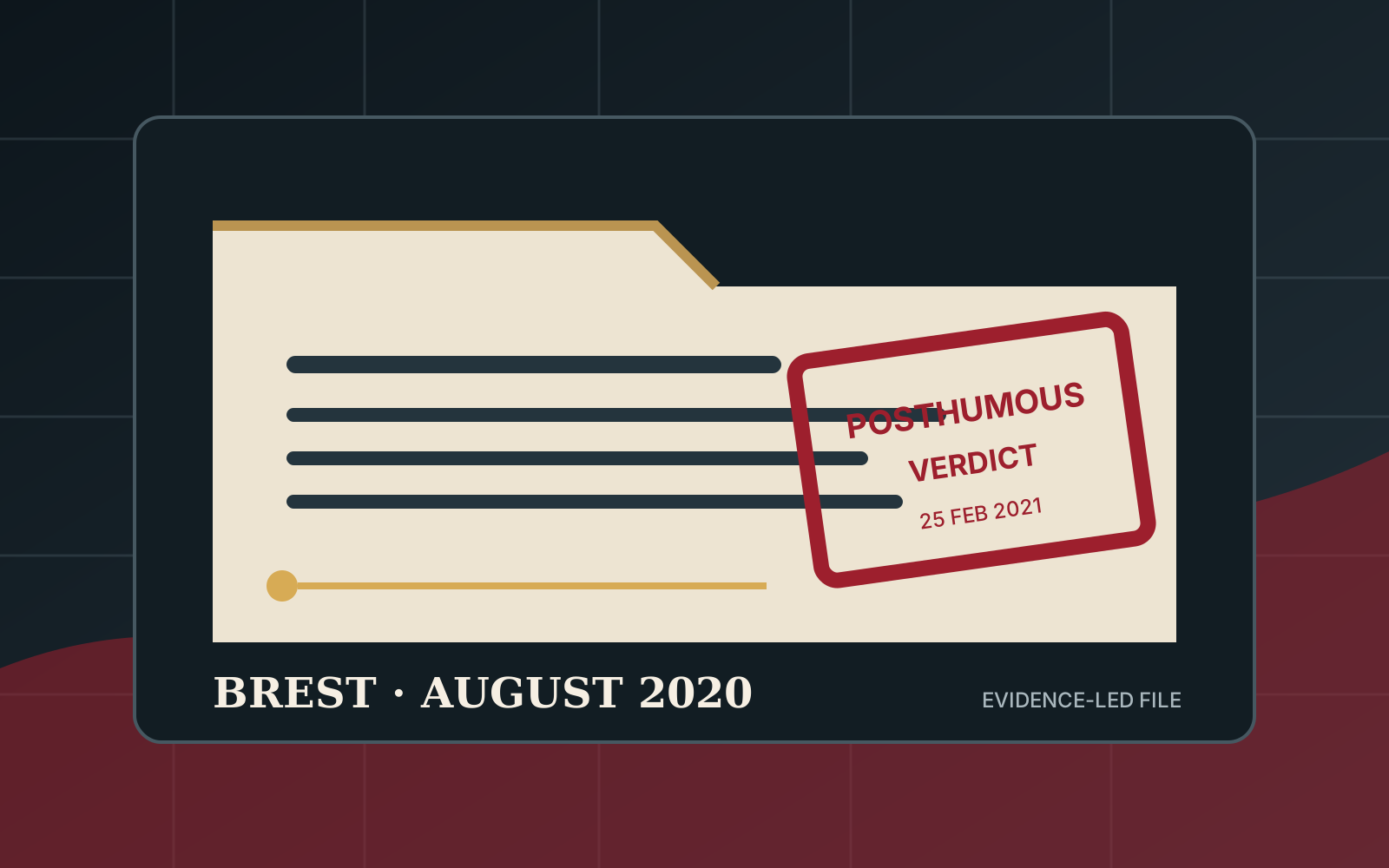
On February 25, 2021, Judge Svyatlana Kramyaneuskaya found Shutau guilty of disobeying a police order but imposed no sentence because he was dead. Kardzyukou, who pleaded not guilty, received ten years for resisting law enforcement and attempted murder.
Shutau’s daughter Anastasia represented him and said she would appeal. A May 2021 report from Belsat said the appellate court left Kardzyukou’s judgment unchanged. The sources reviewed do not show any later homicide prosecution of Haurylau or another person for Shutau’s death.
What remains unresolved?
The public record identifies who fired the shot, but criminal responsibility for the death was never adjudicated in a homicide case. The official claim of self-defense conflicts with evidence cited by Amnesty, and a posthumous conviction of the deceased cannot substitute for an independent determination of whether the lethal force was lawful.
The file is therefore classified as unsolved for homicide accountability. Kardzyukou’s conviction is a separate final criminal outcome and is not described as a conviction for Shutau’s death.
Verified timeline
- August 9, 2020
Belarus holds a disputed presidential election, followed by nationwide protests. - August 11, 2020
Plainclothes officers approach Shutau and Kardzyukou in Brest; Shutau is shot in the back of the head. - August 14, 2020
Kardzyukou is arrested. - August 19, 2020
Shutau dies from the gunshot injury. - September 3, 2020
The family is told there are insufficient grounds to open a homicide investigation. - December 2020
Amnesty reports that Kardzyukou’s charge has been changed to attempted murder of an officer. - February 25, 2021
The Brest Regional Court posthumously convicts Shutau and sentences Kardzyukou to ten years. - May 2021
Belsat reports that the appellate court leaves Kardzyukou’s judgment unchanged.
Sources and verification notes
The account separates the court’s ruling and official self-defense claim from Amnesty’s evidence-based criticism. No source reviewed documented a homicide conviction for Shutau’s death.
- Amnesty International — Witness in police killing faces life sentenceDecember 16, 2020 · shooting, video, medical evidence, death date and refused homicide probe.
- RFE/RL — Protester killed by soldier found guiltyFebruary 25, 2021 · officer identities, posthumous verdict and Kardzyukou sentence.
- Belsat — Appeal court leaves verdict unchangedMay 16, 2021 · appellate outcome and family response.
Frequently asked questions
Who was Hienadz Shutau?
He was a Belarusian man fatally shot after a protest in Brest in August 2020.
Who fired the fatal shot?
Court reporting identified army officer Raman Haurylau. He was an injured party in the trial, not a criminal defendant.
Was a homicide case opened?
No. The family was told that authorities considered there were insufficient grounds.
Why was Shutau tried after his death?
The Brest Regional Court adjudicated the accusation that he disobeyed police and entered a guilty finding without a sentence.
What happened to Kardzyukou?
He received ten years; a later appellate report said the judgment was unchanged.
Is the killing solved?
The shooter is publicly identified, but no homicide conviction was located and the justification for the shooting remains contested.