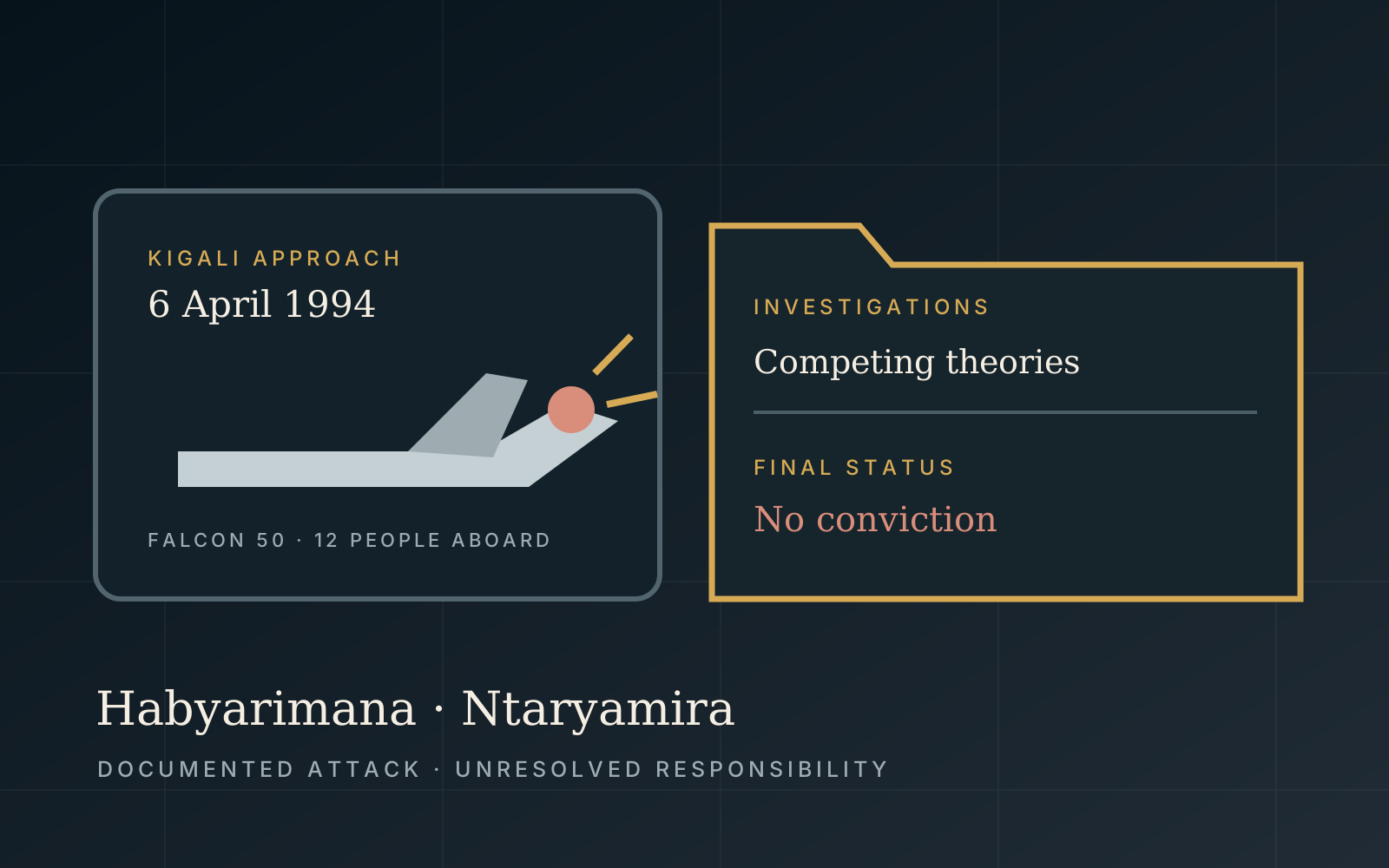
Case-status note: The missile attack and the deaths are established. Responsibility is not. Allegations against members of the Rwandan Patriotic Front and theories involving Hutu extremists are reported only as competing investigative positions. No person or organization is presented here as the perpetrator without a final judgment.
What happened on April 6, 1994?
The aircraft was returning from a regional summit in Dar es Salaam. On board were Habyarimana, Ntaryamira, senior Rwandan and Burundian officials, aides and a three-person French flight crew. As the Falcon 50 approached Kigali International Airport that evening, surface-to-air missiles were launched. The aircraft crashed in the grounds of the Rwandan presidential residence near Kanombe. There were no survivors.
The two presidents had been engaged in negotiations shaped by civil war, regional insecurity and the unimplemented Arusha peace arrangements. Their deaths created an immediate vacuum at the top of the Rwandan state. Roadblocks appeared, moderate officials were targeted and organized massacres began. The attack is therefore inseparable from the chronology of the genocide against the Tutsi, while remaining a distinct criminal event with its own victims and unresolved evidentiary questions.
The people aboard
Public attention usually centers on the two presidents, but the aircraft carried twelve human beings. Along with Habyarimana and Ntaryamira were Burundian ministers, Rwandan military and presidential advisers, a physician and French crew members Jacky Héraud, Jean-Pierre Minaberry and Jean-Michel Perrine. Every person aboard died in the same attack.
Keeping the passenger list in view matters editorially. The case is often used as shorthand for political theories about who benefited from the crash. That framing can erase the individual victims and encourage speculation to stand in for evidence. This file treats the twelve deaths as the starting point and evaluates later claims by the strength and legal status of the investigations behind them.
The immediate aftermath
The shootdown did not create extremist ideology or the organizational machinery of genocide. Those structures, including propaganda, militia organization and lists of political opponents, already existed. The aircraft attack instead acted as a precipitating event and public pretext. Within hours, units associated with the existing security apparatus moved against opposition leaders and civilians.
Prime Minister Agathe Uwilingiyimana sought to address the nation the following morning. She and her husband were killed, as were ten Belgian UN peacekeepers assigned to protect her. That assassination is documented in a separate Crime by Region file because it involved different victims, locations, actors and court proceedings. Combining the two would obscure rather than clarify responsibility.
Why the investigation became contested
Physical access to the crash site, the handling of military information and the rapidly changing control of Kigali complicated evidence collection from the beginning. Later investigators worked with witness statements, missile-trajectory analysis, military records and testimony from defectors. The passage of time increased the difficulty of testing accounts and preserving chains of custody.
Two broad theories dominated public debate. One accused RPF personnel of ordering or conducting the attack. The other pointed to Hutu extremists opposed to the Arusha process and to any transfer of power. Investigative bodies reached different assessments, and some witnesses changed or withdrew accounts. None of those theories became a final conviction.
The French judicial inquiry
France opened a judicial investigation in 1998 after complaints connected to the French flight crew. Judge Jean-Louis Bruguière's inquiry later focused on people close to Paul Kagame and generated arrest warrants. Rwanda rejected those accusations. The case strained diplomatic relations and became intertwined with wider arguments about France's role before and during the genocide.
Later French investigating judges revisited the evidentiary record, including technical work concerning possible launch locations. In December 2018 they dismissed the case, finding insufficient evidence to send the accused to trial. The Paris Court of Appeal upheld that result in July 2020. In February 2022, France's Court of Cassation rejected the final challenge and confirmed the closure of the French proceeding.
A dismissal for insufficient evidence is not a finding that another theory has been proved. It means the French case did not establish legally sufficient charges against the people investigated. The page therefore does not convert the dismissal into an exoneration of every possible actor or an endorsement of the rival theory.
The Rwandan commission
A Rwandan commission published a separate inquiry in 2010. Its assessment attributed the launch to extremist elements associated with the former Rwandan armed forces and argued that the attack was intended to derail power sharing and create the conditions for mass killing. That conclusion sharply contradicted the earlier French theory.
The commission's conclusion is an institutional finding, not a final criminal judgment against a named individual. Its political context and evidence have been debated, just as the French inquiry's methods and earlier allegations were contested. Presenting either report as a criminal conviction would overstate what the record proves.
What the sources agree on—and what they do not
The strongest common ground is narrow but important: missiles struck the aircraft; all twelve occupants died; the event was followed immediately by the seizure of power and the start of organized mass killing; and no final trial has established individual responsibility for the attack.
The disagreement concerns launch location, chain of command, motive and the reliability of particular witnesses. Those are not minor details. They determine whether any theory can move from historical allegation to criminal proof. The closure of the French case without trial leaves the attack legally unresolved.
Current status
As of September 15, 2026, the aircraft assassination remains unsolved at the individual criminal level. The 2018 French dismissal, affirmed in 2020 and finally upheld in 2022, closed that proceeding without a conviction. No later authoritative judgment identifying the attackers or person who ordered the strike was located during this review.
The case remains editorially significant because it demonstrates the difference between a documented crime and a proven perpetrator. The event itself is not in doubt. The identities and command responsibility of those who carried it out remain unresolved.
Questions still unanswered
- Who obtained and launched the missiles used against the Falcon 50?
- What command structure authorized the attack?
- Which early witness accounts can still be independently corroborated?
- Were all physical and military records preserved and disclosed?
- Could future archival releases materially change the evidentiary picture?
Sources and methodology
- United Nations — Rwanda historical backgroundInstitutional chronology of the aircraft attack and genocide.
- Reuters, September 18, 2010French technical investigation and the competing Rwandan inquiry.
- Al Jazeera, July 3, 2020Paris appeals decision and procedural history.
- Le Monde, February 15, 2022Final French Court of Cassation closure.
- United States Holocaust Memorial Museum — RwandaContext on the pre-existing planning and subsequent genocide.
The main facts were cross-checked across institutional chronology, contemporary reporting and the later French procedural record. Where sources conflict, the disagreement is stated rather than resolved by inference.
Frequently asked questions
What happened to the aircraft carrying Juvénal Habyarimana and Cyprien Ntaryamira?
The presidential Falcon 50 was struck by surface-to-air missiles while approaching Kigali on April 6, 1994. All twelve occupants died.
Who was killed?
The victims included Rwanda's president Juvénal Habyarimana, Burundi's president Cyprien Ntaryamira, officials and aides, and the three-person French flight crew.
Who fired the missiles?
No perpetrator has been established by a final criminal judgment. Investigations pursued competing theories involving RPF personnel and Hutu extremists.
What happened to the French investigation?
Investigating judges dismissed the case in 2018 for insufficient evidence. The Paris appeals court upheld the dismissal in 2020, and France's highest court confirmed closure in 2022.
Did the attack cause the genocide?
The shootdown was the immediate precipitating event used by extremists as mass killing began, but extensive evidence shows that genocidal organization, propaganda and targeting structures predated the aircraft attack.
Is this the same case as Agathe Uwilingiyimana's assassination?
No. The aircraft was attacked on April 6. Prime minister Uwilingiyimana and her husband were killed the following morning in a distinct crime.