The case in brief
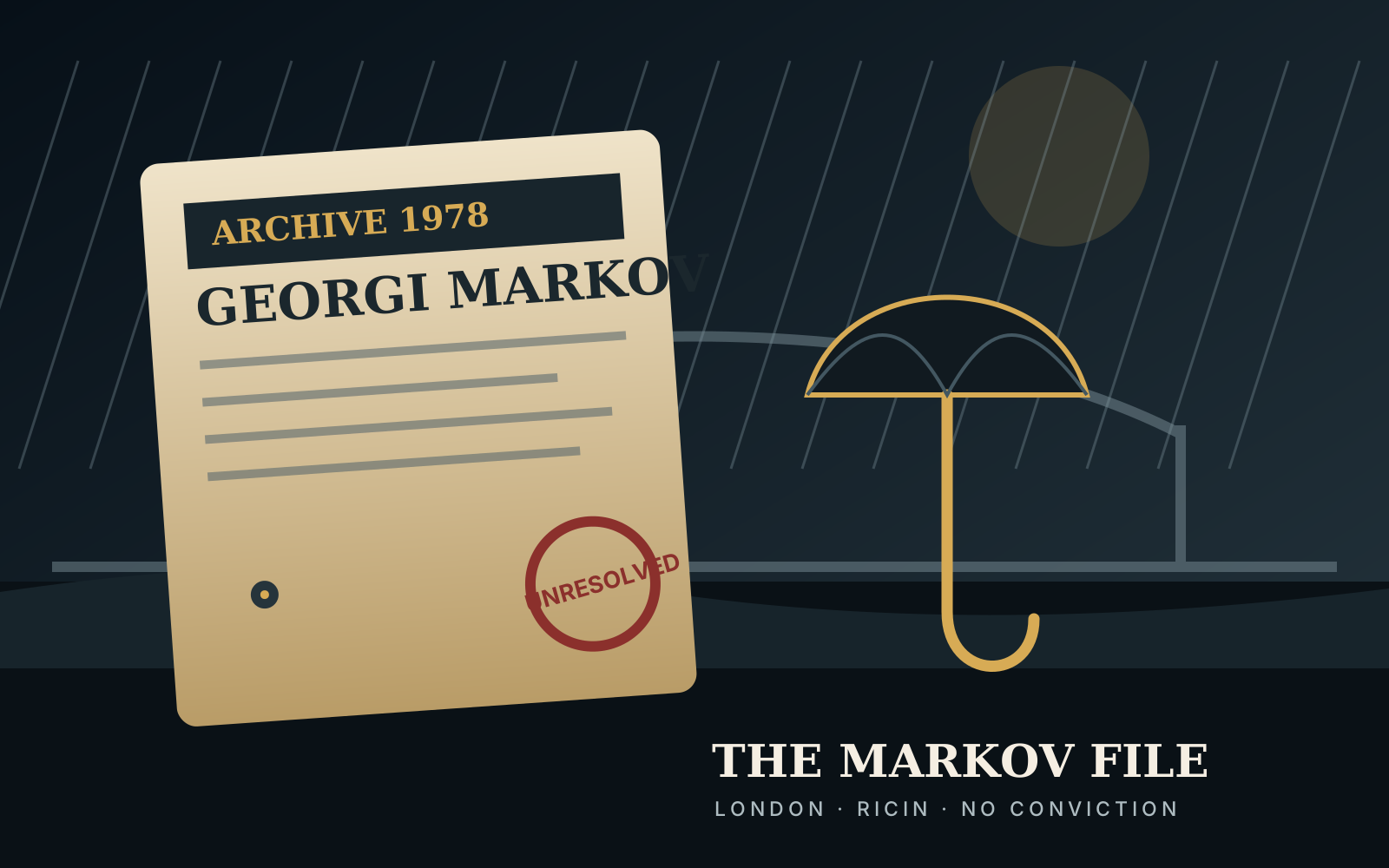
Markov was a Bulgarian novelist, playwright and journalist who had left the country and become an outspoken critic of its communist government. In exile he worked with the BBC World Service and contributed broadcasts to Radio Free Europe and Deutsche Welle. His public profile and criticism became central to later theories about why he was targeted, but motive and command responsibility were never tested to a final criminal verdict.
September 7 at Waterloo
While travelling to work on September 7, Markov was near a bus stop by Waterloo Bridge when he felt a sharp pain in his leg. Contemporary accounts say he noticed a man retrieving an umbrella before leaving the area. Markov became seriously ill and died on September 11, aged 49.
The familiar label “umbrella murder” is useful shorthand, not a judicial finding about every mechanical detail. The most important established forensic fact is the recovery of a minute perforated pellet from Markov's body; investigators concluded that it had delivered ricin.
Forensics and investigation
The unusual pellet shifted the inquiry from an unexplained death to a suspected targeted poisoning. British police examined the route, Markov's work and the possibility of an intelligence operation. Later reporting and archival work focused heavily on Bulgarian State Security and possible KGB assistance.
Those institutional links are widely alleged and supported by circumstantial and archival material, but the reviewed public record contains no final criminal judgment assigning responsibility. Crime by Region therefore records state involvement as an investigative conclusion or allegation attributed to sources—not as a conviction.
“Agent Piccadilly”
Investigators and journalists later identified Francesco Gullino, associated in records with the codename “Piccadilly,” as a suspected operative. He was questioned and denied killing Markov. He was never prosecuted or convicted, and the surviving evidence did not produce a courtroom determination that he was the attacker.
The 2013 closure
Bulgaria closed its criminal investigation in 2013 after the statutory period expired. The closure did not resolve the identity of the operator, the ordering chain or the precise division of responsibility between Bulgarian and Soviet services. As of the latest reliable material reviewed for this dossier, nobody has been convicted of Markov's assassination.
Timeline
- 1969 — Markov leaves Bulgaria and later settles in London.
- September 7, 1978 — He feels a sudden pain near Waterloo Bridge while travelling to work.
- September 11, 1978 — Markov dies in London, aged 49.
- Postmortem inquiry — Investigators recover a tiny perforated pellet and conclude that it delivered ricin.
- 2013 — Bulgaria closes its criminal investigation without an individual conviction.
What remains unanswered
- Who physically delivered the pellet?
- Who authorized and organized the operation?
- What precise role, if any, did each intelligence service play?
- Could surviving archival or forensic evidence still support a prosecutable case?
Frequently asked questions
How was Georgi Markov killed?
Investigators concluded that a tiny perforated pellet recovered during the postmortem examination had delivered ricin after Markov felt a sharp pain at a London bus stop on September 7, 1978. He died four days later.
Was anyone convicted?
No. Bulgaria closed its criminal investigation in 2013, and no individual has been convicted.
Did a court prove who ordered the killing?
No. State Security and KGB involvement have long been alleged and investigated, but no final criminal judgment established the ordering authority.
Sources
- The Guardian — archive account of the 1978 killingContemporary reporting, September 1978; republished September 9, 2020.
- Associated Press — the Markov assassination in the history of ricin attacksPublished September 13, 2024; records the 2013 closure and absence of a conviction.
- The Guardian — review of the investigation into “Agent Piccadilly”Published July 7, 2024; summarizes the pellet evidence, suspicion around Gullino and the lack of prosecution.