What is established?
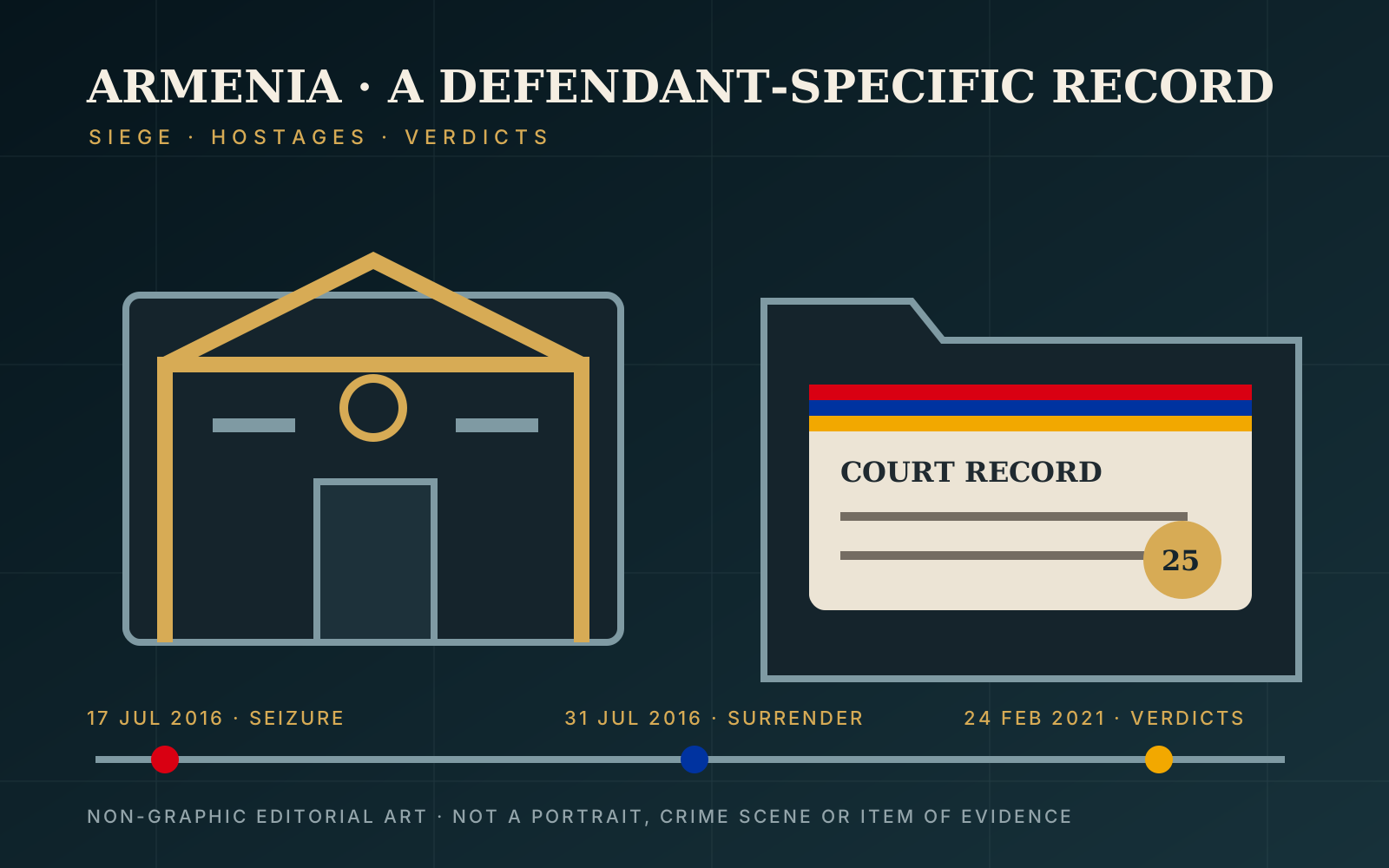
Before dawn on July 17, 2016, armed men entered the Patrol Police regiment compound in Yerevan's Erebuni district. The group used the name Sasna Tsrer, also transliterated Sasna Tzrer or Sasna Dzrer. Its members demanded the release of opposition activist Jirayr Sefilian and called for then-president Serzh Sargsyan to resign.
The seizure became both a hostage crisis and a prolonged armed standoff. Police officer Artur Vanoyan was killed during the initial assault. Lieutenant Yuri Tepanosyan was fatally shot on July 30. Officer Gagik Mkrtchyan later died from injuries associated with the crisis. Reporting at the end of the case consistently records three police deaths.
The remaining gunmen surrendered on July 31. Criminal proceedings were divided across defendants and charges rather than resolved by one collective finding. On February 24, 2021, a Yerevan court delivered verdicts against ten defendants in one major branch of the case. That distinction is essential: membership in the armed group is not presented as proof that every defendant personally committed every killing.
The three police officers who died
- Artur Vanoyan
Police colonel killed during the July 17 assault. - Yuri Tepanosyan
Police lieutenant killed by gunfire on July 30. - Gagik Mkrtchyan
Police officer who later died from injuries connected to the crisis.
English-language reports differ in transliteration: Barseghyan/Barseghian, Bilyan/Bilian, Avetisyan/Avetisian and Kyureghyan/Kyuregian all appear. This page treats those variants as the same people and does not multiply identities because spellings differ.
A political demand enforced through hostage-taking
The gunmen described their action as an uprising against the government. Their stated demands were political, but the means were criminal: an armed seizure, the killing of police officers and the detention of hostages. Public sympathy or opposition to the government does not change the evidentiary description of those acts.
Hostages included police personnel; medical workers were also held during the standoff. The crisis unfolded alongside demonstrations by supporters and other citizens in Yerevan. Those street events form important political context, but they are not collapsed into the criminal responsibility of the men tried for taking the compound.
After negotiations and exchanges during the two weeks, the group laid down its weapons. The surrender allowed individual defendants to be prosecuted. It did not immediately settle which person was responsible for each death, a question that became central at trial.
The 2021 trial-court findings
The Yerevan Court of General Jurisdiction announced its verdict on February 24, 2021. RFE/RL, Hetq, Public Radio of Armenia and Armenpress independently reported the core result: Smbat Barseghyan was found guilty of murdering two police officers and received a 25-year prison sentence.
Armen Bilyan had been charged with murdering Gagik Mkrtchyan, but the court acquitted him on that murder count. It convicted him of other crimes and calculated a sentence of four years, eleven months and six days after credit for time already served; his detention was replaced by a restriction not to leave. The acquittal is not an editorial technicality—it prevents the page from presenting the third killing as judicially attributed to Bilyan.
The other defendants in this branch received sentences that, after credit for detention, ranged from roughly six to eight years. Public Radio of Armenia reported terms for Pavel Manukyan, Varuzhan Avetisyan, Mkhitar Avetisyan, Eduard Grigoryan, Gagik Yeghiazaryan, Areg Kyureghyan and Sedrak Nazaryan. Proceedings against Arayik Khandoyan were terminated because he died before the case concluded.
The reviewed sources establish a first-instance verdict and its defendant-specific findings. They do not provide a sufficiently clear, comprehensive later appellate disposition for every defendant. This page therefore describes the February 2021 decision as the trial-court judgment and does not claim that every sentence was finally affirmed on appeal.
What the judgment proves—and what it does not
The strongest individualized finding concerns Barseghyan: the trial court convicted him of two murders. The same court expressly did not convict Bilyan of the third murder. Other defendants were sentenced for their own charged conduct, but the available reporting does not justify rewriting those convictions as three shared murder verdicts.
The group's political demands were public and documented. Motive at the collective level—forcing Sefilian's release and a change of government—does not establish the private intent or exact conduct of each participant at each stage of the siege. The dossier avoids that leap.
Likewise, the case's later political afterlife is kept separate from the July 2016 evidence. A party formed around the movement and contested elections, but electoral activity neither overturns the criminal judgment nor proves additional crimes.
Verified timeline
- June 20, 2016
Opposition activist Jirayr Sefilian is arrested on weapons-related allegations, becoming the central prisoner whose release the group later demands. - July 17, 2016
Sasna Tsrer gunmen seize the Erebuni police compound, take hostages and kill Artur Vanoyan. - July 30, 2016
Yuri Tepanosyan is killed by gunfire during the standoff. - July 31, 2016
The remaining members surrender after two weeks. - August 2016
Gagik Mkrtchyan dies from injuries connected to the crisis. - February 24, 2021
The Yerevan court announces the verdicts, including Barseghyan's 25-year sentence and Bilyan's acquittal on the Mkrtchyan murder charge.
Editorial status
The case is classified as adjudicated / defendant-specific. A court identified responsibility for two murders and imposed sentences for multiple other crimes. The status is deliberately narrower than “fully solved”: the third police death did not produce a murder conviction in this trial branch, and a complete later appellate record was not located in the reviewed reliable sources.
Armenia remains IN_PROGRESS in the country archive. The label concerns the expansion project, not the legal status of this individual case.
Sources and verification notes
Core facts were cross-checked across international reporting and independent Armenian news organizations. Each source is used for this case only.
- RFE/RL — Members of Armenian Armed Group Jailed Over 2016 Hostage CrisisFebruary 24, 2021 · verdict summary, two murder convictions, separate acquittal and sentences.
- Hetq — Sasna Tzrer Member Gets 25 Years for Killing Yerevan Policeman in 2016 AttackFebruary 24, 2021 · detailed defendant-by-defendant trial-court sentences and time-served calculations.
- Public Radio of Armenia — Court announces verdict in Sasna Tsrer caseFebruary 24, 2021 · court result, individual terms and the two-week standoff.
- Armenpress — Members of Sasna Tsrer sentenced for 2016 hostage crisisFebruary 24, 2021 · independent confirmation of the verdict and 25-year murder sentence.
- RFE/RL — Armenian Court Releases Sasna Tsrer Members From Pretrial DetentionJune 8, 2018 · background on the group's demands, surrender and three police deaths.
- Armenpress — Police officers and citizens pay tribute to killed officersJuly 17, 2017 · names and sequence of the deaths of Artur Vanoyan, Yuri Tepanosyan and Gagik Mkrtchyan.
Frequently asked questions
What did Sasna Tsrer demand?
The group demanded the release of jailed opposition figure Jirayr Sefilian and the resignation of President Serzh Sargsyan.
How long did the standoff last?
It began on July 17, 2016 and ended with surrender on July 31.
How many police officers died?
Three: Artur Vanoyan, Yuri Tepanosyan and Gagik Mkrtchyan.
Who was convicted of murder?
The trial court convicted Smbat Barseghyan of two police murders and sentenced him to 25 years.
Was Armen Bilyan convicted of murdering Gagik Mkrtchyan?
No. He was acquitted on that murder count, although convicted and sentenced for other crimes.
Why is the status defendant-specific?
Because the court's findings differed by defendant. The page does not turn group membership into collective responsibility for every killing.