The Dublin and Monaghan Bombings
Four bombs exploded in Dublin and Monaghan on May 17, 1974, killing 34 people and injuring hundreds. Official inquiries have identified the attacks as the work of loyalist paramilitaries, but no person has ever been convicted for carrying them out.
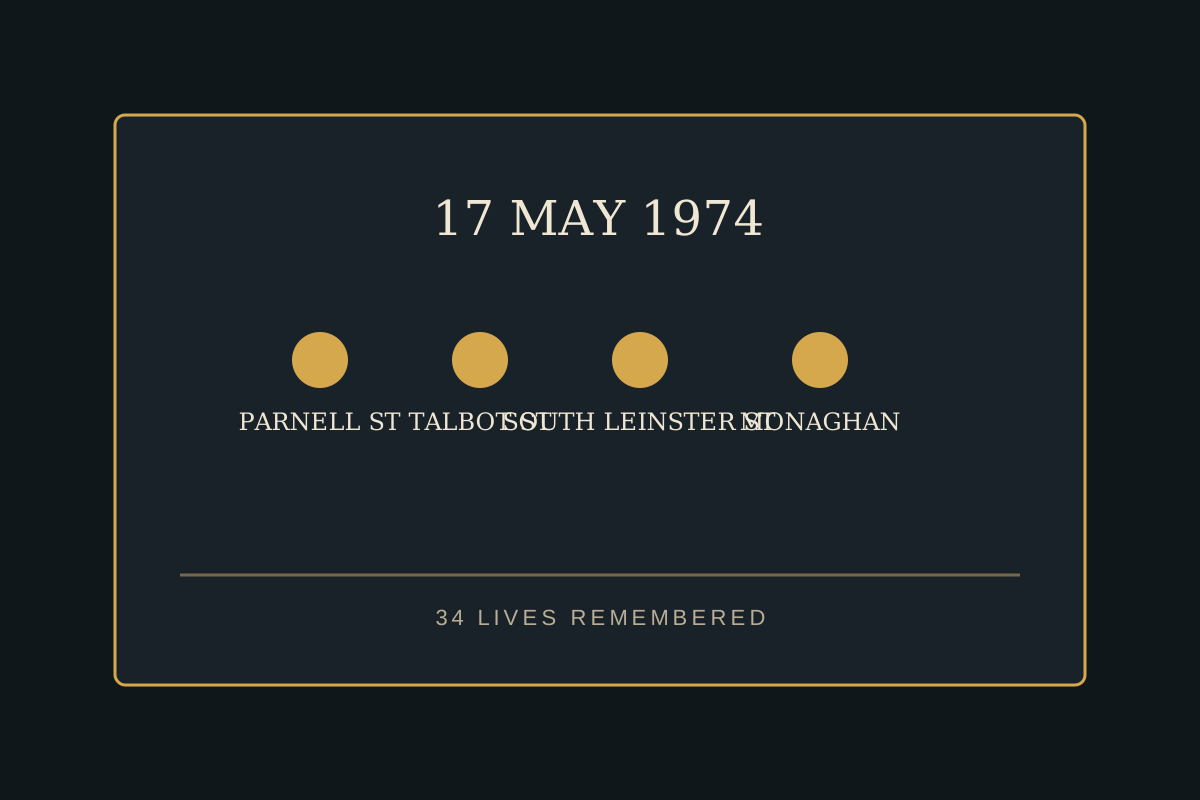
On May 17, 1974, three bombs exploded in central Dublin within minutes of each other. A fourth exploded later that evening in Monaghan town. The attacks caused the greatest loss of life on a single day during the Troubles and became one of the Republic of Ireland's most enduring unresolved mass-murder cases.
Four explosions in one day
The Dublin explosions struck Parnell Street, Talbot Street and South Leinster Street during the evening rush hour. Roughly ninety minutes later, another explosion occurred in Monaghan. Irish government sources record 34 deaths, including an unborn baby, and more than 300 people injured.
This page does not include technical information about the devices. The important criminal questions concern who planned and carried out the attacks, why the investigation failed to produce prosecutions, and whether any state actors assisted the perpetrators.
The UVF attribution
The Ulster Volunteer Force publicly claimed responsibility in 1993. The Barron Inquiry later concluded that those principally responsible were loyalist paramilitaries and that the available information pointed to groups operating from Northern Ireland, including Belfast and the Portadown/Lurgan area.
The Barron process did not function as a criminal trial and did not enter convictions against named individuals. Its findings therefore provide historical and investigative attribution, not a substitute for adjudicated individual guilt.
Problems with the original investigation
The Irish parliamentary review of the Barron Report was highly critical of aspects of the Garda investigation. It noted that the investigation was wound down within months despite information about suspected perpetrators, vehicles and intelligence that might have supported further lines of inquiry.
The committee also emphasized the enduring lack of closure for survivors and relatives. Missing documentation, limited cross-border cooperation and the passage of time became central obstacles to later efforts to establish criminal responsibility.
Operation Denton and the Kenova findings
Operation Denton later reviewed the bombings as part of a wider examination of the so-called Glenanne series of loyalist attacks. The final Kenova report published in December 2025 stated that the Belfast UVF planned and carried out the Dublin and Monaghan bombings with support from the organization in Mid-Ulster.
The same review said it had not identified evidence showing that British security forces colluded with the UVF specifically to carry out the Dublin and Monaghan attacks, while also stating that collusion could not be categorically excluded and documenting collusion by individual state actors in other attacks within the wider series. This distinction is preserved here because broader evidence of collusion in the Glenanne network is not identical to proof of collusion in these four bombings.
Current status
No person has been convicted of carrying out the Dublin and Monaghan bombings. The Irish government stated in May 2025 that the case remained open in this jurisdiction and that new evidence would be pursued. In May 2026, the 52nd anniversary was marked with the same central fact: nobody had been convicted.
As of March 2026, the Irish government was also awaiting fuller publication of Operation Denton material, which had been delayed by legal issues. The absence of a prosecution means this file remains classified as Unsolved / Open Legacy Case, despite substantial official findings about the loyalist network involved.
Timeline
- Four coordinated bombings
Three explosions strike Dublin and a fourth later strikes Monaghan, killing 34 people and injuring hundreds.
- Garda investigation begins, then contracts
Investigators pursue suspects and cross-border leads, but the inquiry is later criticized for being wound down too quickly.
- UVF claims responsibility
The loyalist paramilitary group publicly states that it carried out the bombings.
- Barron inquiry and Oireachtas review
Official reports examine the perpetrators, investigative failures, missing material and allegations of collusion.
- Kenova final report published
The Operation Denton summary attributes the bombings to the Belfast UVF with Mid-Ulster support and says no evidence was found of British-state collusion in these specific attacks.
- 52nd anniversary
Survivors and families again mark the attacks; no one has been convicted.
The UVF's claim, the Barron findings and the Operation Denton review provide substantial attribution. They do not create individual criminal convictions where no prosecution has succeeded.