A militia aligned with the government
The Civil Defence Forces, including Kamajor fighters, supported Sierra Leone's elected government against the Revolutionary United Front and the Armed Forces Revolutionary Council. That political alignment became central to debate over whether their role in restoring the government could mitigate punishment.
The Special Court's mandate was to try persons bearing the greatest responsibility for serious crimes committed in Sierra Leone after November 30, 1996. It applied the same legal protections to civilians regardless of which side claimed to defend them.
The three accused
Sam Hinga Norman was the CDF's national coordinator, Moinina Fofana served as Director of War, and Allieu Kondewa was described as an initiator and high priest. Their cases were joined for trial in 2004.
Norman died in February 2007, after the evidence had closed but before judgment. The court terminated proceedings against him. Because there was no verdict, this page does not label him convicted or acquitted.
The trial judgment
The prosecution called 75 witnesses and the defence called 44. On August 2, 2007, the Trial Chamber convicted Fofana of murder, cruel treatment, pillage and collective punishments as war crimes. Kondewa was convicted on those counts and on a child-soldier count.
The chamber acquitted both men of other charges, including crimes-against-humanity counts at trial. Initial concurrent sentences were six years for Fofana and eight years for Kondewa.
What the appeal changed
On May 28, 2008, the Appeals Chamber reversed both convictions for collective punishments and reversed Kondewa's child-soldier conviction. It also entered new convictions against both men for murder and inhumane acts as crimes against humanity.
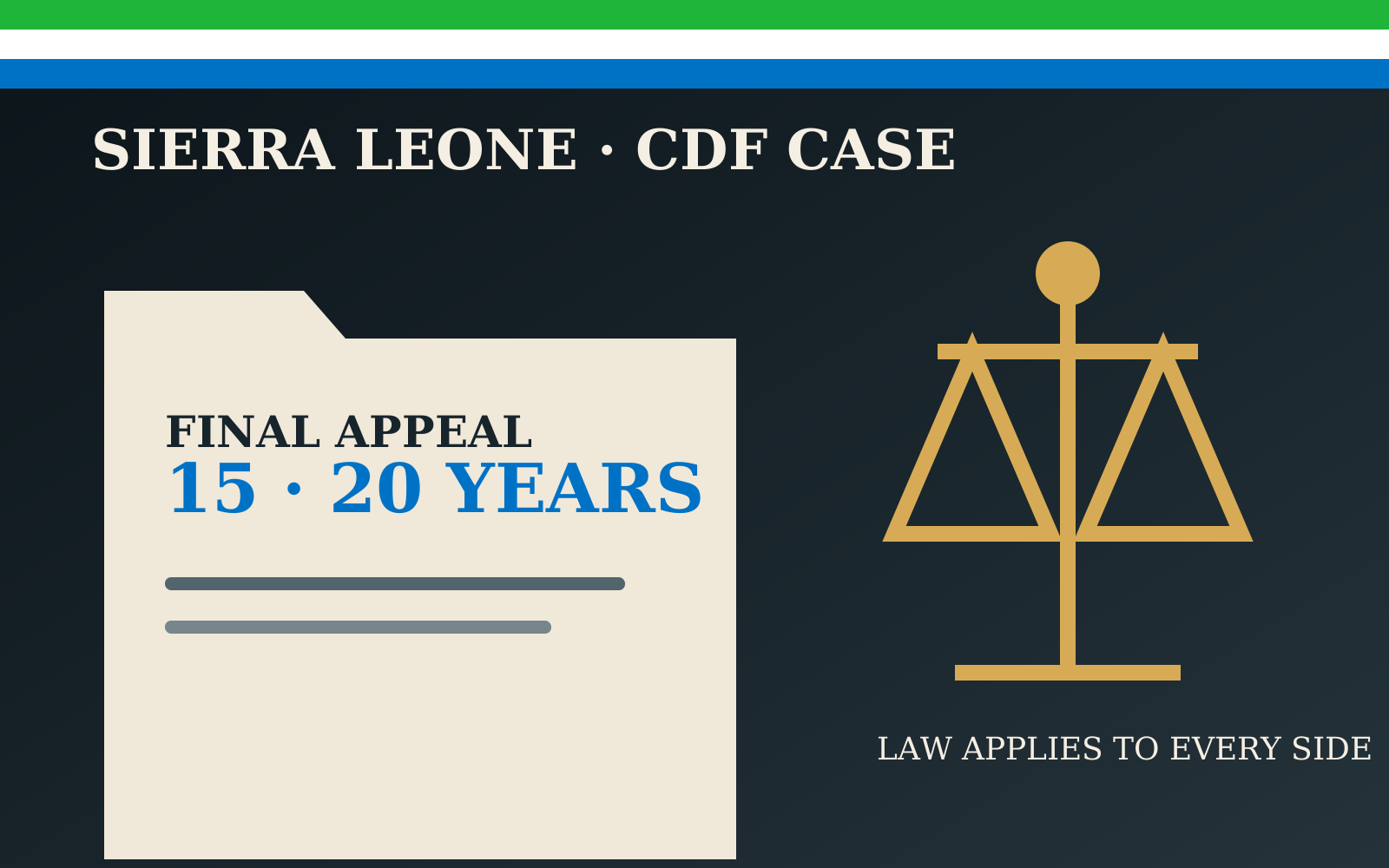
The appeal judges rejected the use of the CDF's pro-government purpose as a basis for reducing punishment. Fofana's sentence increased to 15 years and Kondewa's to 20 years.
The crimes against civilians
The final case record concerned deliberate violence against civilians, including killings, cruel treatment and pillage. Human Rights Watch emphasized that a claimed legitimate political cause could not excuse attacks on civilians or produce unequal protection depending on the perpetrator's faction.
This archive avoids graphic detail not needed to explain the legal findings. The victims are not reduced to evidence for a political argument about which armed group was more justified.
Sentence administration
Both men served sentences through the Special Court's enforcement arrangements in Rwanda. Fofana later received conditional early release and returned to Sierra Leone under monitoring. Kondewa's sentence history is recorded separately from the guilt judgment; later release did not erase the convictions.
Current status
The criminal case against Fofana and Kondewa is final and adjudicated. Its lasting legal point is carefully bounded: fighting on behalf of a recognized government did not remove the duty to protect civilians and did not immunize leaders from responsibility for international crimes.
Questions beyond the judgments
- How completely did later national processes address crimes by lower-level CDF members?
- What reparative measures reached communities harmed by CDF operations?
- How did the appeal's sentencing principle influence later hybrid tribunals?
- Which allegations remained outside the Special Court's temporal or personal jurisdiction?
Frequently asked questions
Who received final convictions?
Moinina Fofana and Allieu Kondewa. Proceedings against Sam Hinga Norman ended after his death before judgment.
What sentences were imposed?
The Appeals Chamber imposed 15 years for Fofana and 20 years for Kondewa.
Did the appeal simply affirm the trial result?
No. It reversed some convictions, entered new crimes-against-humanity convictions and increased both sentences.