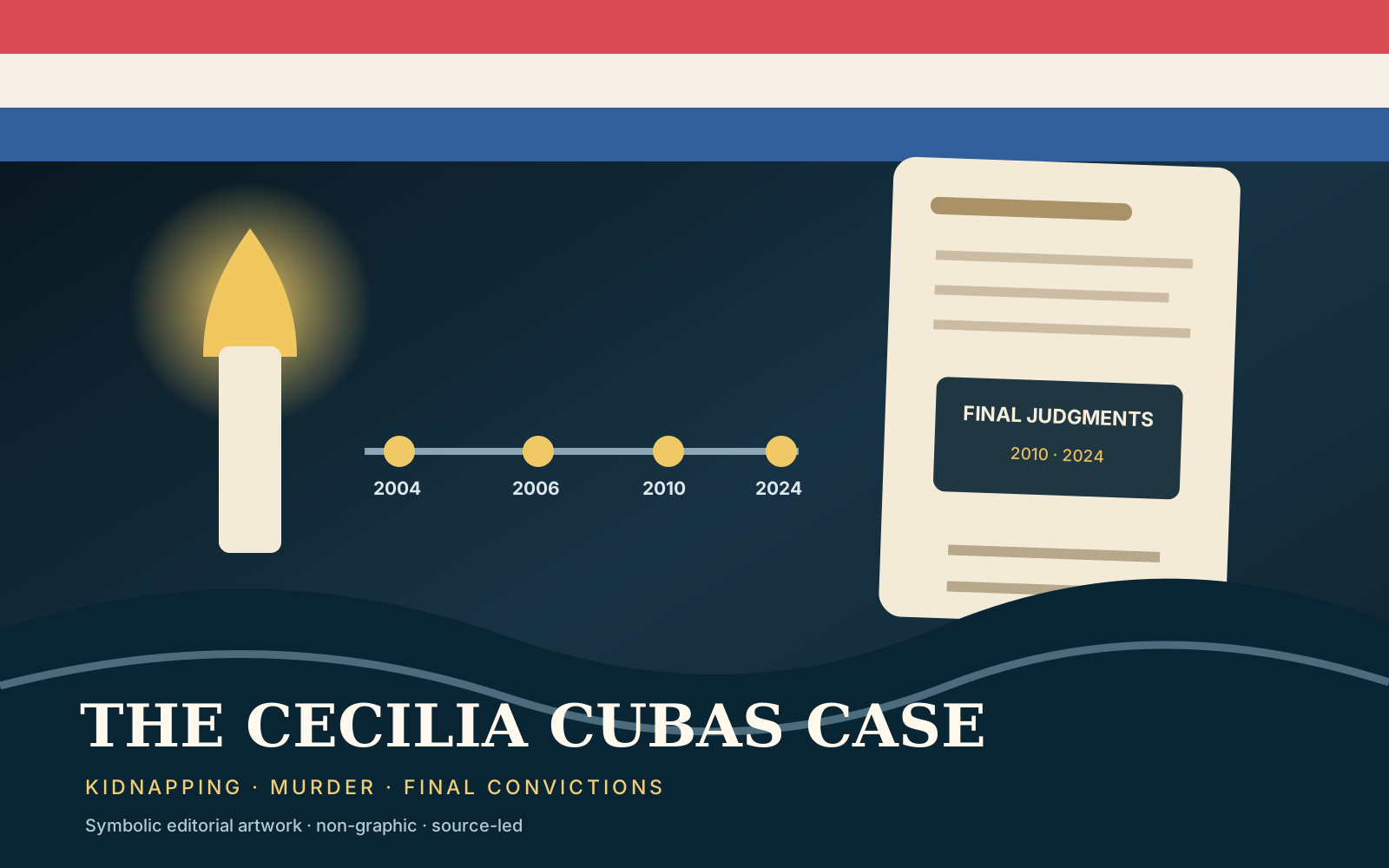
Status boundary: “solved / adjudicated” means courts convicted multiple participants in the kidnapping and murder and final judgments exist. It does not convert every accusation into fact, erase the three acquittals in the 2006 proceeding or claim that every alleged member of a wider network was convicted.
Cecilia and the abduction
Cecilia Cubas Gusinky was a Paraguayan businesswoman and the daughter of former president Raúl Cubas Grau. On 21 September 2004, she was abducted near her home in the Asunción metropolitan area. The crime produced an extensive search and became one of Paraguay’s most closely followed criminal cases.
On 16 February 2005, authorities found her body beneath a house in the Mbocayaty neighborhood of Ñemby. Contemporary reporting said identification was made through dental examination. This archive omits graphic detail because it is not needed to explain what the courts decided or why the case is classified as adjudicated.
The first major trial
Fifteen defendants went to judgment in 2006. Paraguay’s judiciary reported that the trial court found twelve guilty and ordered the release of three because prosecutors and the private complainant had not proved their culpability in that proceeding. That distinction matters: indictment and trial were not treated as proof of guilt.
The court imposed its heaviest punishment on Osmar Martínez and Anastacio Mieres: 25 years in prison plus ten-year security measures. Francisca Andino received a long custodial sentence and a security measure. Other defendants received terms reflecting the conduct the court attributed to them. The convictions were not a single undifferentiated result; responsibility and punishment were individualized.
The 2010 Supreme Court ruling
On 30 December 2010, the Criminal Chamber of Paraguay’s Supreme Court rejected cassation appeals brought for ten convicted people. The judiciary said the ruling left final the convictions of Osmar Martínez, Anastacio Mieres, Francisca Andino, Vaciano Rubén Acosta, Sebastián Osorio González, Aldo Damián Meza Martínez, Manuel Portillo Gómez, Pedro Chamorro Melgarejo, Roberto Otazú Busto and José Hidalgo Ayala.
The published ruling lists terms ranging from fifteen to thirty years, with the longest combined sanctions for Martínez and Mieres. It also notes that the five-year sentences imposed on Rosalba Jara Drackeford and Lidia Samudio as accomplices had become final because they were not appealed.
Later proceedings
The case continued beyond that group. Paraguay’s Public Ministry recorded that seven further accused were convicted in a later oral trial. The existence of separate proceedings is important because it prevents the archive from compressing many defendants and judgments into a misleading single verdict.
Lorenzo González Martínez was extradited from Argentina to Paraguay in February 2022. In December 2024, a court convicted him for his participation and imposed 23 years in prison plus a five-year security measure. The Public Ministry reported that the trial evidence placed him within the operational group and in the meeting at which Cecilia’s death was decided. That description is presented as the prosecution’s proven case accepted by the sentencing court, not as an inference by this archive.
Why this case is classified as solved
The classification rests on adjudication: multiple defendants were convicted, principal sentences became final after Supreme Court review and additional defendants were later sentenced. It is stronger than an arrest or pending charge.
At the same time, “solved” is not used to suggest universal accountability. Three defendants were acquitted in the first proceeding, later litigation involved additional people, and this page does not assign criminal responsibility to anyone who was not convicted in the judicial records cited below.
Case timeline
- 21 September 2004 — Cecilia Cubas is kidnapped in Paraguay.
- 16 February 2005 — Authorities find her body beneath a house in Ñemby.
- 28 November 2006 — The trial court finds twelve defendants guilty and acquits three because culpability was not proved in that proceeding.
- 1 December 2006 — The court announces the principal sentences, including 25 years plus ten-year security measures for Osmar Martínez and Anastacio Mieres.
- 30 December 2010 — The Supreme Court’s Criminal Chamber rejects cassation appeals and makes ten principal convictions final.
- 2012 — Seven additional accused are convicted in a separate trial, according to the Public Ministry’s institutional record.
- February 2022 — Lorenzo González Martínez is extradited from Argentina.
- 23 December 2024 — González Martínez receives 23 years in prison plus a five-year security measure.
Questions readers ask
Who was Cecilia Cubas?
She was a Paraguayan businesswoman and the daughter of former president Raúl Cubas Grau.
Were all fifteen defendants convicted in 2006?
No. Twelve were convicted and three were acquitted because culpability had not been proved in that proceeding.
What made the principal sentences final?
The Supreme Court’s Criminal Chamber rejected cassation appeals in December 2010. Two additional accomplice sentences were already final because they had not been appealed.
Why include the 2024 judgment?
It shows that the judicial record continued after the first trials. Lorenzo González Martínez was tried after extradition and received a 23-year sentence plus a five-year security measure.
Does this page blame people who were not convicted?
No. It limits statements of guilt to judicial outcomes and labels prosecutorial claims or wider allegations accordingly.
Why is the case in the solved section?
Because multiple participants were convicted and final judgments exist. The label does not mean every alleged participant was prosecuted or convicted.