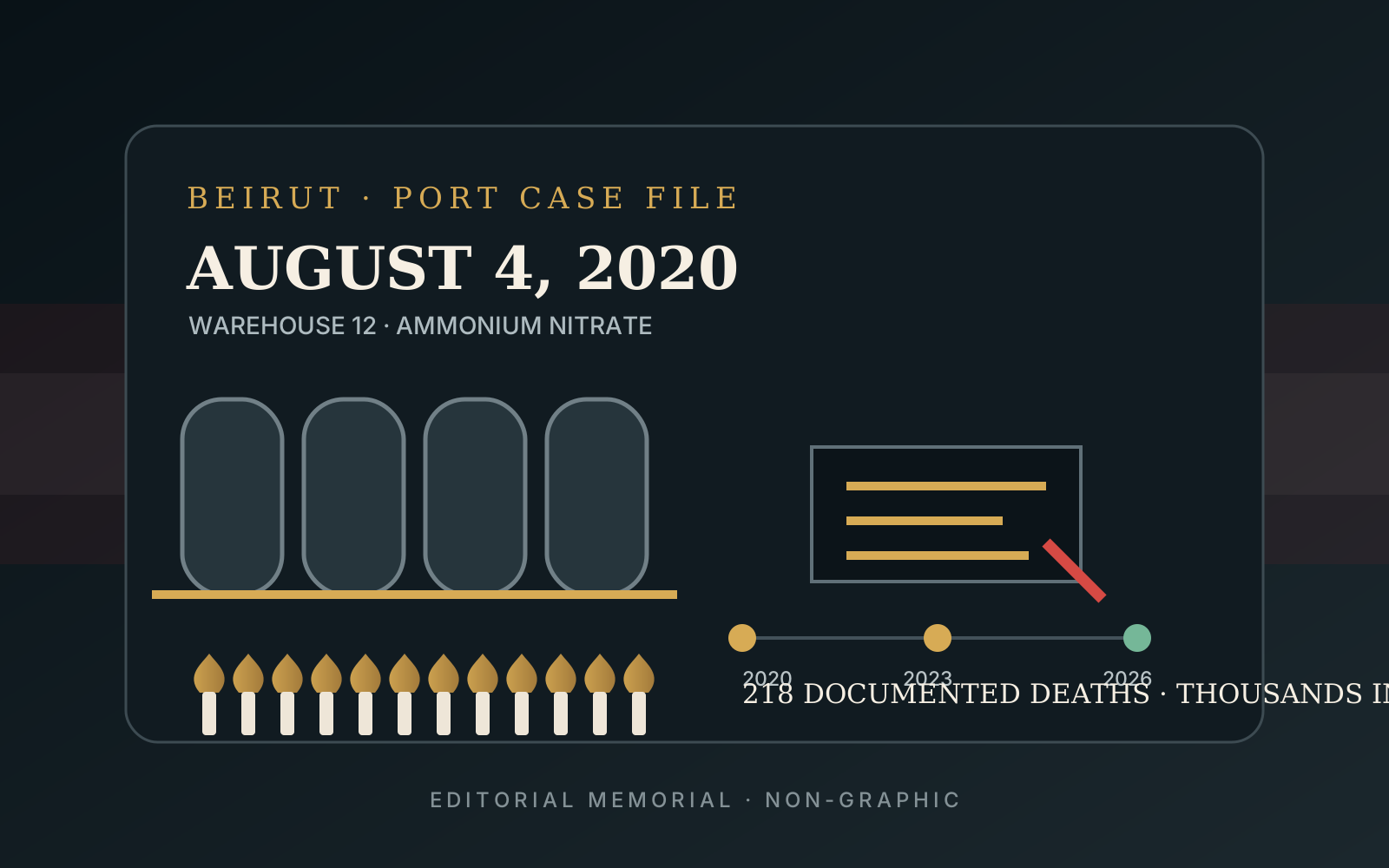
Case-status note: This file is unsolved or partial. Investigators have accused or implicated numerous former officials, security personnel, port employees and others, but an accusation is not a conviction. No final criminal judgment assigning individual responsibility for the explosion was located by September 13, 2026.
A dangerous cargo left at the port
The ammonium nitrate that exploded had arrived aboard the cargo vessel Rhosus in 2013. After the ship was detained, thousands of tonnes of the chemical were unloaded and stored in Hangar 12 at the Port of Beirut. Ammonium nitrate has legitimate industrial uses, but it can become catastrophically dangerous when large quantities are stored without appropriate safeguards.
Human Rights Watch's investigation found that senior officials knew or should have known about the material and the risks it presented. Documents showed repeated warnings and correspondence across customs, port, security, judicial and political institutions. Those records support scrutiny of institutional conduct, but they do not by themselves predetermine the criminal guilt of every person who received a notice.
August 4, 2020
A fire broke out in the port warehouse area on the evening of August 4. Firefighters and emergency personnel responded without being adequately warned about the scale of the explosive material nearby. The ammonium nitrate then detonated, producing a blast felt far beyond Beirut and damaging buildings across the city.
Human Rights Watch documented 218 deaths and about 7,000 injuries, including at least 150 people who acquired physical disabilities. Later major reporting commonly describes more than 220 deaths. This page keeps the documented HRW count visible and notes the later broader formulation rather than presenting a disputed exact number as certain.
Victims, survivors and a changed city
The victims included Lebanese citizens, migrant workers, refugees and foreign nationals. Children were among those killed and injured. Homes, hospitals, schools, businesses and essential infrastructure were damaged; hundreds of thousands of people were displaced or temporarily left without safe housing.
The scale of destruction can obscure individual loss. Families spent years seeking answers about decisions that allowed the chemical to remain at the port. Survivors also faced disability, trauma, medical costs and the loss of homes and livelihoods. This file avoids graphic imagery and treats those continuing harms as part of the case, not a footnote to the explosion itself.
The first investigation and removal of a judge
Lebanese authorities opened a domestic criminal investigation. Judge Fadi Sawan charged former prime minister Hassan Diab and former ministers in 2020. In February 2021, Lebanon's Court of Cassation removed Sawan after complaints challenging his impartiality, and Judge Tarek Bitar inherited the file.
Removal from the investigation was a procedural decision, not an adjudication that the people charged were innocent or guilty. The change also delayed a case already confronting questions of immunity, jurisdiction and access to officials.
Challenges, recusals and paralysis
Bitar summoned senior political and security figures. Those targeted filed numerous legal challenges seeking his removal or contesting his authority. The investigation was suspended for long periods. In January 2023, Bitar attempted to resume work and brought additional charges, while then-public prosecutor Ghassan Oweidat rejected the move, charged Bitar and ordered detainees released.
Reuters and rights organizations described the conflict as a severe institutional rupture. Officials named in the investigation denied wrongdoing. This page therefore attributes accusations to the investigative record and preserves those denials rather than writing the allegations as established fact.
Resumption and the March 2026 report
The inquiry resumed in 2025 amid political changes in Lebanon. Bitar questioned additional officials and port personnel. In March 2026, he concluded the investigative phase and referred the file to public prosecutor Jamal Hajjar. Reuters reported in August 2026 that the report implicated about 70 individuals in various alleged offenses.
That referral was a significant procedural advance after years of paralysis, but it was not a verdict. The prosecutor still had to review the file, after which an indictment and possible trials would follow. As of Reuters' August 4, 2026 update, families were still waiting for those next steps.
The shipowner and the failed extradition
Igor Grechushkin, identified as the owner of the Rhosus, was detained in Bulgaria in September 2025 under an Interpol notice requested by Lebanon. A Bulgarian court rejected Lebanon's extradition request in December 2025 because it found the assurances concerning possible capital punishment insufficient. Prosecutors said they would appeal.
An extradition proceeding determines whether a person will be surrendered to another country; it does not decide guilt for the underlying explosion. Grechushkin is therefore described according to the allegations and procedural record, not as convicted.
Questions still unanswered
- When will the public indictment define the specific alleged responsibility of each person named in the investigative file?
- Will trials proceed without renewed immunity disputes or attempts to remove the investigating judge?
- Will courts establish who knew what about the ammonium nitrate, when they knew it and what legal duties each person held?
- Can cross-border proceedings secure testimony or appearance from people outside Lebanon?
Sources and methodology
The human toll, chain of warnings and institutional responsibilities are grounded in Human Rights Watch's document-based investigation. Reuters reporting supplies the judicial chronology through August 4, 2026 and the Bulgarian extradition outcome. Legal Action Worldwide and TIMEP provide corroboration of the March 2026 conclusion of the investigative phase. No allegation is converted into a conviction.