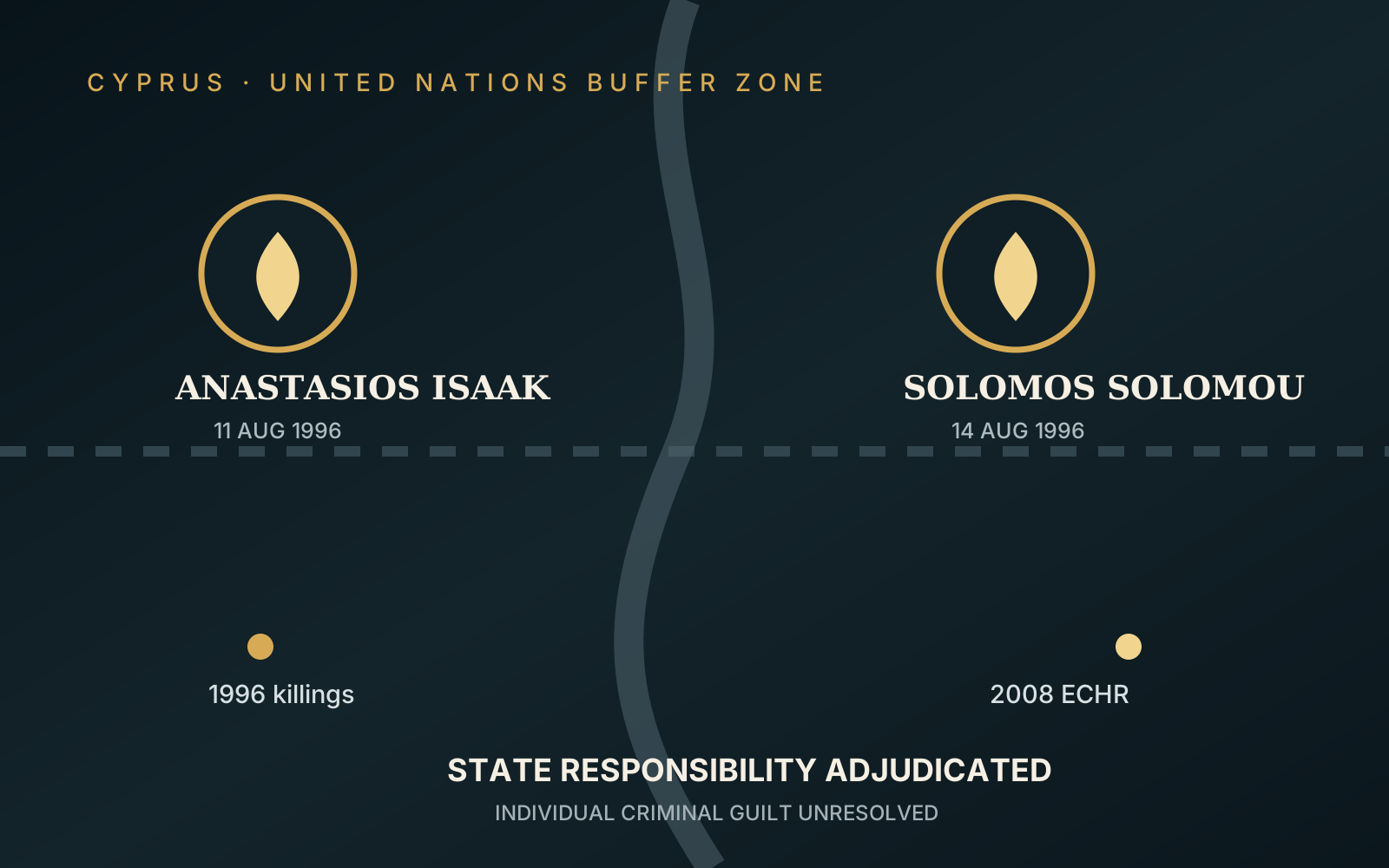
Case-status note: The European Court of Human Rights decided state responsibility under the European Convention. It did not conduct a criminal trial or convict an individual of murder. This archive therefore records the killings as criminally unresolved while separately recognizing the final international judgments.
What led to the August 1996 demonstrations?
Cyprus had remained divided since 1974, with a United Nations-controlled buffer zone separating the government-controlled area from the north. In August 1996, the Cyprus Motorcycle Federation organized a protest connected to that continuing division. The route and scale of the demonstration changed after diplomatic intervention, but groups of demonstrators still gathered near the buffer zone around Deryneia.
The political setting is essential, but it does not determine individual guilt. The demonstrations involved Greek Cypriot protesters, Turkish Cypriot counterdemonstrators, police, soldiers and UN peacekeepers. The European Court examined what happened to Isaak and Solomou and whether the responsible state complied with its obligations under Article 2, the right to life.
How was Anastasios Isaak killed?
On August 11, demonstrators and counterdemonstrators entered or approached the buffer zone and clashes broke out. The ECHR record states that Isaak became separated from other Greek Cypriot demonstrators and was caught in barbed wire. He was then attacked by a group and beaten to death.
The case was supported by video and photographic material, eyewitness accounts, a United Nations report and the investigative record assembled by authorities in the Republic of Cyprus. In its final judgment, the European Court held Turkey responsible for Isaak's death and found a violation of Article 2.
That ruling does not turn every person visible at the scene into a convicted perpetrator. A human-rights court determines whether a state complied with the Convention; criminal guilt requires a separate process against an identified defendant.
How was Solomos Solomou killed?
On August 14, following Isaak's funeral, another protest took place near the location of his death. Solomou entered the buffer zone and began climbing a flagpole. He was unarmed. Gunfire struck him, and he died at the scene.
The ECHR examined photographs, video recordings, witness evidence and ballistics-related material. It concluded that Solomou was killed by agents for whom Turkey was responsible and that the use of lethal force was not “absolutely necessary” within the meaning of Article 2.
The judgment did not endorse the act of entering the buffer zone or climbing the flagpole. It held that those actions did not make lethal force necessary against a person who was unarmed and not threatening anyone's life.
What evidence shaped the record?
Both incidents occurred in front of cameras and international personnel. That produced an unusually visible evidentiary record: news footage, still photographs, UN observations, medical evidence and statements from people present. The images helped establish sequences of movement and the circumstances of the deaths, but they did not replace the need to distinguish identification, allegation and proof.
The Court also considered competing accounts submitted by the parties. Its judgments resolved the Convention claims against Turkey. They did not issue arrest warrants, decide a criminal indictment or impose prison sentences.
What happened to the criminal investigations?
Authorities in the Republic of Cyprus investigated the killings, identified suspects and issued warrants. The ECHR record also addressed the absence of a meaningful investigation by the authorities exercising control in the north. The Court found Convention violations connected to the deaths and investigative failures.
Warrants and public identifications are not convictions. The reviewed sources do not document a completed criminal trial ending in a final murder conviction for either death. Accordingly, names associated with warrants or official allegations are not presented on this page as convicted killers.
What did the European Court decide in 2008?
On June 24, 2008, the European Court of Human Rights delivered judgments in Isaak and Others v. Turkey and Solomou and Others v. Turkey. The Court found violations of Article 2 in both cases and awarded compensation to the victims' relatives.
For Isaak, the Court attributed responsibility for the fatal assault to Turkey and found that the authorities had not carried out the investigation required by the right to life. For Solomou, it found the shooting unjustified and also addressed the failure to investigate effectively.
These were binding findings of international responsibility. Editorially, they are neither dismissed as “only allegations” nor inflated into criminal verdicts against specific individuals.
Why state responsibility and criminal guilt must stay separate
A state can be held responsible under a human-rights treaty even when no named person has been convicted in criminal court. The legal tests, parties, evidence rules and remedies differ. The ECHR ordered monetary compensation and declared Convention violations; it did not sentence an attacker or shooter to imprisonment.
That distinction shapes the status badge. “International responsibility adjudicated” accurately reflects the Strasbourg judgments. “Criminally unresolved” accurately reflects the absence of a final individual murder conviction located in the reviewed record.
Current status
The 2008 ECHR judgments remain the principal final legal findings documented for the two deaths. No later reliable source reviewed for this file established a final criminal conviction for killing Isaak or Solomou.
The case therefore remains open in the accountability sense used by this archive. Any later arrest, extradition, domestic judgment or official closure should be recorded defendant by defendant and must not be inferred from political statements or anniversary reporting.
Questions still unanswered
- Will any person accused in connection with either death face a completed criminal trial?
- Can cross-boundary cooperation produce evidence capable of being tested in court?
- Have later investigations identified roles that were not resolved in the 2008 human-rights proceedings?
Victim-aware editorial treatment
Isaak and Solomou were people whose families lost them within three days of one another. The public footage is historically important, but repeated violent imagery is not necessary to explain the case. The accompanying artwork uses two memorial lights, a divided horizon and a restrained court timeline rather than recreating either death.
Frequently asked questions
Who were Anastasios Isaak and Solomos Solomou?
They were Greek Cypriot cousins killed during linked demonstrations near the United Nations buffer zone at Deryneia in August 1996.
How was Isaak killed?
He was beaten to death on August 11 after becoming separated during clashes in the buffer zone. The ECHR later held Turkey responsible under Article 2.
How was Solomou killed?
He was shot on August 14 while climbing a flagpole during a protest. The ECHR found that lethal force was not absolutely necessary.
Were individuals convicted of the killings?
No final individual criminal conviction was located in the reviewed sources.
What did the 2008 judgments establish?
They established international state responsibility and violations of the right to life; they were not criminal murder convictions.