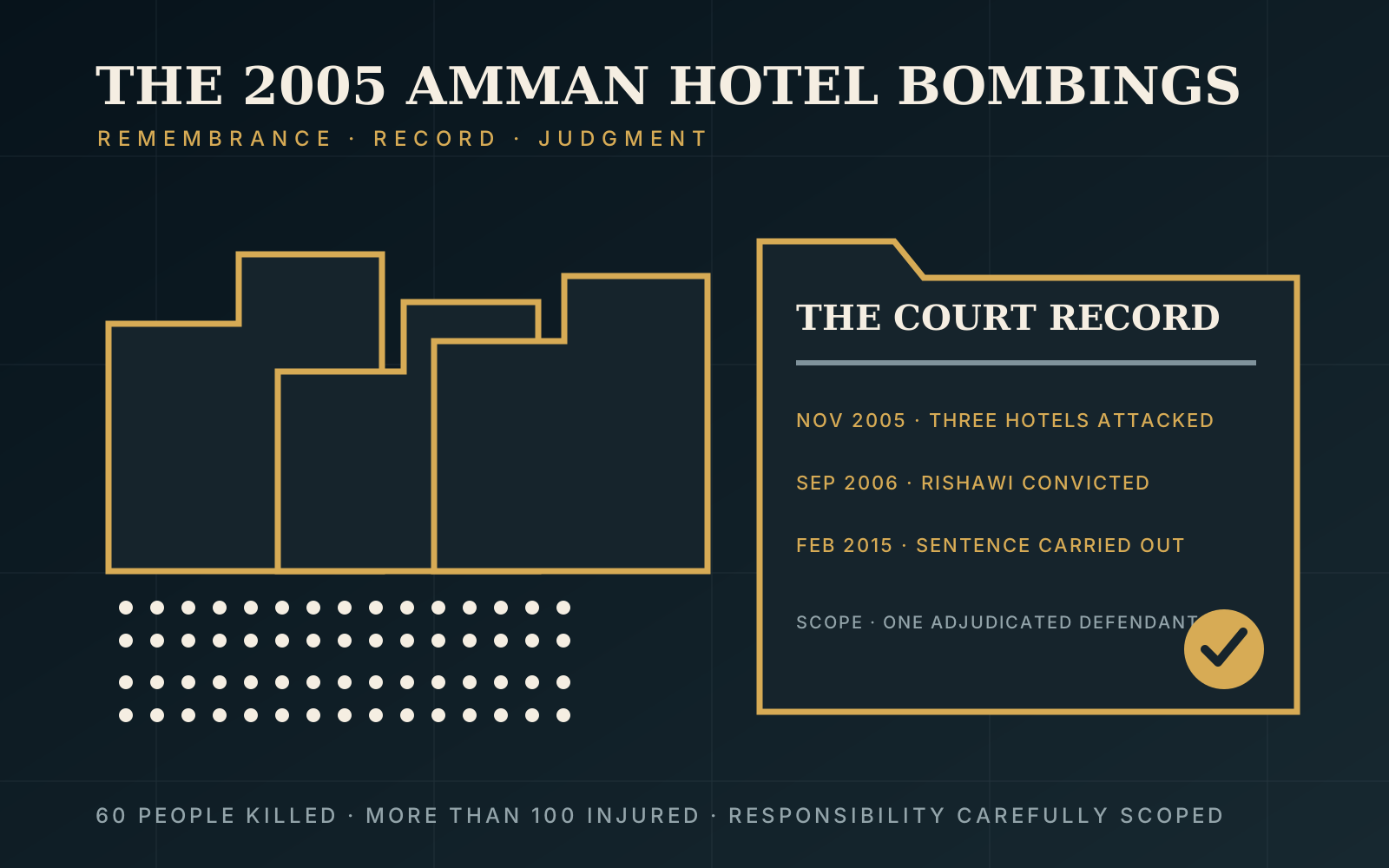
Case-status note: “Solved / adjudicated” refers specifically to Sajida al-Rishawi's conviction for her role in the attacks. It does not mean that every planner, absent defendant or operational question received a final, public judgment. Recording the conviction also does not endorse capital punishment or erase reported due-process concerns.
What happened in the 2005 Amman hotel bombings?
At about 9 p.m. on November 9, 2005, explosions struck the Grand Hyatt, the Radisson SAS and the Days Inn in Jordan's capital. The attacks occurred within minutes of one another. Later reporting by the Associated Press and ABC recorded 60 people killed, with more than 100 injured. Most victims were Jordanian civilians.
The Radisson blast hit a wedding celebration. Bride and groom Ashraf al-Akhras and Nadia al-Alami survived, but members of their families and other guests were among those killed. Film director and producer Moustapha Akkad and his daughter Rima Akkad Monla were also killed in the attacks. This archive does not reproduce graphic descriptions or militant propaganda.
Three hotels, one coordinated operation
The near-simultaneous attacks and the devices carried into three hotels established a coordinated operation rather than three unrelated crimes. Al-Qaeda in Iraq, led at the time by Abu Musab al-Zarqawi, claimed responsibility. A U.S. State Department country report later described Jordan's pursuit of Zarqawi's network and treated the hotel bombings as a defining terrorist attack in the country.
German Institute for International and Security Affairs analysis reported that the perpetrators traveled from Iraq and acted on Zarqawi's instructions. Those broader attributions are part of the historical record; the judicial status used on this page remains narrower and is tied to a specific defendant.
What was Sajida al-Rishawi accused of doing?
Al-Rishawi entered the Radisson ballroom with her husband, Ali Hussein Ali al-Shamari. Prosecutors said both carried explosive belts. His device detonated; hers did not. Jordanian authorities arrested al-Rishawi several days later. She appeared on state television demonstrating the belt and describing the failed attempt.
During trial, however, she retracted the televised confession and said she had not willingly taken part. Amnesty International later reported her allegation that the confession had been obtained through severe coercion. The allegation is important to the procedural history and is presented as Amnesty documented it—not as a judicial finding that automatically nullified the conviction.
The 2006 conviction
On September 21, 2006, Jordan's State Security Court convicted al-Rishawi and sentenced her to death by hanging. Associated Press reporting published by The Washington Post said six co-defendants who remained at large were also tried in absentia and received death sentences. The conviction against al-Rishawi is the adjudicated outcome that supports this page's solved classification.
This archive does not extend that label to the entire network. An in-absentia judgment is not the same as a defendant being captured, serving a sentence or having every appellate issue resolved in a public record. Each person's procedural status would require a separate source review.
The 2015 execution
In early 2015, the Islamic State group demanded al-Rishawi's release during a hostage crisis involving Jordanian pilot Muath al-Kasasbeh and Japanese journalist Kenji Goto. Jordan sought proof that al-Kasasbeh was alive. The group later released evidence that it had killed him.
Jordan executed al-Rishawi and Ziad Karboli by hanging on February 4, 2015. ABC reported the executions and the government's statement that they followed the killing of al-Kasasbeh. The sequence explains the timing; it does not change the date or basis of al-Rishawi's 2006 conviction.
Why the due-process concerns remain part of the file
A factual case page should record both a court result and credible criticism of the process. Amnesty International opposed the death sentence, cited the retracted confession and reported allegations of torture or ill-treatment. Those concerns do not permit the archive to call the conviction nonexistent, but neither should a “solved” badge hide them.
The accurate summary is therefore limited: al-Rishawi was arrested, tried, convicted, sentenced and later executed. The archive does not claim that her confession was voluntary, that capital punishment resolved the harm to victims, or that every person who planned the attack was brought before a court.
Remembering the victims without spectacle
The attacks targeted public hospitality spaces and a family celebration. Sixty deaths represent sixty individual lives, not merely a statistic or a dramatic backdrop. Contemporary totals varied in the first days after the bombings as hospitals and authorities updated their records; this page uses the later 60-death figure repeated in the court and execution coverage cited below.
The editorial artwork uses three building silhouettes and 60 remembrance lights. It does not simulate the explosions, portray victims or present invented evidence.
What exactly is resolved?
- Established event: coordinated explosions struck three Amman hotels on November 9, 2005.
- Adjudicated defendant: Sajida al-Rishawi was convicted in 2006 for her role in the operation.
- Sentence carried out: Jordan executed her on February 4, 2015.
- Documented caution: she retracted a televised confession and alleged coercion, concerns recorded by Amnesty International.
- Not claimed: that every planner or absent defendant was captured and finally adjudicated.
Frequently asked questions
What happened in the Amman hotel bombings?
On November 9, 2005, coordinated explosions struck the Grand Hyatt, Radisson SAS and Days Inn hotels in Amman. Sixty people were reported killed and more than 100 injured.
Why did the Radisson attack cause so many casualties?
The bomber entered a wedding celebration in the hotel ballroom. Many of those killed were Jordanian wedding guests and members of their families.
What was Sajida al-Rishawi convicted of?
A Jordanian State Security Court convicted her in September 2006 for her role in the attacks after the explosive belt she carried failed to detonate.
Why does the archive call the case solved or adjudicated?
The label refers only to al-Rishawi's court conviction and sentence. It does not claim that every organizer, absent defendant or operational question was finally adjudicated.
Were there concerns about the proceedings?
Yes. Amnesty International reported that al-Rishawi retracted her televised confession and alleged that it had been obtained under coercion. The archive records that concern without replacing the court outcome.
When was al-Rishawi executed?
Jordan executed al-Rishawi by hanging on February 4, 2015. The execution followed the Islamic State group's killing of Jordanian pilot Muath al-Kasasbeh.