Classification note: Crime by Region classifies this file as Unsolved / partial. The bombings, targets, casualties and AQIM claim are well documented. A claim of responsibility and official identification of suspected bombers do not substitute for final judgments establishing the complete chain of planning, assistance and command.
Two explosions in the capital
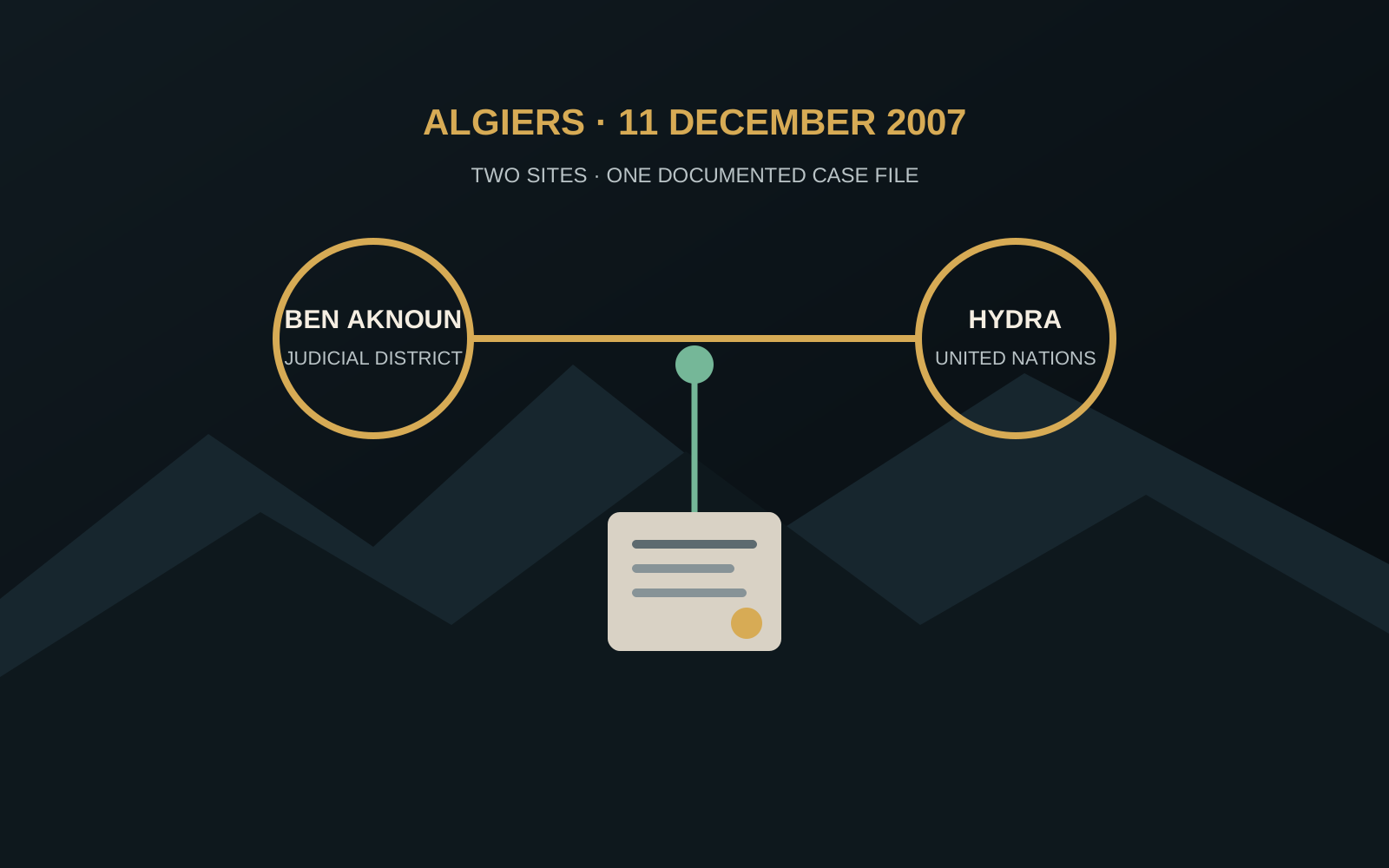
The first explosion struck the Ben Aknoun district near the Constitutional Council and close to Algeria's Supreme Court. A second blast followed in Hydra, a residential and diplomatic district, on the road separating United Nations premises from offices used by the UN refugee agency. The timing and target selection led authorities and international reporting to treat the attacks as coordinated.
The Hydra explosion caused catastrophic damage to the UN compound. Personnel from several agencies worked there, most of them Algerian nationals. The attack was therefore not an abstract strike on an international symbol: it killed local and international staff, visitors and people in the surrounding area, while the other blast harmed students and other civilians near the government district.
The victims and the disputed early toll
Casualty numbers changed during rescue and identification. Early reports varied sharply as officials searched damaged buildings and hospitals treated the injured. Later official and UN-linked reporting widely cited 37 deaths and 177 injuries. The United Nations ultimately identified 17 personnel among those killed.
This archive uses the later figure while preserving the fact that contemporaneous sources disagreed. It does not combine early estimates or unexplained press totals into a larger number. The 17 UN personnel included 14 Algerians and colleagues from Denmark, the Philippines and Senegal, according to UN reporting.
AQIM's claim of responsibility
Al-Qaeda in the Islamic Maghreb claimed responsibility after the attacks. AQIM had developed from the Algerian Salafist Group for Preaching and Combat and formally aligned its name and public identity with al-Qaeda in 2007. The December bombings followed other major attacks in Algeria that year.
The claim is relevant evidence about organizational responsibility, but it is not a criminal verdict against a named planner. Propaganda statements can contain accurate information, exaggeration or strategic messaging. This file therefore attributes the claim and does not turn it into proof of every operational detail.
Rescue, mourning and institutional review
Algerian emergency services and UN personnel searched the damaged Hydra premises. UNHCR's high commissioner condemned the attack and mourned staff and other victims. The Security Council also condemned the bombings on the day they occurred.
The attack prompted scrutiny of security arrangements for UN premises. A later independent review considered the circumstances and broader protection lessons. Security criticism after an attack does not transfer criminal responsibility from perpetrators to victims or employers; it addresses whether foreseeable risk was managed and how future staff could be protected.
Investigation and the limit of the public record
Algerian authorities publicly identified men they said drove the bomb vehicles, and later security reporting linked additional militants to the operation. Some suspected AQIM figures were reported killed in subsequent operations. Those developments may explain parts of the attack, but death in a security operation is not a trial, and an official attribution is not a conviction.
No reliable source reviewed for this page supplied a complete set of final judgments establishing who planned both attacks, who supplied the vehicles and explosives, who selected the targets, and who knowingly assisted. The file therefore avoids the word “solved” even though the immediate attackers were described as suicide bombers and AQIM claimed the operation.
What is established and what remains open?
- Established: two coordinated vehicle bombs struck Ben Aknoun and Hydra on December 11, 2007.
- Established: the targets included the Constitutional Council area and United Nations premises.
- Casualties: the later widely cited official total was 37 dead and 177 injured; 17 UN personnel were among those killed.
- Attributed: AQIM claimed responsibility. This is not presented as a judicial finding against every alleged member.
- Reported: authorities identified suspected bombers and linked other militants to the operation.
- Incomplete: a comprehensive, final public criminal record for all planners and facilitators was not located.
Source and status methodology
The chronology, targets and immediate aftermath were checked against contemporary international reporting and United Nations statements. UNHCR and UN materials were used for the institutional toll and the identities of affected staff groups. The AQIM claim was checked against established reporting that clearly labels it as a claim.
Because early death counts conflicted, the page uses the later official figure of 37 and separately identifies the confirmed UN staff toll. It does not use the highest early estimate merely because it is more dramatic.
The source review was completed through September 11, 2026. No reliable public case-specific record located in that review established full final individual accountability. The case remains IN_PROGRESS for Algeria and Unsolved / partial at the incident level.
Frequently asked questions
What were the two targets?
The Constitutional Council and Supreme Court area in Ben Aknoun, and United Nations offices in Hydra.
How many people were killed?
The later widely cited official total was 37, including 17 UN personnel. Early reports carried conflicting totals.
Who claimed responsibility?
Al-Qaeda in the Islamic Maghreb claimed the attacks.
Why is the case marked partial?
The event and organizational claim are documented, but the reviewed public record does not establish complete final individual criminal accountability for planning and assistance.